

Reasons why consumers are still hesitant about E10 gasoline.
In the draft resolution of the Government promulgating regulations on accelerating the implementation of the E10 bioethanol fuel roadmap, the Ministry of Industry and Trade stated that studies indicate E10 is compatible with over 90% of current vehicles and does not require engine modifications.
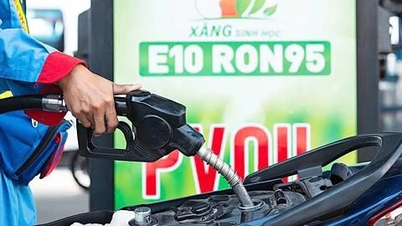
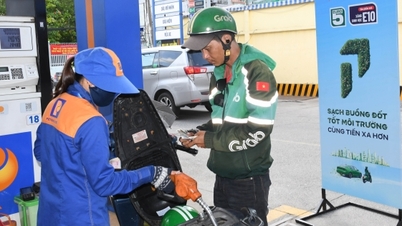
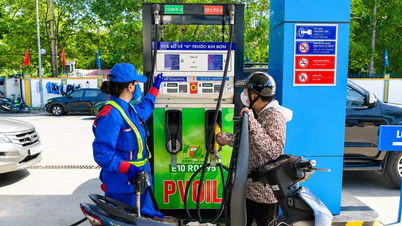
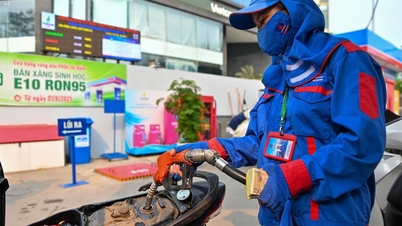
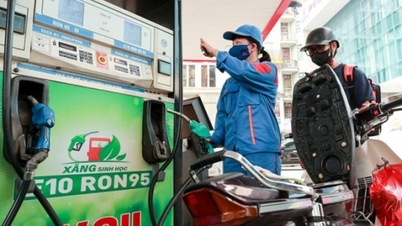
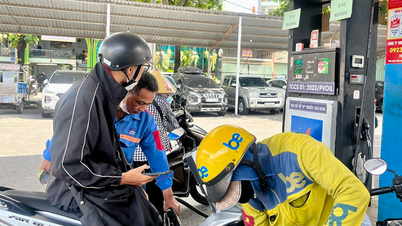
However, one of the difficulties in implementing E10 gasoline in practice is consumer sentiment. Consumers are still hesitant about E10 biofuel due to a lack of sufficient scientific , technical, and practical information on its use.
According to the Ministry of Industry and Trade, E5 gasoline consumption once reached nearly 40% of the market share. However, this figure has now decreased to about 15-20%. The reasons are the low price difference and consumer sentiment. Therefore, we need strong policies, a clear price difference, and communication is crucial in the implementation process.

There are many reasons why consumers are still hesitant about E10 bioethanol.
According to the Ministry of Industry and Trade, the dissemination and communication of information regarding the environmental benefits, technical efficiency, and safety of E10 bioethanol have not been implemented consistently or comprehensively.
The Ministry of Industry and Trade further stated that, over the past two decades, biofuels have moved from the experimental phase to widespread commercialization. According to the IEA, more than 60 countries have implemented mandatory ethanol blending policies, with E10 being the most common. The main driving factors include energy security, emission reduction, and support for agriculture . The general trend is for E10 to become the benchmark standard, no longer just a substitute product.
The Ministry of Industry and Trade estimates that, with an average gasoline consumption of approximately 1 million m3/month (of which about 15% is E5RON92 and 85% is E10RON95), the total ethanol (E100) demand for blending into biogasoline ranges from 92,000 m3/month to 100,000 m3/month;
In April 2026, domestic E100 production reached approximately 25,000 m3/month. According to the plan, when demand arises, the aforementioned E100 production plants will increase their capacity. Specifically, the E100 plants in Dong Nai, Quang Nam, and Dung Quat could increase their capacity to 9,000 m3/month. This equipment upgrade and capacity increase will take about one year, bringing the total domestic E100 production to approximately 30,000 m3/month.
In the United States, E10 accounts for over 95% of the market share with ethanol production of approximately 60 billion liters per year. Policies include renewable fuel standards, tax subsidies, and mandatory blending obligations. According to the Ministry of Industry and Trade, this shows that Vietnam needs clear legal obligations, combining market mechanisms with financial support.
In the European Union (EU), RED II requires a minimum of 14% renewable energy in transport, and E10 has become a standard in Germany and France. The EU also stipulates flexible technical standards and has a carbon certification system. According to the Ministry of Industry and Trade, Vietnam needs policies aligned with long-term climate goals.
Meanwhile, Thailand has phased out RON91 gasoline and completely replaced it with E10. The successful implementation is due to its lower price compared to conventional gasoline and consistent policies.
According to the Ministry of Industry and Trade, for the successful implementation of E10, Vietnam needs clear and mandatory legal regulations; flexible technical regulations; sufficiently strong financial incentives; a competitive market; and strong communication to build trust among users. The key point is that the policy must be strong enough to change market behavior.
Safety assessment before mass deployment.
Dr. Dang Tat Thanh, from the Department of Innovation, Green Transformation and Industrial Promotion (Ministry of Industry and Trade), stated that before the mass distribution of E10 gasoline, the Ministry of Industry and Trade consulted with many major car manufacturers (Toyota, Honda, Ford, etc.) and technical organizations, such as the Society of Automotive Engineers (SAE). These organizations all confirmed that E5 and E10 bioethanol gasoline do not harm engines. On the contrary, E10 bioethanol gasoline has a higher octane rating, helping engines operate more efficiently and reducing knocking.
According to Petrolimex, based on the results of state-level scientific research and recommendations from manufacturers and international organizations such as ACEA (European Automobile Manufacturers Association), E10 gasoline is basically compatible with most gasoline engines currently in circulation.
Associate Professor Pham Huu Tuyen, Director of the Center for Research on Power Sources and Autonomous Vehicles, stated that E10 gasoline has been widely used worldwide for decades in countries such as the United States, Brazil, and Thailand. Practical experience shows that this fuel does not negatively affect engine durability and is perfectly suitable for vehicles currently in circulation.
Mr. Tuyen affirmed that some opinions suggest that ethanol has a lower calorific value than mineral gasoline, so blending it could reduce the fuel's energy content, leading to increased consumption. However, in reality, this difference in calorific value is not significant (only a few percent), and is compensated by more efficient combustion in the engine.
Studies and tests have shown that when using E10 gasoline, engine power and fuel consumption are essentially equivalent to conventional gasoline. In some cases, fuel consumption can even be improved due to a more optimized combustion process.
Furthermore, a clear benefit of E10 gasoline is reduced emissions. Harmful substances such as CO (carbon monoxide) and some unburned organic compounds are significantly reduced. This not only contributes to environmental protection but is also better for public health.
In terms of cost, with current support policies, E10 gasoline is generally cheaper than conventional gasoline, helping consumers save on vehicle operating costs. More importantly, E10 gasoline has been widely used around the world for decades, in countries such as the United States, Brazil, and Thailand.
Experience shows that this type of fuel does not negatively affect engine durability and is perfectly suitable for vehicles currently in operation.
Source: https://suckhoedoisong.vn/vi-sao-nguoi-dung-con-e-ngai-xang-e10-169260523065147729.htm




























































































Comment (0)