

Trang Dien village in the past
According to the Quang Nam Village Chronicle, catalog number AJ.23/8, a 1944 survey by the French School of Far Eastern Studies recorded that Trang Dien belonged to Quang Hoa commune, Duy Xuyen district, Quang Nam province. This village did not have a "main road" (i.e., a highway). "To reach this village, follow main road number 104 to My Loc (formerly part of Duy Xuyen district), at kilometer 22, cross the ferry (Thu Bon River) to Giang Hoa, and from there, heading north is Trang Dien."
At that time, Trang Dien had an area of 216 acres and a total population of 500 people. The people were mostly engaged in agriculture. The most abundant agricultural product was rice, but there were also mulberry trees, cotton, cassava, and corn.
The aforementioned documents also provide information that the name Trang Dien village only appeared during the Minh Mang dynasty, after the major administrative reforms in 1831-1832, when Quang Nam district became Quang Nam province.
On the occasion of the 555th anniversary of the founding of Quang Nam Province - the 13th provincial-level administrative unit of Dai Viet (1471 - 2026), we visited Trang Dien village to learn more about the village's origins and the pioneering figure who established this land.
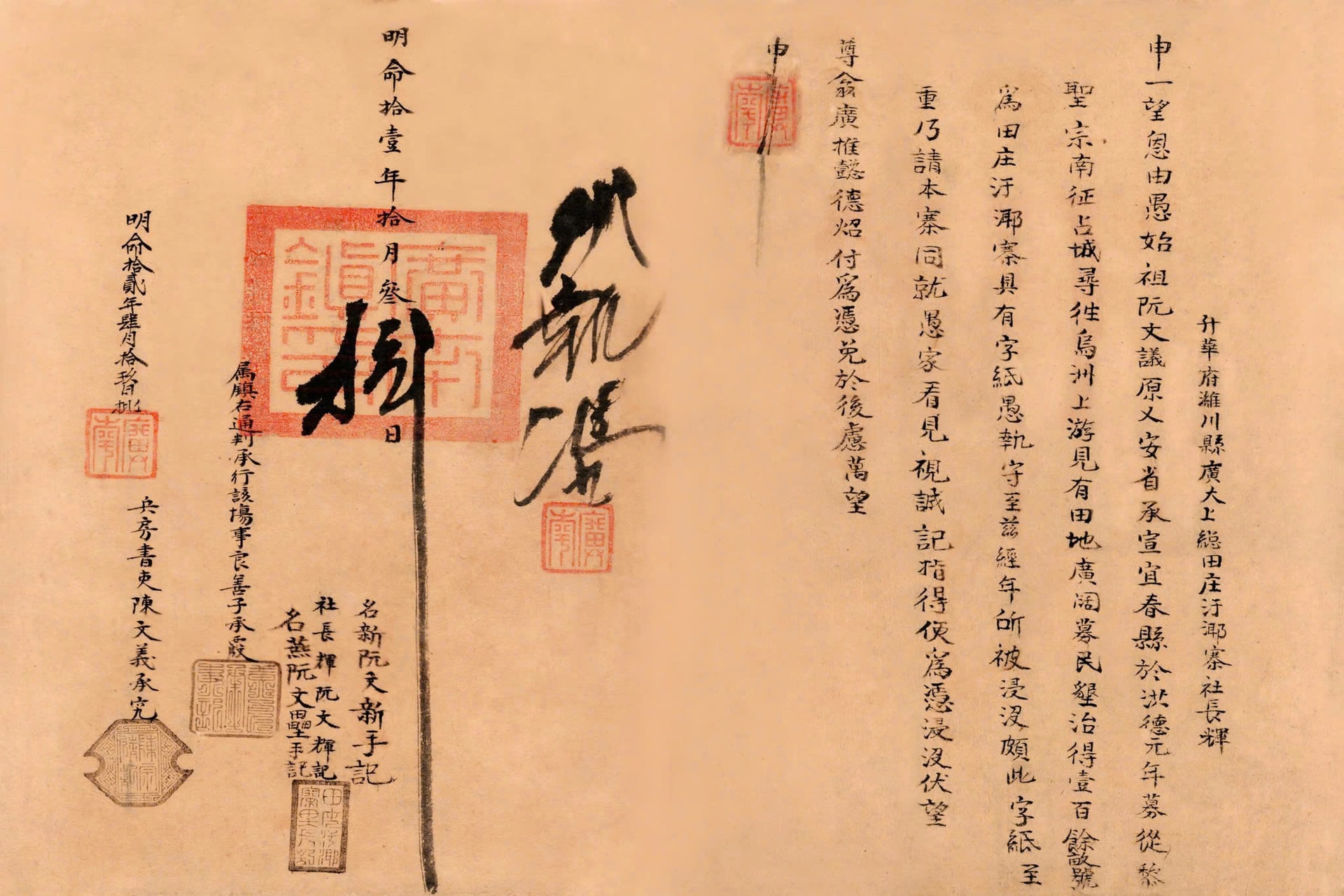
Fortunately, despite all the changes and upheavals, the Nguyen Van clan has carefully preserved an ancient document dated October 30th, the 11th year of Minh Mang's reign (1830), meaning it is nearly 200 years old.
According to this ancient record, Trang Dien village in the 1830s belonged to Quang Dai Thuong commune, Duy Xuyen district, Thang Hoa prefecture, Quang Nam province, and was called Dien Trang Vu Gia camp. This camp was established by the warrior Nguyen Van Nghi, the ancestor of the Nguyen Van clan. He was originally from Nghi Xuan district, Nghe An province . In the first year of Hong Duc (1470), he followed King Le Thanh Tong on a southern campaign against Champa. Afterwards, he came to the upper region of O Chau, found the land vast, so he recruited people to cultivate and settle it, acquiring more than one hundred acres, and named it Dien Trang Vu Gia camp.
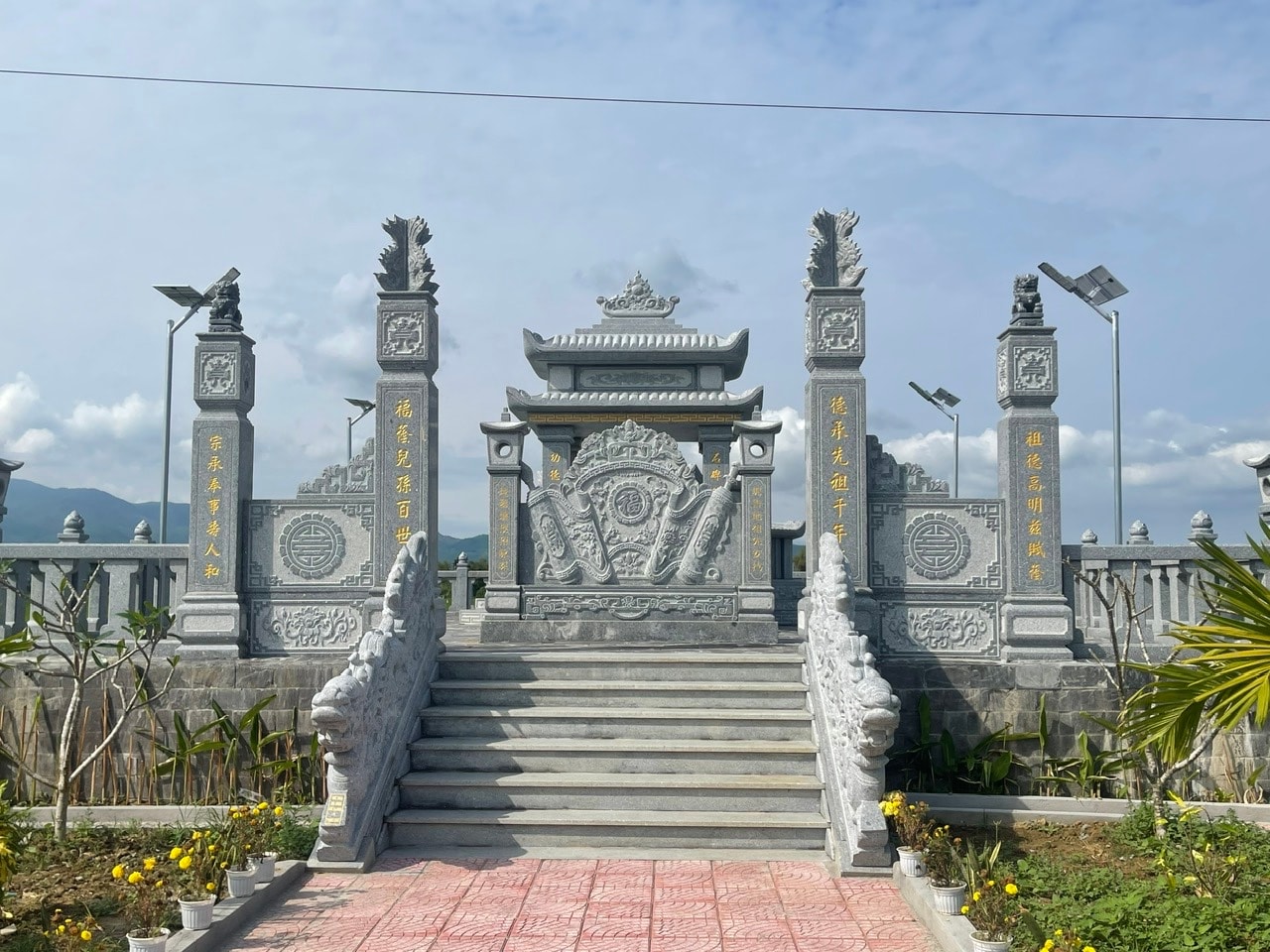
The founder of "Vu Gia Village Estate"
Thus, Nguyen Van Nghi belonged to the first group of migrants who followed King Le Thanh Tong from the North to open up Quang Nam province. His response to the imperial policy of territorial expansion, his willingness to stay in northern Quang Nam, and his organization of people to reclaim over 100 acres of land (a considerable area) to form the Vu Gia settlement is truly admirable. He must have possessed exceptional talent and virtue to win the hearts of the people and manage the affairs of the state amidst the complex geographical and political context of the region.
Not to mention that during this period, Quang Nam province also had a significant presence of Cham people who remained after Dai Viet's victory in 1471, creating a complex intermingling of villages inhabited by Vietnamese migrants and Cham villages.
It is noteworthy that the aforementioned document, preserved by the Nguyen Van clan, is not an internal village document but was recognized by the Nguyen Dynasty (provincial level) government during the reign of Minh Mang. It was received by a specialized agency of the Quang Nam province and thoroughly checked by two clerks before being approved by the Governor of Quang Nam on April 19th, the 12th year of Minh Mang's reign (1831), and stamped with the "Quang Nam Province Seal". Therefore, this document has high legal value in affirming the significant role of the founder of the Nguyen Van clan – Mr. Nguyen Van Nghi – in establishing the Vu Gia Trai estate, the predecessor of Trang Dien village.
More than a century later, the title "Ancestor" of Mr. Nguyen Van Nghi is still mentioned in the Quang Nam village chronicle. This document also states that in June of the 19th year of Thanh Thai (1907), the village chief of Trang Dien village "allocated land to the ancestral lineage of the ancestor Nguyen Van" on the 20th day of the 7th lunar month every year at the village communal house, with 1 mau and 2 sao in the Tra No area.
Unfortunately, the descendants of the Nguyen Van clan do not know the full story of their ancestor, apart from the Chinese characters carved on his tombstone, erected during the Duy Tan dynasty (which is still preserved today), which can be tentatively translated as: Tomb of the ancestor, the pioneer who reclaimed Trang Dien land, Nguyen clan, courtesy name Bat Di.
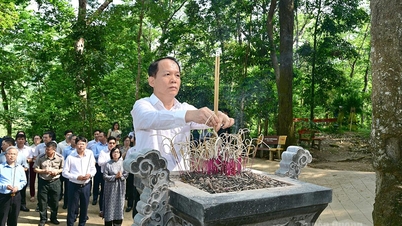
Immediately after the fierce war ended, descendants of the Nguyen Van family throughout the country rebuilt the tomb of their ancestor. Notably, this tomb complex has just undergone a major renovation, becoming grand and impressive, and was inaugurated on the occasion of the 555th anniversary of Le Thanh Tong's conquest of Champa – a brilliant and heroic ruler in Vietnamese history.
In his article "Traces of the Founding Ancestors of Quang Nam in Stone Inscriptions," researcher Nguyen Di Co argues that, "in the history of Vietnamese villages, the founding ancestral clans held an important position and prestige within the villages." In our opinion, moreover, the establishment of Trang Dien village by the founding ancestor Nguyen Van Nghi is also vivid evidence of the southward expansion of the Vietnamese people in the late 15th century, establishing national sovereignty over the ancient Quang Nam region.
It is my belief that the tomb of the village's founding ancestor, Nguyen Van Nghi, should be classified as a city-level historical relic as soon as possible. This would not only honor and celebrate his immense contributions to the history of the village's formation and development in Quang Nam province, but also contribute to preserving and promoting the great spiritual values passed down by our ancestors.
Source: https://baodanang.vn/vi-tien-hien-lang-trang-dien-3333191.html
![[Photo] The heat at the fireworks display site on the opening night of the Da Nang International Fireworks Festival 2026](https://vphoto.vietnam.vn/thumb/1200x675/vietnam/resource/IMAGE/2026/05/27/1779889741485_ndo_br_z7872039145157-fecaba5112f39e8352544099d7ef4738-5140-jpg.webp)
![[Photo] The courage of new recruits of Brigade 144 on the training ground.](https://vphoto.vietnam.vn/thumb/1200x675/vietnam/resource/IMAGE/2026/05/27/1779881651341_anh-man-hinh-2026-05-27-luc-18-32-52.png)










































































Comment (0)