

Although fungal sinusitis accounts for only about 10% of all sinusitis cases worldwide , it is considered a potentially serious condition with many complications, and can even be life-threatening if not detected and treated promptly.
- Numbness on half of my face for 3 years due to fungal sinusitis.
- Symptoms of fungal sinusitis
- Is fungal sinusitis dangerous?
- How can I prevent fungal sinusitis?
Numbness on half of my face for 3 years due to fungal sinusitis.
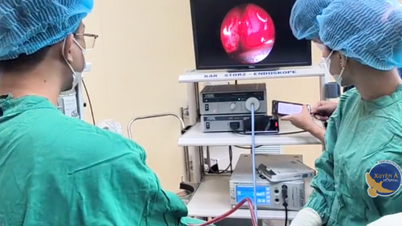
Recently, doctors at Xuyen A General Hospital in Ho Chi Minh City successfully treated an 18-year-old female patient from Tay Ninh province who suffered from chronic fungal sinusitis with lesions located close to the trigeminal nerve.
According to information from the hospital, patient LNHL had been experiencing persistent, dull headaches for three years. During this time, the patient had consulted many doctors and used painkillers, but the condition did not improve.
Approximately one month before hospitalization, the patient began experiencing numbness on the left side of their face, significantly impacting their daily life and studies. Concerned about these unusual symptoms, the family took the patient to a specialized medical facility for examination.
Magnetic resonance imaging (MRI) of the brain and computed tomography (CT) scan of the nasal sinuses revealed chronic pansinusitis, with suspected fungal infection in the left sphenoid sinus. This location is deep within the skull base and very close to the trigeminal nerve – the nerve that controls sensation in the facial region.

If fungal sinusitis is not treated promptly, patients may face many serious complications.
After consultation, the doctors decided to perform endoscopic sinus surgery to completely remove the fungal tissue and restore the natural flow of the sinus system. During the surgery, the team noted that the fungal lesion was located close to the trigeminal nerve. The prolonged inflammation had affected this nerve, causing the patient to experience persistent facial numbness.
Following the surgery, the patient's headaches and facial numbness improved significantly. The patient no longer had nasal congestion or runny nose, and their health recovered well.
Doctors say this is a typical case showing that fungal sinusitis can progress silently for many years but cause serious neurological complications if not detected early.
Symptoms of fungal sinusitis
The symptoms of fungal sinusitis are quite similar to other types of sinusitis, so patients often overlook or mistake them for other conditions. The disease usually starts in one side of the nose with symptoms such as:
- Persistent nasal congestion.
- Thick, yellow or green nasal discharge.
- The nasal discharge has an unpleasant odor.
- Reduced or lost sense of smell.
- Pain or soreness in the face, forehead, cheekbones, or between the eyes.
- A persistent feeling of heaviness in the head.
- Fever during the acute phase.
For individuals with weakened immune systems, such as those with diabetes, cancer, HIV/AIDS, or those taking immunosuppressant medications, fungal sinusitis can progress more rapidly and become more dangerous.
At that time, the patient may exhibit warning signs such as:
- Numbness on one side of the face.
- Severe pain in the eye and facial area.
- Protruding eyes. Swelling around the eye socket.
- Vision has decreased.
- Double vision (seeing in pairs).
- The skin on the face changes color, becoming pale or purplish-black.
- Paralysis of cranial nerves.
These signs indicate that the fungus may have spread beyond the sinuses and invaded vital structures such as the eye socket, nerves, or brain.
Is fungal sinusitis dangerous?
Fungal sinusitis is not simply a common infection. Some forms, especially acute invasive fungal sinusitis, are considered medical emergencies due to their high mortality risk. In this form, the fungus can invade blood vessel walls, destroy tissue, and spread rapidly to nearby organs. If left untreated, patients may face several serious complications such as:
- Blind
Fungal infections can spread from the paranasal sinuses to the eye socket, causing optic neuritis or compressing structures within the eye socket, leading to irreversible vision loss.
- Nerve damage
Facial nerves, particularly the trigeminal nerve, can become inflamed or compressed, causing pain, numbness, or paralysis of the facial muscles.
- Meningitis and brain abscess
When fungi invade the base of the skull, patients are at risk of developing meningitis or abscesses in the brain. These are particularly dangerous complications that directly threaten life.
- Facial tissue necrosis
Some types of fungi can destroy soft tissue and bone in the facial area, causing severe facial disfigurement.
- Heavy bleeding
Fungal infections that invade blood vessel walls can cause severe, difficult-to-control bleeding. Even after treatment, some patients may still face long-term consequences such as chronic facial pain, nerve damage, or vision loss. Therefore, doctors emphasize that early detection and appropriate specialist treatment are crucial factors in limiting complications and preserving the function of vital organs.
How can I prevent fungal sinusitis?
Vietnam has a hot and humid tropical climate with high rainfall throughout the year. This creates ideal conditions for mold growth, increasing the risk of ear, nose, and throat diseases, including fungal sinusitis.
To effectively prevent the disease, people need to take the following measures:
- Maintain daily nasal and throat hygiene.
Rinse your nose with saline solution. Gargle frequently. Keep your nose and throat warm when the weather changes. Wear a mask when going outside or working in dusty environments.
- Improve living environment
Keep your home clean and well-ventilated. Minimize mold growth in bedrooms, kitchens, and bathrooms. Use a dehumidifier or air purifier if necessary. Regularly air out blankets, sheets, pillows, and towels in the sun.
- Boost your immune system.
Eat a balanced diet. Increase your intake of fruits and vegetables. Get enough sleep. Maintain regular physical activity. Limit tobacco and alcohol.
- Proactively manage underlying conditions.
People with chronic sinusitis, allergic rhinitis, diabetes, cancer, or immunodeficiency should have regular health checkups. Regular ENT (Ear, Nose, and Throat) examinations and nasal and sinus endoscopy help detect abnormalities early so that they can be treated promptly, avoiding dangerous complications.
In summary: Fungal sinusitis is a completely treatable condition if detected early. Conversely, neglecting the condition or self-treating for an extended period can cause the disease to progress silently and lead to serious consequences for vision, nerves, and even the patient's life.
If you experience persistent nasal congestion, runny nose, persistent headaches, or unexplained facial pain, you should seek medical attention at a specialist.
Source: https://suckhoedoisong.vn/viem-xoang-do-nam-co-nguy-hiem-khong-169260601153152867.htm












































































































Comment (0)