

.jpg)
Positive signs
According to statistics from the Ministry of Finance , Vietnam currently has 46,200 active foreign direct investment (FDI) projects with a total registered capital of approximately US$545 billion. The cumulative implemented FDI capital of these foreign investment projects has reached over US$357 billion, equivalent to about 65.6% of the total registered active investment capital.
In the first four months of 2026 alone, total FDI investment in Vietnam reached US$18.24 billion, a 32% increase compared to the same period in 2025. Disbursed capital is estimated at over US$7.4 billion, a 9.8% increase compared to the same period.
Notably, this is the highest disbursement rate for the first four months of the year in the past five years, indicating that FDI projects are not only being registered but also being implemented relatively effectively.
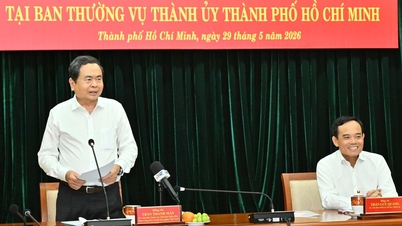
Assessing the results of FDI attraction in the first months of the year, Mr. Nguyen Duc Hien, Deputy Head of the Central Policy and Strategy Committee, said that Vietnam's FDI attraction trend continues to maintain positive momentum, with total registered FDI capital in Vietnam increasing sharply compared to the same period last year, showing that international investors' confidence in Vietnam's investment and business environment has been firmly consolidated.
From a management perspective, the Foreign Investment Agency (Ministry of Finance) also noted that, in the context of slow global growth recovery, volatile trade policies, persistent geopolitical risks, and increasingly evident economic fragmentation, these factors directly affect the investment decisions, production expansion, and capital flows of multinational corporations. However, Vietnam still recorded positive investment attraction results, demonstrating its adaptability and relatively sustainable attractiveness.
One notable point is the improving quality of capital flows. The 9.8% increase in disbursed capital indicates that existing projects are being implemented steadily, and disbursement progress is being maintained, reflecting foreign investors' confidence in the investment and business environment in Vietnam.
In addition, 1,249 new FDI projects were licensed, with registered capital reaching US$12.15 billion, an increase of 3.7% in the number of projects and 2.2 times in registered capital compared to the same period last year. This shows that Vietnam remains a target for investors in their strategy of shifting and diversifying supply chains.
Capital contribution and share purchase activities also saw increased activity, signaling that foreign investors are not only interested in new projects but are also actively seeking opportunities to participate more deeply in the market through existing businesses.
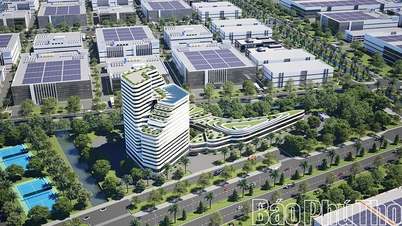
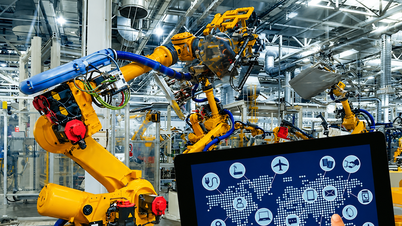
Notably, FDI flows into Vietnam are increasingly concentrated in large-scale, high-tech projects. This aligns with the country's strategy of selective investment attraction, prioritizing advanced technologies, foundational technologies, high value-added products, and those with spillover effects to domestic businesses. This is also a key factor in improving the quality of FDI flows in the coming period.
Strengthening the confidence of the international business community.
.jpg)
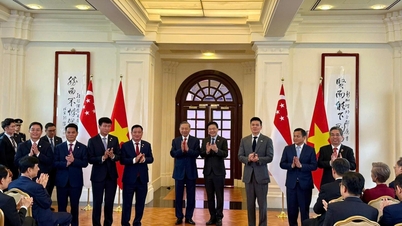
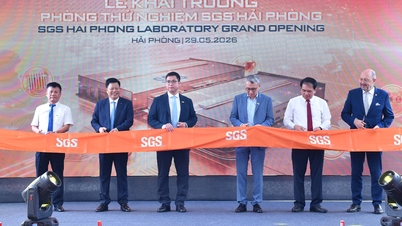
Positive signals from FDI inflows are strengthening the confidence of the international business community in Vietnam's investment environment.
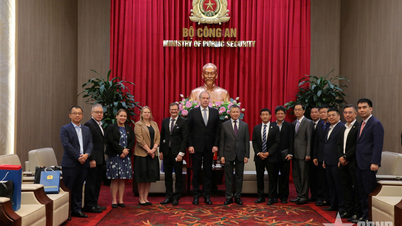
According to Mr. Kim In Woo, Vice President of the Korean Chamber of Commerce in Vietnam (KoCham), as of February 2026, the cumulative investment capital of South Korea in Vietnam had reached US$95.23 billion, with 10,425 projects. Vietnam possesses distinct advantages with its open economy , solid manufacturing base, and impressive growth rate. For Korean businesses, Vietnam is not only a production and export hub but also a strategically important market in the medium and long term.
From another perspective, Mr. Ton Phong Loi, Chairman of the Chinese Business Association in Vietnam, stated that there are currently over 10,000 Chinese enterprises operating in Vietnam, including more than 400 listed companies. This demonstrates the growing scale and presence of the Chinese business community in the Vietnamese market. Notably, these enterprises are accelerating their plans to transform, upgrade, and expand into high-tech fields such as information technology, new energy, and artificial intelligence, gradually replacing traditional labor-intensive industries.
Meanwhile, Torben Minko, Vice President of the European Chamber of Commerce in Vietnam (EuroCham), stated that EuroCham currently has 1,500 businesses operating in Vietnam. These European businesses have a very high level of confidence, which is an important indicator showing that Vietnam is an ideal market for further investment expansion.
While appreciating Vietnam's investment environment, Mr. Kim In Woo believes that the current investment environment still needs further improvement to meet new requirements. Specifically, production capacity needs to be enhanced alongside technological capabilities and the level of industrial integration. These are crucial factors in retaining and attracting high-quality projects.
Furthermore, the predictability of policies and consistency in administrative implementation are becoming increasingly important. Businesses are not only interested in incentives, but also particularly focused on the ability to operate stably in a transparent, consistent, and predictable legal environment in the long term. Therefore, improving the speed of administrative procedures, enhancing transparency, and ensuring consistency in policy application will be key factors in improving competitiveness.
Mr. Torben Minko believes that green transformation and ESG are becoming mandatory requirements. Therefore, to increase attractiveness in the new context, Vietnam needs to integrate these elements into its business operations, thereby meeting the increasingly high demands of international investors.
Meanwhile, Mr. Nguyen Duc Hien also pointed out bottlenecks that need to be addressed to improve the effectiveness of the FDI sector, such as weak linkages between the FDI sector and domestic enterprises; low localization rates; limited technology absorption capacity of Vietnamese enterprises; low research and development content; along with institutional, infrastructure, and human resource barriers. If these issues are not effectively addressed, the effectiveness of FDI cooperation will decline, limiting the spillover effects and the enhancement of the economy's competitiveness.
Source: https://baohaiphong.vn/viet-nam-tang-suc-hut-dong-von-fdi-542436.html
![[Photo] Ba Lang An Lighthouse - the "eye of the sea" amidst the "rock museum" of Quang Ngai province.](https://vphoto.vietnam.vn/thumb/1200x675/vietnam/resource/IMAGE/2026/05/29/1780038698840_anh-man-hinh-2026-05-29-luc-14-10-42.png)


![[Image] Pleasant weather helps students enter the 10th grade entrance exam with confidence.](https://vphoto.vietnam.vn/thumb/1200x675/vietnam/resource/IMAGE/2026/05/29/1780034401612_ngay-1-thi-lop-10-minh-duy-8-5009-jpg.webp)






























































Comment (0)