

Visiting her alma mater in Vietnam, Tran Thi Ngoc Guong was surprised to find all the students curious about her field of work: chip design. “Everyone asked so many questions, and they were very detailed,” she said.
Much has changed in the five years since Guong graduated. She is now a senior physical design engineer at chip developer Marvell (USA). Many new graduates choose semiconductor majors. The Vietnamese government aims to train at least 50,000 chip engineers and designers by 2030.
“I never thought I’d be working in such a ‘hot’ field,” Guong, 26, told Nikkei from his office in Ho Chi Minh City.
Nikkei noted that the semiconductor industry's boom is a combination of factors: soaring demand for chip engineers during the AI boom; supply chain shifts driving local demand; and severe labor shortages in traditional chip economies such as South Korea, Taiwan (China), and the United States.
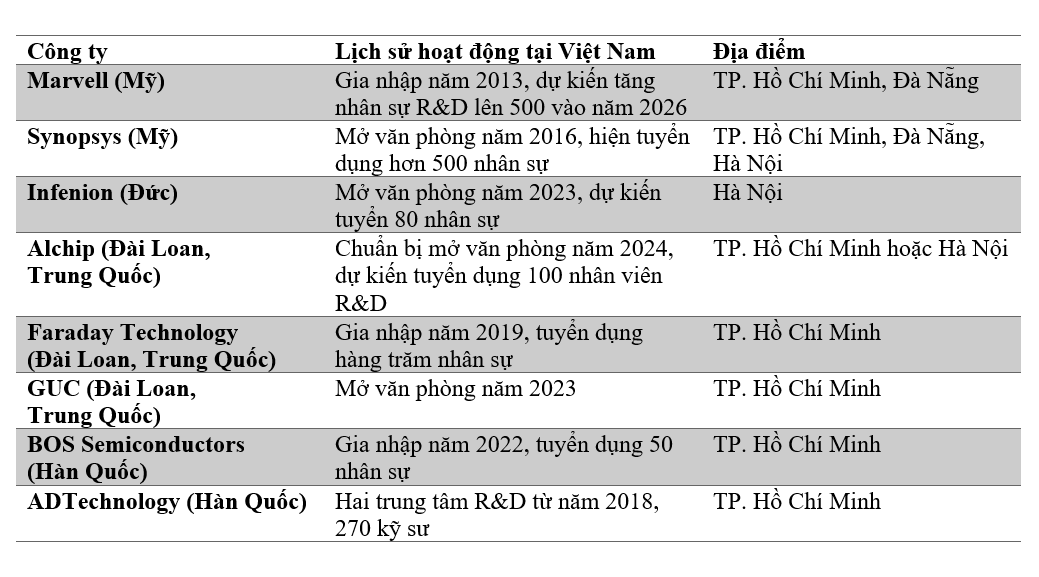
Alchip Technologies, a leading AI chip design service provider from Taiwan (China), is expanding its R&D team in Vietnam, where it plans to open its first office this year. Chief Financial Officer Daniel Wang said the company is likely to increase its workforce to a maximum of 100 engineers within two to three years.
According to CEO and Chairman Johnny Shen, after evaluating several Asian destinations, “Vietnam’s promising technical talent pool and strong work ethic make Vietnam a very attractive option for us. We are very impressed by the dedication and commitment of Vietnamese engineers who are eager to learn and contribute.”
Also coming to Vietnam to recruit young engineers are GUC and Faraday Technology, a provider of chip design services for TSMC and UMC.
Korean companies are also relocating to Vietnam, partly to compensate for the brain drain in their home country. According to Nikkei, Vietnam was the most frequently mentioned country in recent discussions between business leaders and Oh Young Ju, Minister of Small and Medium Enterprises and Startups.
A strategic location for developing technical talent.
South Korean semiconductor company BOS Semiconductors came to Ho Chi Minh City to establish a support team. During their collaboration between the two countries, comparing the two teams' personnel, the quality of the Vietnamese engineers convinced the company to upgrade the team. “They realized this could be the main R&D center. That was really unexpected,” said Country Director Lim Hyung Jun.
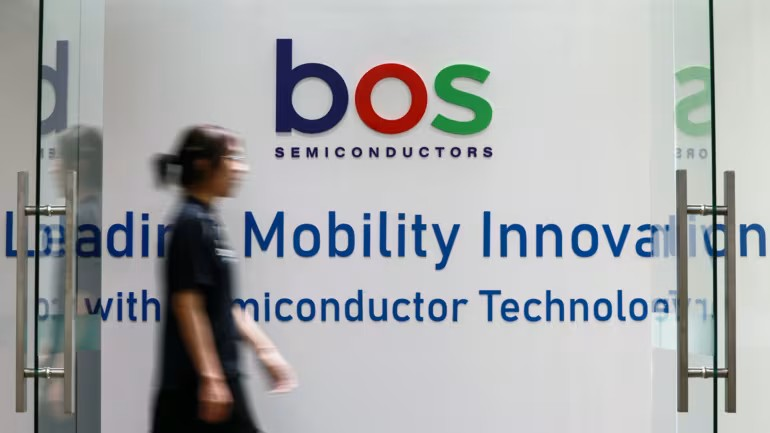
BOS designs AI chips for automakers like Hyundai. Mr. Lim said that achieving the goal of designing SoC chips in Vietnam would demonstrate local ingenuity . "It could shape market trends," he said.
There are approximately 50 BOS employees in Ho Chi Minh City, including Design Director Nguyen Hung Quan. He said his colleagues are “very excited” to be working on issues such as high-speed data transmission, which helps them gain additional skills. “In Vietnam, we are in the R&D phase. Production is difficult and expensive, but this will help us move in the right direction.”
ADTechnology, a fellow Japanese company of BOS, operates two research centers in Ho Chi Minh City.
Having readily available technology personnel during a time of scarcity can help Vietnam achieve its goal of increasing the value of its supply chain. Marvell describes Vietnam as a “strategic location for developing technical talent.”
Le Quang Dam – a veteran figure in the industry – helped launch Marvell's first office here. From just a few dozen engineers in the early years, his team has now grown to over 400 people. Dam, General Manager of Marvell Vietnam, shared that Vietnam will become Marvell's third largest chip design center, after the US capital and India.
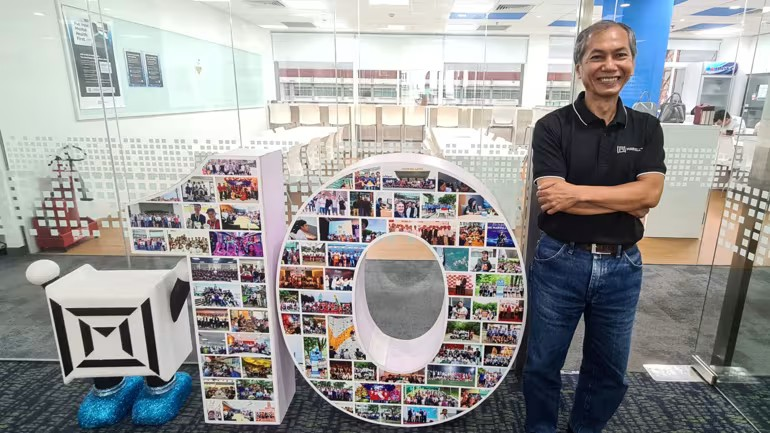
Marvell aims to increase its local workforce to 500 by 2026. The recruitment plan includes not only staff for its Ho Chi Minh City office but also a new location in Da Nang. According to Mr. Dam, after 11 years, the Vietnamese team “will be able to conduct cutting-edge chip technology R&D.”
Unlike low-tech fields, Marvell's operations in Vietnam require advanced technical capabilities. The majority of Dam's team members are young – in their 20s or 30s – and over 20% are female.
Meanwhile, Synopsys – a leading global manufacturer of chip design tools – is among the most active investors in Vietnam, where it has over 500 employees across multiple design centers in various cities. Robert Li, Vice President of Sales for Synopsys Taiwan (China) and Southeast Asia, commented: "The high level of interest from Vietnamese students and the trained workforce in semiconductor engineering, combined with government funding and programs, will help establish Vietnam as a semiconductor talent hub."
According to Mr. Li, the Synopsys team in Vietnam is addressing the most critical customer challenges. A prime example is the team's crucial role in developing the industry's first UCIe-connected chiplet-based test chip, announced in 2023 in collaboration with Intel.
Brian Chen, an expert at KPMG, noted that the demand for high-level technical skills in Vietnam is exceeding the supply as many companies relocate to Southeast Asia. He believes there is still ample room for talent development. Specifically in the chip design sector, he predicts each company will recruit at least 300 to 500 people for their Vietnam offices.
Furthermore, compared to Taiwan (China) or South Korea, the productivity and salaries of engineers in Vietnam are also more attractive due to their cost-effectiveness. Mr. Chen pointed out that Ho Chi Minh City remains the top choice for foreign companies because of its quality of life and vibrant atmosphere. Hanoi will be the next destination.
(According to Nikkei)
Source: https://vietnamnet.vn/viet-nam-thoi-nam-cham-cua-nganh-ban-dan-the-gioi-2312734.html

![[Image] Pleasant weather helps students enter the 10th grade entrance exam with confidence.](https://vphoto.vietnam.vn/thumb/1200x675/vietnam/resource/IMAGE/2026/05/29/1780034401612_ngay-1-thi-lop-10-minh-duy-8-5009-jpg.webp)


![[Photo] Ba Lang An Lighthouse - the "eye of the sea" amidst the "rock museum" of Quang Ngai province.](https://vphoto.vietnam.vn/thumb/1200x675/vietnam/resource/IMAGE/2026/05/29/1780038698840_anh-man-hinh-2026-05-29-luc-14-10-42.png)




















































































Comment (0)