

The State of Southeast Asia: 2026 Survey Report was published by the Institute of Southeast Asian Studies (ISEAS – Yusof Ishak Institute) on April 7, 2026.
 |
Thai tourists wearing Vietnamese ao dai check in at Sapa. |
This year's survey was conducted over a six-week period (from January 5th to February 20th) with more than 2,000 participants, including experts, academics, business leaders, and policymakers from 11 Southeast Asian countries.
The final section of the survey provides results on people's choices of where to live, work, and travel in the region. The report shows that Thailand, Singapore, Malaysia, and Vietnam are the four most popular destinations in ASEAN, although the ranking varies among different groups of countries.
While Singapore leads in terms of places to live and work, Thailand is the most popular destination when it comes to tourism. The survey shows that the country is the most chosen destination in ASEAN, while Vietnam holds a high position among the most popular countries for both tourism and living.
According to experts, the choice of travel destination is often influenced more by exchange rates, costs, and tourism promotion campaigns than by decisions to relocate or change jobs.
Tourist choices reflect a country's "soft power." This concept, first introduced in 1990 by American political scientist Joseph Nye, refers to the ability to create appeal through culture, social values, policies, and quality of life, rather than military or economic strength.
Dr. Irna Nurlina Binte Masron, a researcher at the ISEAS-Yusof Ishak Institute, argues that the difference between countries favored for tourism and those chosen for residence demonstrates that soft power stems not only from short-term appeal to tourists but also from the ability to create attractive living, learning, and working environments in the long term.
The report also shows that people in the five largest ASEAN economies —Indonesia, Malaysia, the Philippines, Thailand, and Vietnam—all demonstrate a high preference for domestic tourism. 85.7% of Thais surveyed said they still prefer traveling within the country rather than abroad.
 |
Foreign tourists visit Thanh Ha pottery village (Hoi An). |
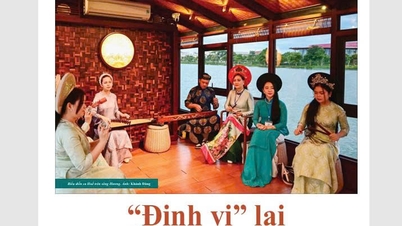
Vietnam's inclusion among the region's top destinations demonstrates its growing appeal to ASEAN tourists. In recent years, Vietnam has consistently been recognized by international organizations and tourism awards for its diverse landscapes, rich cultural heritage, reasonable travel costs, and increasingly improved infrastructure serving tourists.
Japan continues to be one of the most popular out-of-region destinations for Southeast Asians. Many Indonesians, Filipinos, and Thais now work in Japan, as the country faces a rapidly aging population.
Experts explain Japan's appeal stems from its long-term investments in human resource training, trade, and development aid in Southeast Asia, its strong tourism promotion campaigns, and the recent weakening of the yen.
The report also noted that trends in labor migration, tourism, and education within the region will continue to increase in the coming years, as Southeast Asia's middle class expands and has more opportunities to access neighboring countries.
Source: https://baobacninhtv.vn/viet-nam-vao-top-4-diem-den-hap-dan-nhat-dong-nam-a-postid446979.bbg

![[Photo] General Secretary and President To Lam presides over a meeting with the Central Organizing Committee.](https://vphoto.vietnam.vn/thumb/1200x675/vietnam/resource/IMAGE/2026/06/03/1780482764658_a1-bnd-4741-3342-jpg.webp)
![[Photo] Secretary of the National Assembly Party Committee, Chairman of the National Assembly presides over the meeting of the Standing Committee and Executive Committee of the National Assembly Party Committee.](https://vphoto.vietnam.vn/thumb/1200x675/vietnam/resource/IMAGE/2026/06/03/1780480353201_ndo_br_bnd-2585-jpg.webp)
![[Photo] First session of the 14th Congress of the Vietnam Trade Union](https://vphoto.vietnam.vn/thumb/1200x675/vietnam/resource/IMAGE/2026/06/03/1780465947883_ndo_br_img-3852-jpg.webp)


![[Infographic] Over 1.2 million candidates registered for the 2026 High School Graduation Exam](https://vphoto.vietnam.vn/thumb/402x226/vietnam/resource/IMAGE/2026/06/03/1780496872518_w_20260603205412.jpeg)




![[Podcast] Capital City Law 2026: Increased penalties for violations in the fields of culture and advertising](https://vphoto.vietnam.vn/thumb/402x226/vietnam/resource/IMAGE/2026/06/03/1780487283783_4522222.png)






































![[Video] Sunset at Lap An Lagoon – Where the sun sets over the fishing nets](https://vphoto.vietnam.vn/thumb/1200x675/vietnam/resource/IMAGE/2026/05/31/1780192137701_beach-landscape-sea-water-nature-grass-745871-pxhere-com.jpeg)






























Comment (0)