

An outbreak of the rare Andean strain of Hantavirus on the Dutch-flagged cruise ship MV Hondius has killed three people and raised global concerns about the potential for spread as those evacuated return to their home countries.
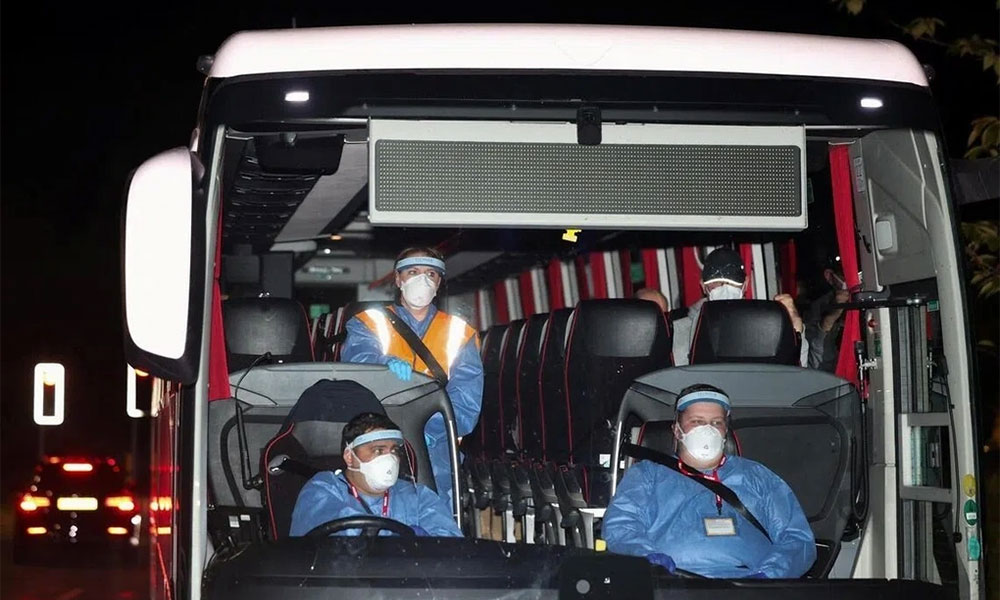 |
All passengers have been evacuated from the MV Hondius cruise ship. |
Dr. Olivier Le Polain, head of the WHO's epidemiology and response analysis unit, said: "The early stages of the disease are when the risk of transmission is highest."
He noted that the ship created a favorable environment for transmission because it was an environment where people lived together in a relatively confined space.
"That's also why we might see more spread than usual," he explained.
The WHO recommended that all nearly 150 people on board be quarantined for six weeks when the ship arrived in waters off Tenerife early on May 10th to allow passengers to disembark.
This period (approximately 42 days) corresponds to the maximum incubation period of the Andean Hantavirus strain, which is known to be capable of human-to-human transmission.
However, Dr. Polain stated that on average, people infected with the virus begin to develop symptoms after about three weeks. He emphasized the importance of not waiting until symptoms appear before isolating potential contacts.
He said that if the WHO recommends "isolation, it's because people are actually infectious from the very beginning of their illness," adding that this "can sometimes be difficult because the symptoms are a bit hard to recognize."
"That's because the initial symptoms can be mild, a little tiredness, a slight fever," he said, adding that those symptoms then "sometimes get worse."
According to Dr. Polain, the long incubation period of the Hanta virus "means we could see new cases reappear in the next few days, possibly even next week."
"That's why we need to be vigilant, ensuring that the first signs and symptoms are recognized, and that patients are isolated and cared for," he said. Although the WHO provides recommendations, the implementation of the health procedures they deem most appropriate depends on each country.
Since contact tracing and the repatriation of passengers and crew from the MV Hondius began, most countries have followed WHO guidelines and implemented a 42-day quarantine.
Several countries, including Germany, the UK, Switzerland, and Greece, have opted for a 45-day quarantine period. Australia and France have announced minimum monitoring periods of 3 and 2 weeks, respectively, which may be extended.
Conversely, US officials indicated that the 17 returning American passengers would not necessarily need to be quarantined. WHO Director-General Tedros Adhanom Ghebreyesus warned that this “could pose potential risks.”
Source: https://baobacninhtv.vn/who-nhan-dinh-ve-thoi-diem-virus-hanta-lay-lan-manh-nhat-postid445360.bbg












































































































Comment (0)