

Using E10 gasoline helps ensure energy security and is in line with international commitments.
Regarding the roadmap for using E10 gasoline, which will be applied from June 1, 2026, Deputy Minister of Industry and Trade Nguyen Sinh Nhat Tan stated that at the end of 2025, the Ministry of Industry and Trade issued Circular No. 50/2025/TT-BCT dated November 7, 2025, regulating the roadmap for applying the blending ratio of biofuels with traditional fuels in Vietnam, which stipulates that from June 1, 2026, biofuel gasoline will be distributed nationwide.
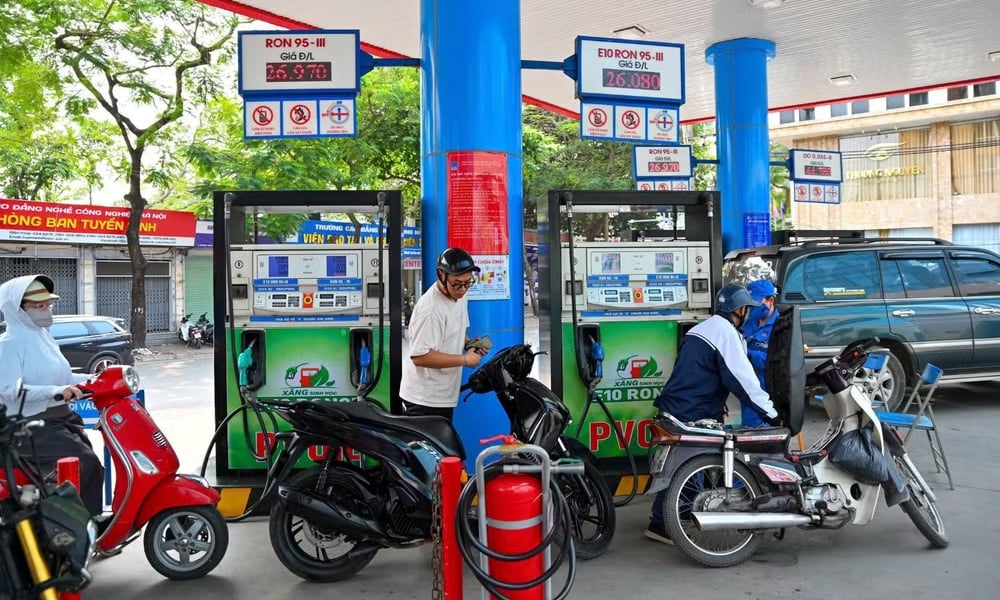 |
E10 biofuel: No imposition or restriction on consumer choice. |
This roadmap is being implemented strictly in accordance with the policies of the Party and the State, including Resolution No. 55-NQ/TW of the Politburo on the orientation of the national energy development strategy of Vietnam until 2030, with a vision to 2045; and Resolution No. 70-NQ/TW, dated August 20, 2025, of the Politburo on ensuring national energy security until 2030, with a vision to 2045. These documents all require the realization of solutions to reduce dependence on fossil fuels, reduce emissions, and protect the environment.
In addition, the Ministry of Industry and Trade is also implementing the Prime Minister 's Decisions, such as: Decision 1658/QD-TTg dated October 1, 2021, approving the National Strategy on Green Growth for the period 2021-2030, with a vision to 2040; Decision No. 215/QD-TTg dated March 1, 2024, approving the national energy development strategy of Vietnam until 2030, with a vision to 2045… These Decisions all set goals for developing renewable energy, green energy, and reducing CO2 emissions…
Specifically, Decision No. 53/2012/QD-TTg dated November 22, 2012, of the Prime Minister on the issuance of the roadmap for applying the blending ratio of biofuels with traditional fuels (Decision 53) stipulated that after a trial period, from December 1, 2015, gasoline produced, blended, and sold for use in road motor vehicles nationwide would be E5 gasoline. From December 1, 2017, gasoline produced, blended, and sold for use in road motor vehicles nationwide would be E10 gasoline.
In accordance with Decision No. 53/2012/QD-TTg, after numerous trials, E5 gasoline was officially distributed nationwide from January 1, 2018. However, the roadmap for implementing E10 gasoline as stipulated in Decision 53 has not yet been realized. Therefore, the Ministry of Industry and Trade has reported to the Prime Minister to continue implementing the roadmap in accordance with the spirit of Decision No. 53 of the Prime Minister.
Therefore, the official nationwide transition to bioethanol (E5RON92 and E10RON95) from June 1, 2026, is the next step in implementing the biofuel roadmap in accordance with Decision 53. This is entirely consistent with practical requirements, legal basis, and the Party and Government's policies and guidelines on energy transition, building a green economy, and reducing carbon emissions.
"The implementation of the biofuel roadmap is not an imposed decision or an attempt to restrict people's choices, but stems from the requirements of sustainable development, ensuring energy security, protecting the environment, and fulfilling Vietnam's international commitments on reducing greenhouse gas emissions," Deputy Minister of Industry and Trade Nguyen Sinh Nhat Tan stated.
Deputy Minister of Industry and Trade Nguyen Sinh Nhat Tan further explained that, in the past, we applied both mineral gasoline and bio-gasoline simultaneously to give people time to get used to them, the market to adapt, and businesses to gradually improve their distribution infrastructure, technology, and supply sources.
However, practice in many countries shows that maintaining too many types of fuel simultaneously for a long period of time can lead to many drawbacks such as increased logistics, storage, and distribution costs; difficulties for retail businesses; and reduced effectiveness of green energy transition policies.
In particular, E10 bioethanol fuel has been researched, tested, and evaluated as suitable for most vehicles currently in circulation. Using E10 fuel not only helps reduce environmental emissions but also contributes to reducing dependence on imported fossil fuels, promoting the consumption of domestic biofuels, creating an outlet for agricultural production, and enhancing national energy self-sufficiency.
 |
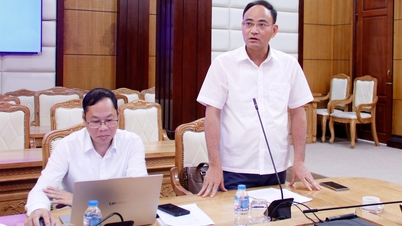
Deputy Minister of Industry and Trade Nguyen Sinh Nhat Tan. |
Deputy Minister of Industry and Trade Nguyen Sinh Nhat Tan affirmed: “We also want to emphasize that the transition roadmap is built in a step-by-step manner, with thorough impact assessments, and will not be implemented abruptly. During the implementation process, the Ministry of Industry and Trade will continue to coordinate with other ministries, sectors, and businesses to ensure stable supply, fuel quality, consumer rights, and especially, the Ministry will continue to provide more transparent information to reassure people about using the fuel.”
Preparing for the E10 gasoline rollout: Sharing about the preparations for the supply of E10 gasoline, Deputy Minister of Industry and Trade Nguyen Sinh Nhat Tan stated that immediately after the Ministry of Industry and Trade issued Circular No. 50/2025/TT-BCT regulating the roadmap for applying the blending ratio of biofuels with traditional fuels in Vietnam, the Ministry of Industry and Trade coordinated with ministries, sectors, localities and businesses to implement many solutions simultaneously to ensure that the transition takes place stably and does not disrupt the market.
To date, preparations have been largely completed in all three stages: the supply of E100 ethanol, blending capacity, and the retail distribution system.
Specifically, regarding the supply of ethanol (E100), with the country's gasoline consumption at approximately 1 million m³/month, the required amount of E100 is about 100,000 m³/month. From domestic production sources of approximately 25,000 m³/month and imports of approximately 75,000 m³/month, businesses have essentially been able to proactively meet the blending needs.
Regarding blending capacity, as of the end of May 2026, 13 out of 26 major petroleum trading companies nationwide have invested in or are in the process of investing in biofuel blending stations with a total blending capacity exceeding 1 million m³/month, surpassing the national petroleum demand (approximately 1 million m³/month). Of these, 3 enterprises have been licensed to blend with a capacity of approximately 890,000 m³/month, and 10 enterprises are awaiting licenses to blend E10 gasoline with a capacity of approximately 297,600 m³/month.
Additionally, the Binh Son refinery can also blend E5 and E10 bioethanol with a capacity of approximately 20,000 - 40,000 m3/month in May 2026 and 70,000 - 90,000 m3/month from June 2026 onwards, when required.
Currently, the petroleum distribution infrastructure is the final link in the supply chain and plays a decisive role in bringing E10 bioethanol to the market. Unlike production and blending, the current distribution system has been comprehensively invested in nationwide, including main depots, central warehouses, retail outlets, and logistics systems. Therefore, the conversion from RON95 mineral gasoline to E10 mainly involves upgrading and adjusting operations, not requiring large-scale new infrastructure investment. Essentially, the distribution infrastructure to consumers is already ready to implement the roadmap.
E10 gasoline offers many benefits.
Sharing his views on the benefits of using E10 gasoline, Deputy Minister of Industry and Trade Nguyen Sinh Nhat Tan stated that the development and use of biofuels is a common trend in many countries around the world to reduce dependence on fossil fuels, protect the environment, and promote the transition to green energy. For Vietnam, the use of E5 and E10 gasoline brings many important benefits.
First and foremost are the environmental benefits. Biofuels contain ethanol blended from biofuels, which helps reduce emissions of CO₂, CO₂, and other pollutants during combustion, contributing to Vietnam's commitment to net-zero emissions by 2050.
Secondly, there are benefits in terms of energy security. Increasing the use of biofuels will contribute to reducing dependence on imported fossil fuels, diversifying energy sources, and enhancing national energy self-sufficiency.
Thirdly, there are socio-economic benefits. Developing biofuels will contribute to boosting agricultural production, ethanol processing industries, creating more jobs and outlets for some domestic agricultural products, reviving existing ethanol production plants, maximizing the economic purpose and effectiveness of the project, and continuing the development of new plants.
In particular, the transition to biofuels is not a sudden step, but has been implemented by Vietnam according to a roadmap over many years. Since 2018, E5RON92 gasoline has been distributed nationwide and has been operating stably to date. The implementation of E10 is the next step in the energy transition roadmap, in line with international trends and Vietnam's sustainable development requirements.
Regarding concerns about the compatibility of vehicle engines with E10 gasoline, Deputy Minister of Industry and Trade Nguyen Sinh Nhat Tan emphasized that the Ministry of Industry and Trade has coordinated with specialized agencies, universities, engine and fuel experts, automobile and motorcycle manufacturing associations, and related businesses to assess the compatibility of vehicles with E10 gasoline.
"Through review, assessment, and reference to international experience, it has been shown that most cars and motorcycles currently in circulation in Vietnam can use E10 gasoline as recommended by the manufacturers. In fact, E10 is currently widely used in many countries such as the US, Brazil, Thailand, and the Philippines," Deputy Minister Tan stated.
Furthermore, Vietnam has also conducted trials and practical deployments of E10 gasoline in the distribution systems of several large enterprises before widespread implementation. To date, there have been no scientifically-founded reports or official technical conclusions indicating that E5 or E10 gasoline causes widespread negative impacts on vehicle engines.
However, for some very old vehicles, those that are rarely used, or those with poorly maintained fuel systems, the Ministry of Industry and Trade recommends that people regularly check and maintain their fuel systems and use fuel as recommended by the manufacturer to ensure efficient operation.
Deputy Minister of Industry and Trade Nguyen Sinh Nhat Tan affirmed: “The roadmap outlined in Circular 50 clearly states: Firstly, the transition to using E10 gasoline, while continuing to distribute E5RON92 gasoline. The main goal is to serve older vehicles that are not yet compatible with E10 gasoline. We have also estimated that the roadmap for E5 gasoline will continue for another 5 years, meaning from now until 2030. This will ensure compatibility with all vehicles currently in circulation. The Ministry's view is that the development of biofuels must go hand in hand with the requirements of ensuring technical safety, fuel quality, and consumer rights.”
Deputy Minister Nguyen Sinh Nhat Tan shared that, in the coming time, the Ministry of Industry and Trade will continue to closely coordinate with ministries, sectors, localities and businesses to implement a comprehensive range of solutions.
First and foremost, ensure a stable supply of E5 and E10 gasoline to the market; closely monitor supply and demand, prices, and the blending capacity of businesses to prevent supply disruptions during the transition process.
Secondly, it is necessary to strengthen the inspection and supervision of the quality of biofuels from the blending, storage, transportation to retail distribution stages to ensure that all E5 and E10 gasoline circulating in the market meets the correct technical standards.
Thirdly, we need to continue reviewing and improving mechanisms and policies to remove obstacles for businesses in investing in infrastructure for blending, storing, and distributing biofuels.
Fourth, it is necessary to strengthen communication efforts, providing scientific, transparent, and accurate information so that people understand biofuels correctly, avoiding panic or unverified information that could affect the market.
The Ministry of Industry and Trade is also studying mechanisms for receiving feedback and providing technical support to citizens and businesses during the initial implementation phase through management focal points, petroleum distribution companies, and appropriate information channels. The Ministry of Industry and Trade's view is that the implementation of the biofuel roadmap must ensure a balance between the goals of green energy transition, environmental protection, stabilization of the petroleum market, and the legitimate rights of citizens and businesses. |
Source: https://baobacninhtv.vn/xang-sinh-hoc-e10-khong-ap-dat-hay-han-che-quyen-lua-chon-cua-nguoi-tieu-dung-postid446621.bbg

![[Photo] Ba Lang An Lighthouse - the "eye of the sea" amidst the "rock museum" of Quang Ngai province.](https://vphoto.vietnam.vn/thumb/1200x675/vietnam/resource/IMAGE/2026/05/29/1780038698840_anh-man-hinh-2026-05-29-luc-14-10-42.png)
![[Image] Pleasant weather helps students enter the 10th grade entrance exam with confidence.](https://vphoto.vietnam.vn/thumb/1200x675/vietnam/resource/IMAGE/2026/05/29/1780034401612_ngay-1-thi-lop-10-minh-duy-8-5009-jpg.webp)

































































Comment (0)