

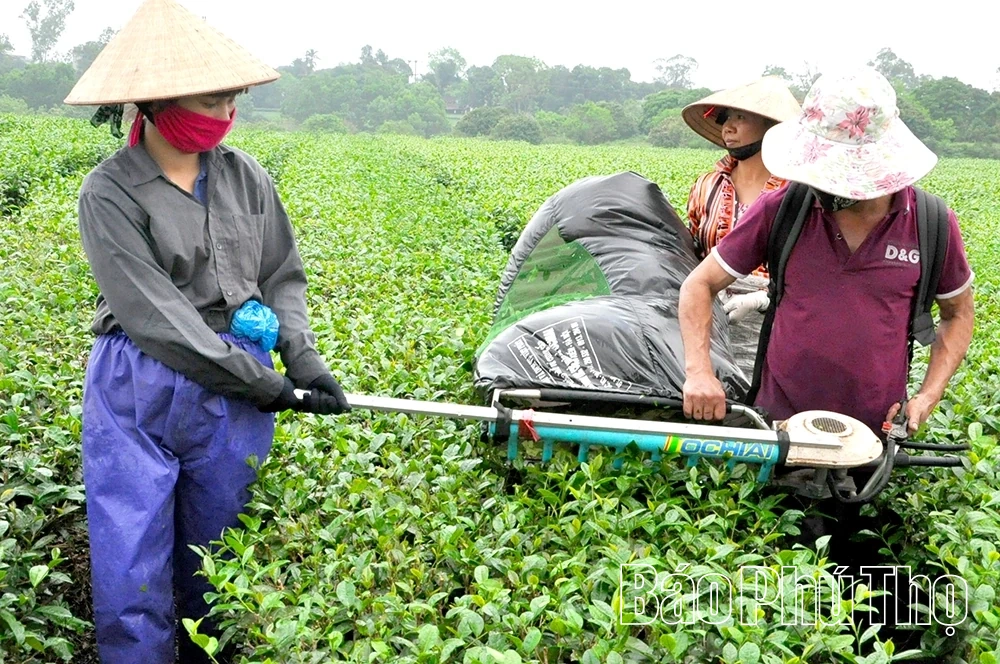
People in Yen Ky commune are harvesting tea.
According to statistics, Phu Tho province has 14,500 hectares of tea plantations, with a fresh tea leaf production of over 193,000 tons (ranking 3rd nationwide). The tea plantations are distributed across 58 communes and wards in the former Phu Tho and Hoa Binh provinces, with 28 communes having over 100 hectares and 4 communes (Minh Dai, Long Coc, Yen Ky, and Tay Coc) having over 1,000 hectares, forming concentrated growing areas that facilitate the application of mechanization in production.
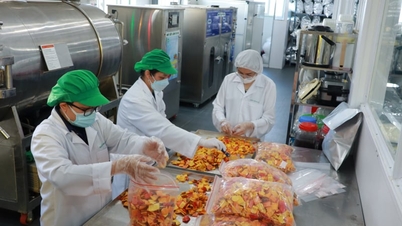
In the province, there are 76 enterprises involved in tea production and processing, with an average processing output of over 60,000 tons per year, meeting the increasing demand of the domestic and export markets. Approximately over 20% of these enterprises have invested in technology for processing green tea and other processed green tea products such as tea bags, matcha, and bottled beverages.
Notably, Phu Da Tea Company (Phu Long Tea Factory), SSOE Tea Company Limited, Cozy Tea Company, and several companies focused on developing specialty and distinctive tea products such as Thanh Ba purple bud tea from UT Tea Investment and Development Company Limited, and Pa Co Shan Tuyet tea from Phuong Huyen Company Limited...

Exporting tea through the value chain enhances the product value of Phu Tho tea. Photo: Black tea processing line for export at Hoai Trung Tea Co., Ltd., Chi Tien commune.
Phu Tho province also has a large area of tea plantations applying high standards of safe production. The percentage of area applying IPM (Integrated Pest Management) and ICM (Integrated Crop Management) reaches 90.8%, and the area of tea plantations applying good and safe production processes (GlobalGAP, RA, VietGAP, organic) is 4,300 hectares. The entire province also has 4,045 hectares that have been granted 162 domestic tea growing area codes.
At the same time, the province has established concentrated tea production areas in key communes with an area of over 6,600 hectares. In addition, many localities in the province with large tea growing areas have formed safe tea production sites linked to tourism promotion and development, considered among the most unique in Vietnam, such as the Long Coc and Thanh Thuy tea hills; and the ancient tea hills in Duc Nhan, Pa Co, Van Son, and Xuan Son National Park.
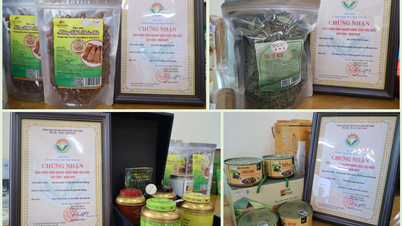
The entire province has developed 38 tea products that have been recognized as OCOP-rated products with 3 stars or higher, including 19 3-star products, 17 4-star products, and 2 5-star products from 21 entities. Businesses, cooperatives, and tea production and processing groups have strengthened production linkages and cooperation with tea growers, establishing 25 production and consumption chains for tea products with an output of over 22,600 tons per year.
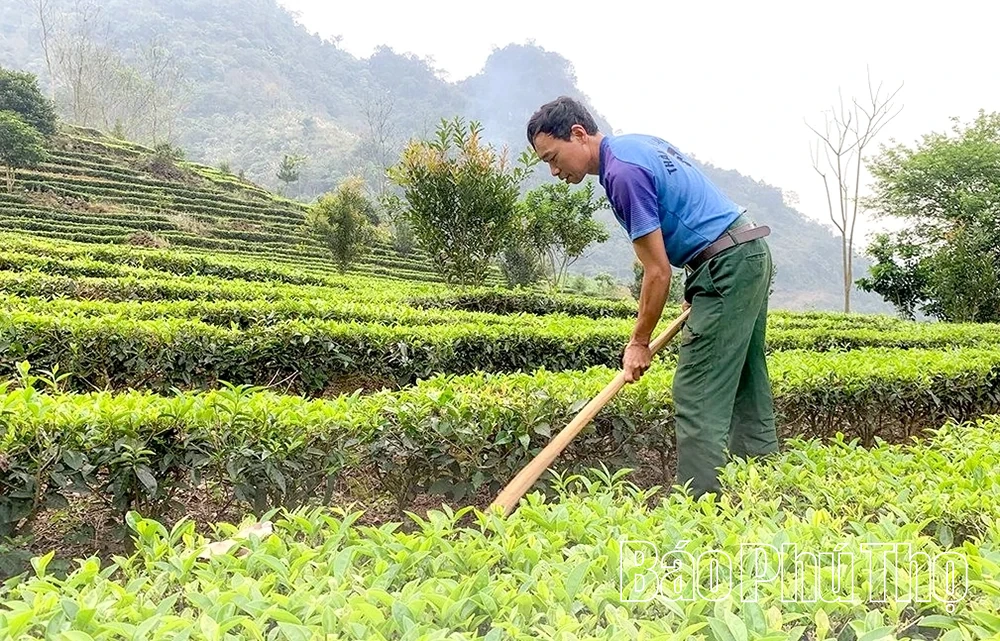
People in Tay Coc commune are applying ICM and organic farming methods in tea production, creating a foundation for building a value chain.
Mr. Nguyen Truong Giang, Deputy Head of the Department of Crop Production and Plant Protection, stated: Phu Tho has a significant advantage with its large-scale, concentrated raw material areas, facilitating the standardization of varieties, processes, and management of planting area codes. The province has a long tradition of tea cultivation and processing, a "local story" to build brands and specialty product lines, beautiful landscapes, and national identity values (Hung Temple, Long Coc and Tay Coc tea hills, Xuan Son ancient tea garden). The large number of businesses and cooperatives makes it easy to organize stable supply chains for large orders as well as niche market products. Furthermore, Phu Tho is the largest raw material area for the Vietnam Tea Corporation (Vinatea). This is a key advantage for the province to continue promoting the development of value chains, especially high-end tea value chains.
In accordance with Resolution No. 41/2025/NQ-HĐND of the Provincial People's Council, during the period 2026-2030, the province will support intensive cultivation to improve the productivity and quality of high-quality tea growing areas with a scale of 3 hectares or more, totaling approximately 1,750 hectares (of which, the area of Shan Tuyet tea is about 500 hectares) with a maximum support level of 50 million VND/ha.
At the same time, the province continues to maintain the existing production and consumption chain of tea products and develop new chains throughout the province. This includes maintaining a stable tea cultivation area of approximately 14,000 hectares; reviewing and identifying areas for replanting and re-planting of about 2,500 hectares (approximately 500 hectares of Shan Tuyet tea and 2,000 hectares of raw tea for processing into green and black tea); ensuring 80% of the tea area applies good and safe production practices; managing over 70% of concentrated tea production areas with registered planting area codes and traceability; and establishing and developing over 5 points to promote the tea culture of the ancestral land, linked to the development of experiential tourism, enhancing brand value, and increasing service revenue, contributing to building an effective and sustainable tea value chain.
Quan Lam
Source: https://baophutho.vn/xay-dung-chuoi-gia-tri-cho-cay-che-252085.htm
![[Photo] Secretary of the National Assembly Party Committee, Chairman of the National Assembly presides over the meeting of the Standing Committee and Executive Committee of the National Assembly Party Committee.](https://vphoto.vietnam.vn/thumb/1200x675/vietnam/resource/IMAGE/2026/06/03/1780480353201_ndo_br_bnd-2585-jpg.webp)
![[Photo] General Secretary and President To Lam presides over a meeting with the Central Organizing Committee.](https://vphoto.vietnam.vn/thumb/1200x675/vietnam/resource/IMAGE/2026/06/03/1780482764658_a1-bnd-4741-3342-jpg.webp)








![[Infographics] Functional groups of digital applications in Thanh Hoa](https://vphoto.vietnam.vn/thumb/402x226/vietnam/resource/IMAGE/2026/06/03/1780479770325_infographics-ca-w1200t0-di2622d199d3163702t11359l1-cac-nhom-chuc-n3.webp)






































![[Video] Sunset at Lap An Lagoon – Where the sun sets over the fishing nets](https://vphoto.vietnam.vn/thumb/1200x675/vietnam/resource/IMAGE/2026/05/31/1780192137701_beach-landscape-sea-water-nature-grass-745871-pxhere-com.jpeg)




























Comment (0)