

 |
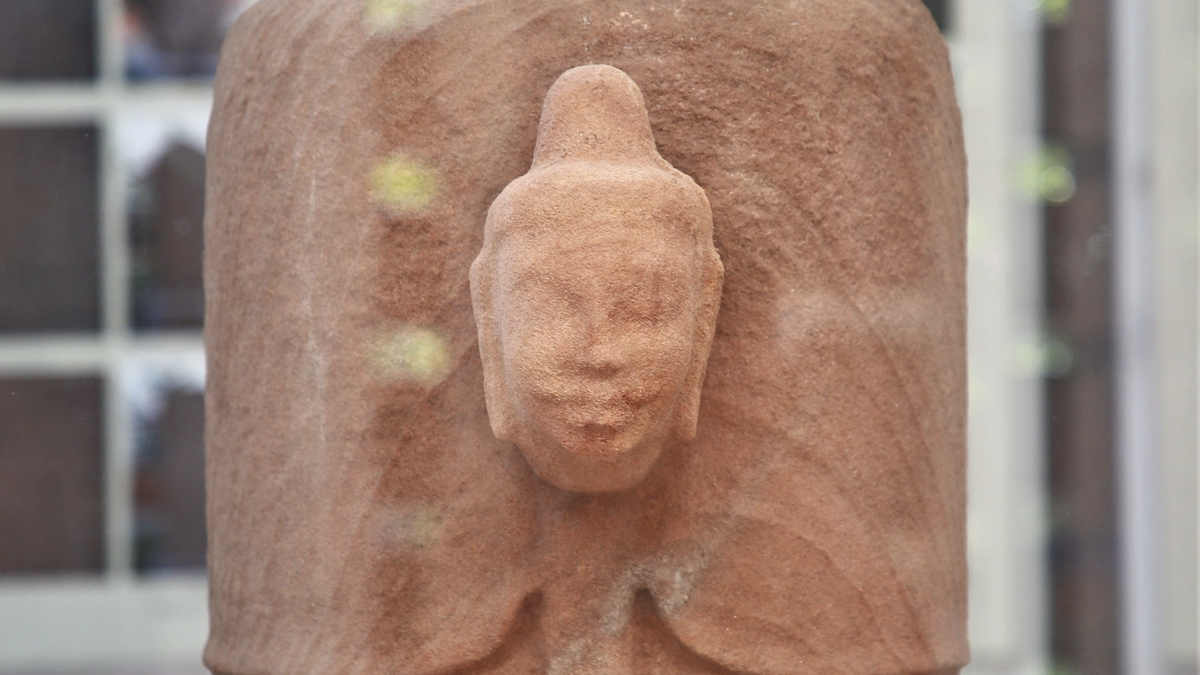
| Tan Lai archaeological site, Tran Bien ward - a destination for people to learn about culture and beliefs. Photo: My Ny |
Preserving, protecting, and promoting the value of archaeological sites in Dong Nai not only demonstrates respect for the past but also extends the cultural heritage, allowing it to be awakened and endure through time.
Archaeological sites – extending the stream of history.
In 2026, it will be two years since the Long Hung archaeological site in Long Hung ward, Dong Nai province, was recognized as a provincial-level historical site. Located within the Long Hung communal house complex, the site was researched, explored, and excavated by scientists in 1988 and 2020. Through these excavations, many artifacts such as coarse pottery, earthenware, bricks, and tiles have been discovered, reflecting traces of structures from the Oc Eo culture period (around the 7th-12th centuries) and the Dai Viet culture - Nguyen dynasty (from the 17th to the end of the 18th centuries).
According to Chau Ngoc Tho, Deputy Head of the Long Hung Temple Management Board: Since the site was recognized as a provincial-level historical site, the work of protecting, preserving, and promoting its value has received increasing attention. Especially in the early days of spring, the site welcomes many local people, tourists, and students who come to visit and learn. Not only do they take souvenir photos, but many young people also proactively learn about the formation and development of the site as well as the history of the Long Hung area. “We feel very warm-hearted. That is the greatest ‘spring blessing’ for those who keep the temple and the heritage,” Mr. Tho shared.
Not far from Long Hung, archaeological sites such as Go Me (Phuoc An commune), Cau Sat (Binh Loc ward), Doi Phong Khong (Tri An commune), and Tan Lai (Tran Bien ward); or further afield, archaeological sites of the circular earthen mound type, mostly discovered in Binh Long, Loc Ninh, and Bu Gia Map… have also been identified, studied, demarcated for protection, and classified in recent years, contributing to a more vivid "portrayal" of the history and culture of the Dong Nai region.
According to Nguyen Cao Thanh Sang, Vice Chairman of the People's Committee of Loc Quang commune, the commune currently manages two archaeological sites listed in the inventory: Loc Hiep circular earthen citadel (Hiep Tam A hamlet) and Loc Quang 2 circular earthen citadel (Bu Tam hamlet). Over the past period, the commune has identified the preservation and promotion of heritage values as a key task in the local socio-cultural development. In the period 2026-2030, the commune will continue to complete the scientific documentation of the sites; promote the application of technology and digitization of heritage, gradually building a cultural database to create a foundation for the management and promotion of the sites' values.
In Binh Tan commune, Dong Nai province, the management and preservation of archaeological sites are being implemented comprehensively. This is one of the localities with the authority to manage numerous archaeological sites, including one site classified at the provincial level and three sites included in the inventory. These include: Long Hung Circular Earthen Fortress; Long Hung 2 Circular Earthen Fortress; Long Binh 1 Circular Earthen Fortress; and Long Binh 8 Circular Earthen Fortress. These sites not only possess archaeological and historical value but also serve as important sources of information for studying the settlement patterns and social organization of ancient inhabitants.
Digital archaeological maps and expectations for a new phase.
Over the years, Dong Nai has gradually built a digital database of archaeological sites. In particular, in northern Dong Nai, during 2013-2014, the cultural sector conducted a survey and mapping project of archaeological sites, recording dozens of circular earthen ramparts under rubber trees; using GPS technology to measure and map detailed earthen ramparts and surrounding moats, discovering many new archaeological sites. By 2025, 69 archaeological sites of the circular earthen rampart type had been officially announced.
The artifacts recovered from archaeological excavations are now stored and displayed at the Dong Nai Museum, introduced to the public through various exhibitions. In addition, the museum conducts a 360-degree virtual reality tour of the Hang Gon Megalithic Tomb, a special national archaeological site, and showcases it on its website and fanpage.
The work of collecting data and developing GIS mapping software for archaeological sites in southern Dong Nai province during the 2021-2023 period has received attention from relevant units and localities. The Dong Nai Museum has collaborated with relevant units and localities to update information on 130 archaeological sites and discovery locations belonging to prehistoric, early historical, and historical periods, divided into two groups: 102 prehistoric sites and discovery locations; and 28 early historical/historic sites.
Dr. Nguyen Van Quyet, a researcher of Dong Nai's culture and history (in Tran Bien ward), said: "After the administrative boundary merger, Dong Nai has a rich system of relics, many of which are classified archaeological sites. This is an important foundation for the locality to implement the work of preserving and managing relics and promoting the value of heritage. In particular, the application of technology in the preservation of archaeological relics has opened up opportunities to bring heritage closer to the community, especially through education, research, and cultural tourism."
The application of GIS technology in the management of archaeological sites has been helping agencies and units use digital databases as a foundation, closely linking them with specialized archaeological data. Not only does it store information about sites in digital form, GIS maps also support efficient and accurate management, while allowing for online data retrieval and exploitation through thematic maps and statistical systems, contributing to "awakening" the value of heritage in contemporary life.
My Ny
Source: https://baodongnai.com.vn/dong-nai-cuoi-tuan/202602/xuan-ve-danh-thuc-di-tich-khao-co-o-ong-nai-f502ab7/

![[Photo] General Secretary and President To Lam presides over a meeting with the Central Organizing Committee.](https://vphoto.vietnam.vn/thumb/1200x675/vietnam/resource/IMAGE/2026/06/03/1780482764658_a1-bnd-4741-3342-jpg.webp)
![[Photo] First session of the 14th Congress of the Vietnam Trade Union](https://vphoto.vietnam.vn/thumb/1200x675/vietnam/resource/IMAGE/2026/06/03/1780465947883_ndo_br_img-3852-jpg.webp)
![[Photo] Secretary of the National Assembly Party Committee, Chairman of the National Assembly presides over the meeting of the Standing Committee and Executive Committee of the National Assembly Party Committee.](https://vphoto.vietnam.vn/thumb/1200x675/vietnam/resource/IMAGE/2026/06/03/1780480353201_ndo_br_bnd-2585-jpg.webp)













![[Infographic] Over 1.2 million candidates registered for the 2026 High School Graduation Exam](https://vphoto.vietnam.vn/thumb/402x226/vietnam/resource/IMAGE/2026/06/03/1780496872518_w_20260603205412.jpeg)



































![[Video] Sunset at Lap An Lagoon – Where the sun sets over the fishing nets](https://vphoto.vietnam.vn/thumb/1200x675/vietnam/resource/IMAGE/2026/05/31/1780192137701_beach-landscape-sea-water-nature-grass-745871-pxhere-com.jpeg)


































Comment (0)