

On April 23, 2026, at its first session, the 16th National Assembly voted to pass Law No. 07/2026/QH16 on Beliefs and Religions. This law was officially promulgated by the President under Decree No. 07/2026/L-CTN on April 26, 2026, and will officially come into effect on January 1, 2027. The enactment of this new law aims to replace the entire 2016 Law on Beliefs and Religions, thereby fully institutionalizing the Party's policies, thoroughly addressing practical shortcomings, and simultaneously meeting the requirements for streamlining the government apparatus (two-tiered local government) and promoting national digital transformation. From a legal and practical perspective of state management, the 2026 Law on Beliefs and Religions has six groundbreaking new points.
Establishing legal identification and strict management of religious and belief activities in cyberspace.
This is a groundbreaking and epoch-making step. For the first time, activities in the digital environment are directly regulated by law. The law has added a definition in Clause 17, Article 2: " Religious and faith-based activities in cyberspace are the use of cyberspace by organizations and individuals, as stipulated in this Law, to carry out religious and faith-based activities."
The feasibility of the regulation is realized in Article 8 when the Law establishes a clear management mechanism: requiring individuals and organizations to notify and register with competent state agencies when operating in cyberspace. In particular, the Law stipulates mandatory responsibility for organizations and businesses providing services in cyberspace and telecommunications to implement technical solutions and coordinate the removal and blocking of infringing content. Furthermore, Clause 6 of Article 7 adds a provision strictly prohibiting the act of: "Using cyberspace, artificial intelligence, or technology to violate laws on belief and religion."
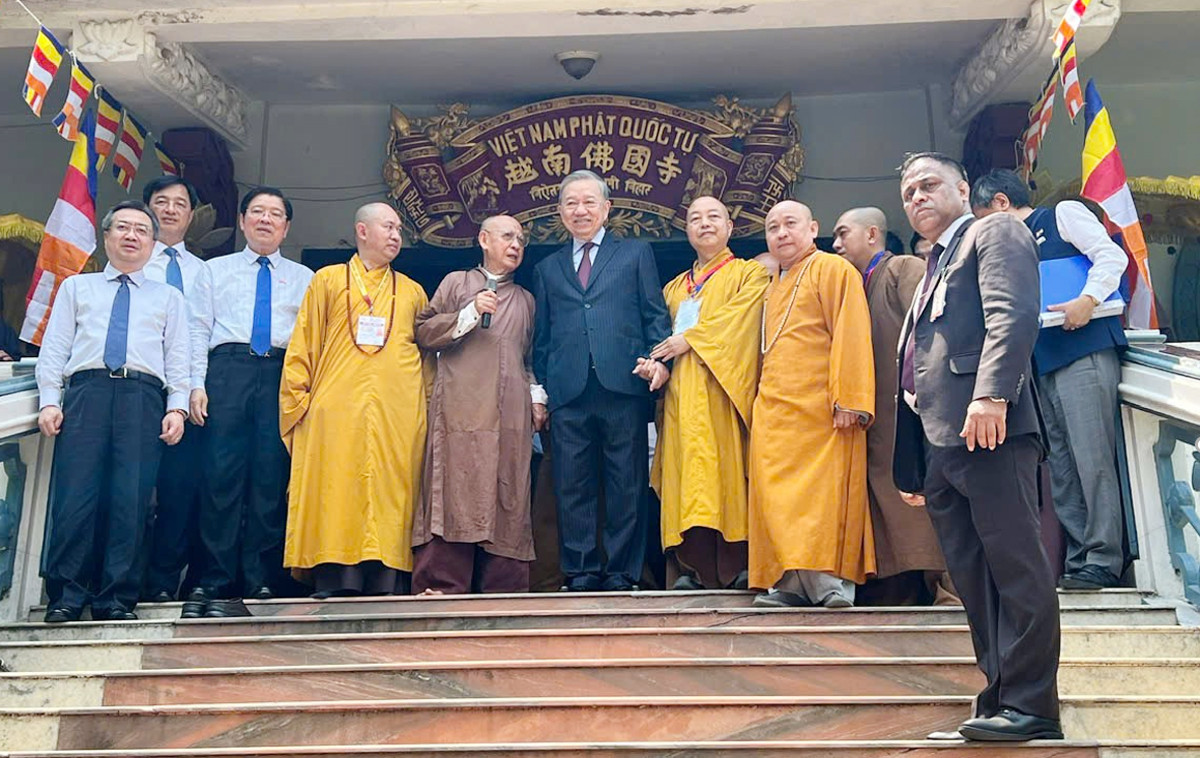
General Secretary and President To Lam and the high-level Vietnamese delegation visit Vietnam Buddhist Temple during their visit and working trip to India. (Archival photo)
Thorough decentralization and delegation of power are linked to the two-tiered local government structure.
The most significant change in the structure of state administrative authority is the complete abolition of the authority of the People's Committees at the district level, aiming to operate a two-tiered local government model. At the central level, the Ministry of Ethnic Minorities and Religions is entrusted with the responsibility of unified state administration.
The powers previously held by the district level are now being further decentralized to the provincial People's Committee or directly transferred to the commune-level People's Committee.
Typically, the People's Committee at the commune level has the authority to receive notifications and approve the organization of congresses, ceremonies, and religious lectures within the geographical area of a single commune. This ensures autonomy, close attention to the grassroots level, and enhances the capacity for direct accountability of local authorities.
Breakthrough in administrative procedure reform: Shifting the mindset from "pre-approval" to "post-approval"
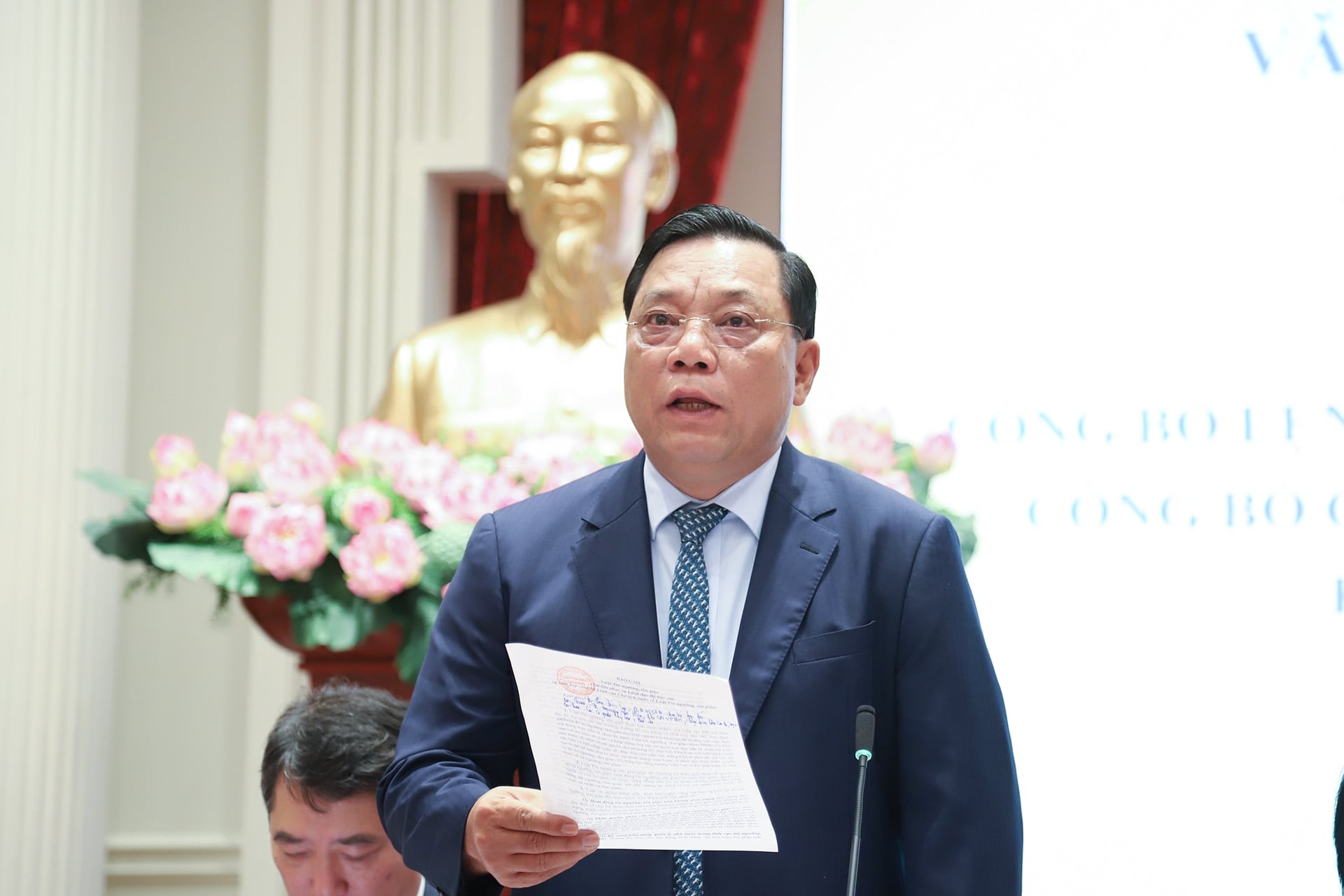
Adhering to the legislative principle that "Laws should only stipulate matters of a fundamental nature," the 2026 Law has omitted detailed regulations on required documents and processing times, entrusting the Government with the authority to provide detailed regulations to ensure flexibility and prevent obsolescence.
Many administrative procedures have been drastically reduced and simplified: shifting from "request" to "registration"; and from "registration" to "notification". For example, religious activities at religious establishments now apply a "notification" mechanism (from pre-inspection to post-inspection). At the same time, the Law abolishes the requirement for Vietnamese citizens to submit criminal record certificates, reflecting the spirit of building a digital government that puts the people at the center.
Supplementing with deterrent and flexible state management measures.
In order to build a culture of respect for the rule of law and promote preventive measures, the Law adds sharp specialized management sanctions.
Revocation measures : The state agency shall revoke the document approving the registration of concentrated religious activities if the group does not organize activities within 6 months (Clause 5, Article 19). The certificate of registration of religious activities shall also be revoked if the organization does not operate for 1 year (Clause 3, Article 20).
Suspension measures: Adding the authority to suspend or request the suspension of an official's position in cases of violations of Article 7 or the use of forged documents (Article 33).
Flexible personnel registration mechanism: The law clearly defines the process: If it is an appointment/election, the registration documents must be submitted first; if it is through election at the congress, the notification of results must be submitted later (Article 31), resolving difficulties for religious organizations.
The core role of the "local community" is strongly emphasized.
The 2026 Law on Beliefs and Religions has added "residential communities" as a subject of application and defined it in its fundamental concepts (Articles 1 and 2). Defining belief as a faith that brings spiritual peace to "individuals and residential communities" demonstrates compatibility with the law on cultural heritage. Notably, Article 14 stipulates that the election of representatives to the management board of religious establishments is the right of the residential community, organized by the People's Committee in coordination with the Fatherland Front Committee, promoting genuine grassroots democracy.
Ensuring the consistency of the legal system through referencing techniques.
Addressing the overlaps in the 2016 Law (which previously included Articles 64 and 65 specifically regulating the handling of violations), the 2026 Law completely abolished these provisions. From a legislative perspective, this is a progressive reference technique aimed at adhering to the principle of uniformity within the legal system. When violations occur (especially in cyberspace), authorities will directly apply sanctions under the Law on Handling Administrative Violations, specialized decrees on telecommunications and cybersecurity, or pursue criminal liability under the Penal Code. This mechanism creates a multi-layered legal framework, ensuring no violations go unpunished while providing a strong deterrent against hostile forces exploiting religion for personal gain and subversive activities.
The Law on Beliefs and Religions of 2026 is a highlight in the work of building and perfecting institutions. The law not only expands the legal framework to protect the genuine right to freedom of belief and religion of the people, but also provides sharp tools for effective state management in the digital age, contributing to maintaining political and social stability and national unity.
Source: https://vietnamnet.vn/luat-tin-nguong-ton-giao-2026-nhung-diem-dot-pha-2455811.html



































































































Comment (0)