
|
People struggled to get around on the streets under the scorching sun in Hanoi on May 25th. |
On May 25th, Hanoi and many provinces in Northern and Central Vietnam experienced exceptionally intense heat. Notably, Hanoi recorded a temperature of 40.7 degrees Celsius at the Lang weather station, the highest in the country.
Speaking to Tri Thức - Znews , Dr. Truong Ba Kien - Deputy Executive Director of the Center for Meteorological and Climate Research, Institute of Meteorology, Hydrology, Environment and Marine Science, Ministry of Agriculture and Environment - said that this heatwave is the combined result of many weather and urban factors.
Accordingly, from around May 21-22, the minor summer rain pattern will weaken and end, after which the hot low-pressure area in the West will expand to the Northern and Central regions, causing widespread increased heat.
At the same time, the southwest monsoon winds of summer become more active. When these southwest monsoon winds cross the Truong Son mountain range, causing the Foehn effect, the Central and North Central regions of Vietnam become noticeably hot and dry.
"In Northern Vietnam, especially the Northwest region and parts of the northern mountainous areas, the Foehn effect also occurs when the air current crosses the Hoang Lien Son mountain range and the western mountain ranges, contributing to a rise in temperature," Mr. Kien explained.
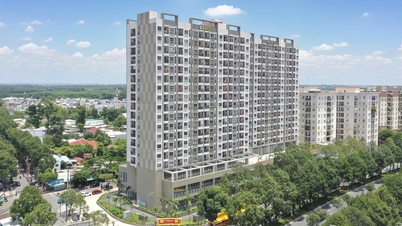
Hanoi, in particular, besides the impact of general weather patterns, is strongly affected by the urban heat island effect. The density of concrete, asphalt roads, high-rise buildings, traffic, air conditioning, and energy-consuming activities cause the urban surface to absorb heat strongly during the day, then dissipate heat slowly in the evening and at night. Meanwhile, when there is little or no wind, and high humidity, the body has difficulty dissipating heat, making the feeling of stuffiness and heat even more pronounced.
"Hanoi becoming one of the hotspots of this heatwave is due to the expanding hot low-pressure system, combined with the strong urbanization characteristics of the capital," Mr. Kien concluded.
Not unusual
Given the weather conditions in recent days, many people believe that this year's temperatures have arrived earlier and are more extreme than in previous years. However, according to experts, the appearance of hot weather at this time is not unusual.
In terms of climate patterns, the period from late May to July is when Northern Vietnam typically experiences peak heat waves. A notable feature of this period is the widespread and intense heat right from the beginning of summer, with temperatures exceeding 40°C in some areas. Meanwhile, the feeling of oppressive heat is much stronger in urban areas due to lower humidity, weaker winds, and surface heat accumulation.

|
The combination of weather patterns and the urban heat island effect is causing intense heat in Hanoi. |
"In other words, if we only consider the appearance of hot weather, this is still a phenomenon consistent with the summer season in Northern Vietnam. But if we consider the level of oppressive heat, its impact on health, daily life, and electricity consumption in urban areas, this period is noteworthy," Mr. Kien assessed.
The Deputy Executive Director of the Center for Meteorological and Climate Research also noted that in the context of climate change and rapid urbanization, heatwaves tend to become more intense, longer-lasting, or feel more extreme, especially in large cities like Hanoi.
However, concluding whether a particular heatwave is "unusual" or "record-breaking" requires a long-term series of observational data, comparisons with multi-year averages and historical records, rather than relying solely on subjective feelings or a few days of high temperatures.
How long will this heatwave last?
In the short term, widespread heatwaves are expected to persist in Northern and Central Vietnam for the next few days. However, from around May 28th, the heatwave is expected to gradually subside as the weather system causing the heat weakens, and localized thunderstorms may occur in some areas.
However, the reduction in heat doesn't mean the weather will cool down completely. Temperatures in Hanoi and many areas of Northern Vietnam remain quite high, possibly around 30-31 degrees Celsius in the late afternoon or at night, combined with high humidity, so the feeling of stuffiness persists, especially in the inner city after many days of continuous heat buildup.
Therefore, people should limit outdoor activities during peak sunlight hours, usually from around 11 am to 4 pm; drink plenty of water; use protective clothing when moving around; and avoid sudden temperature changes between outdoors and air-conditioned rooms.
In particular, vulnerable groups such as the elderly, young children, people with underlying health conditions, and outdoor workers need special attention. In large cities like Hanoi, it is also necessary to proactively prevent the risk of electrical overload and fires caused by the continuous use of cooling equipment.

|
People should limit going outside during peak hours of intense heat and cover their bodies well. |
In addition, the risk of thunderstorms and other extreme weather phenomena following a series of hot days should also be taken into consideration.
Mr. Kien explained that after many days of hot weather, the ground temperature is high, and the air near the ground is intensely heated, increasing atmospheric instability. When a low-pressure trough, wind convergence, or weak cold air mass comes into play, convective cloud masses can develop rapidly, causing strong thunderstorms.
During the transition from intense heat to thunderstorms, the North of Vietnam may experience dangerous weather phenomena such as tornadoes, lightning, hail, strong gusts of wind, and localized heavy rainfall in short periods. In urban areas like Hanoi, if heavy rain is concentrated in a short time, the risk of localized flooding in low-lying streets and areas with poor drainage is entirely possible.
"People should not be complacent when the weather cools down after the heatwave, as this is also the time when strong thunderstorms are likely to occur. When there is a thunderstorm warning, people should avoid taking shelter under large trees, billboards, or power poles; avoid moving through areas with deep flooding; and regularly monitor short-term weather forecasts and warnings from meteorological and hydrological agencies," Mr. Kien advised.
Source: https://znews.vn/ly-do-ha-noi-thanh-chao-lua-nong-nhat-ca-nuoc-post1654180.html


![[Photo] General Secretary and President To Lam presides over the meeting to approve the draft report on the results of the second inspection by the Politburo of the Standing Committee of the Hanoi City Party Committee.](https://vphoto.vietnam.vn/thumb/1200x675/vietnam/resource/IMAGE/2026/05/26/1779789811432_a2-bnd-4430-9620-jpg.webp)



















































































Comment (0)