

Grilled snakehead fish over a charcoal fire.
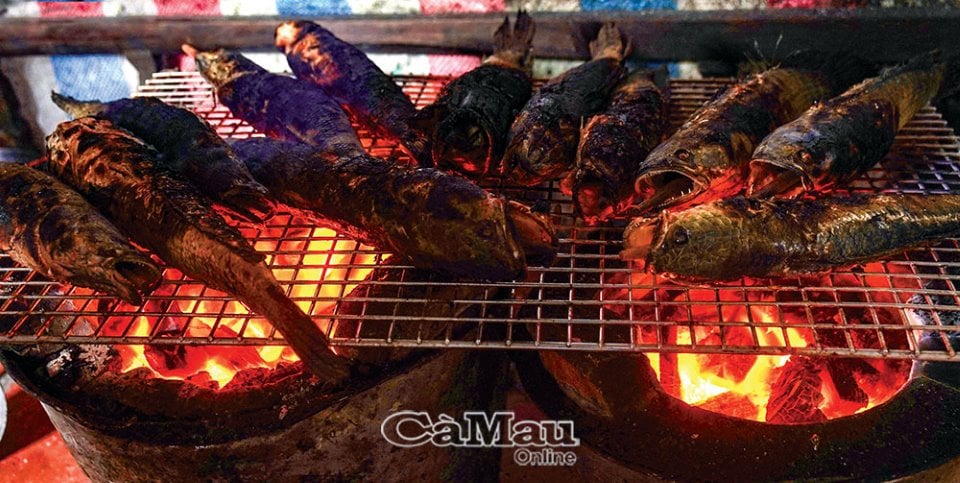
U Minh Ha is a freshwater area, so it is very rich in freshwater products, including snakehead fish. In the past, while many things were scarce, fish were abundant, especially large snakehead fish, each weighing 5-7 kg was commonplace. Every time they drained ponds, canals, and ditches, they would catch plenty of snakehead fish to skewer and grill. However, in recent years, the number of freshwater fish has decreased significantly, so the government encourages people in U Minh Ha to release freshwater fish along the banks to conserve this freshwater species, including the snakehead fish, a specialty of the U Minh forest region, in order to develop the economy , especially to serve tourists who come to visit and experience the area.
The best time to enjoy snakehead fish in the U Minh forest is from the 10th lunar month to the 1st lunar month. This is when the water level at the foot of the forest is highest, and the abundance of young fish provides delicious food for the plump snakeheads. Snakehead fish can be prepared in many delicious ways. As the saying goes: "First grilled, second sour soup, third braised, fourth boiled," the best is grilled snakehead fish over straw or charcoal from the Melaleuca tree, a type of charcoal that carries the rich flavor of the homeland. Grilled snakehead fish is a favorite among many diners. This dish is served with wild herbs, water lilies, and water spinach shoots...
The Elixir of the Underworld
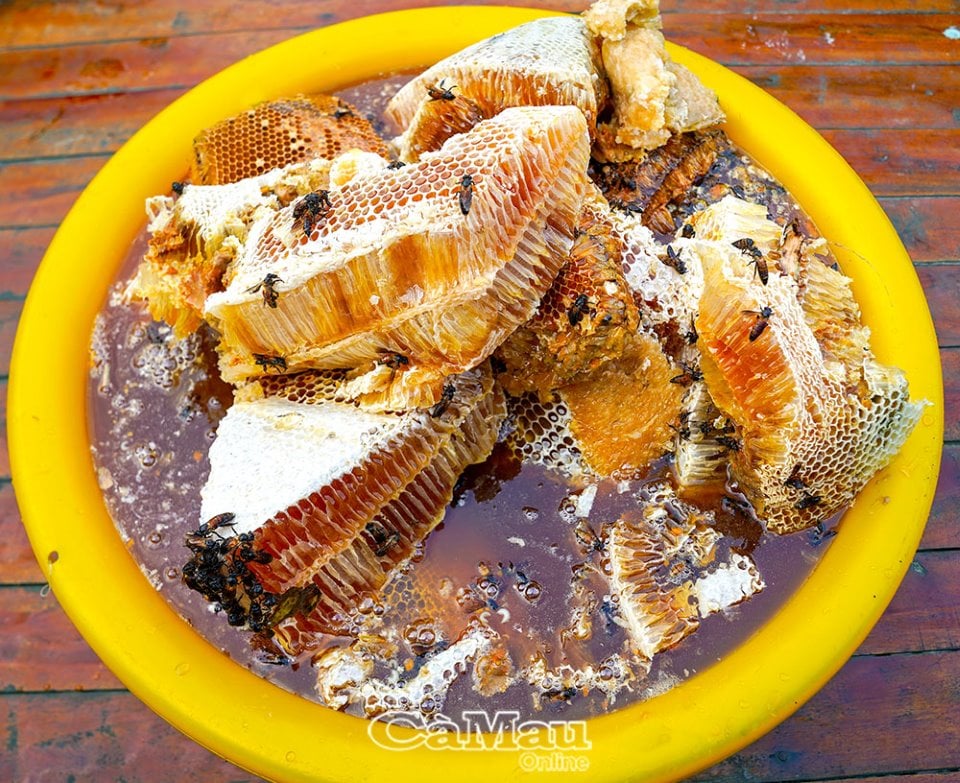
U Minh Ha boasts the largest area of melaleuca forest in Vietnam. It is also the "kingdom" of natural honey from melaleuca flowers and other wildflowers. Locally, this honey is often called Bach Hoa Cao, Bach Hoa Tinh, or the miraculous elixir of the melaleuca flower land. The renowned Vietnamese traditional medicine practitioner, Hai Thuong Lan Ong Le Huu Trac, considered honey to be the essence of a hundred flowers.
U Minh honey is harvested using a method of luring bee colonies to build nests, a technique that allows the people of U Minh to harvest several thousand tons of honey annually. Currently, the Department of Science and Technology of Ca Mau province has registered a trademark for the honey from the Melaleuca forest. This is an opportunity for the people of Phong Ngan Group to exploit their advantages to bring the U Minh Ha honey brand to domestic and international markets, contributing to the enrichment of the people and the socio-economic development of the locality. The Vietnam Record Organization also recognized the largest beehive in Vietnam using the method of luring bee colonies to build nests at the "U Minh Forest Fragrance - 2022" Festival.
A unique dish
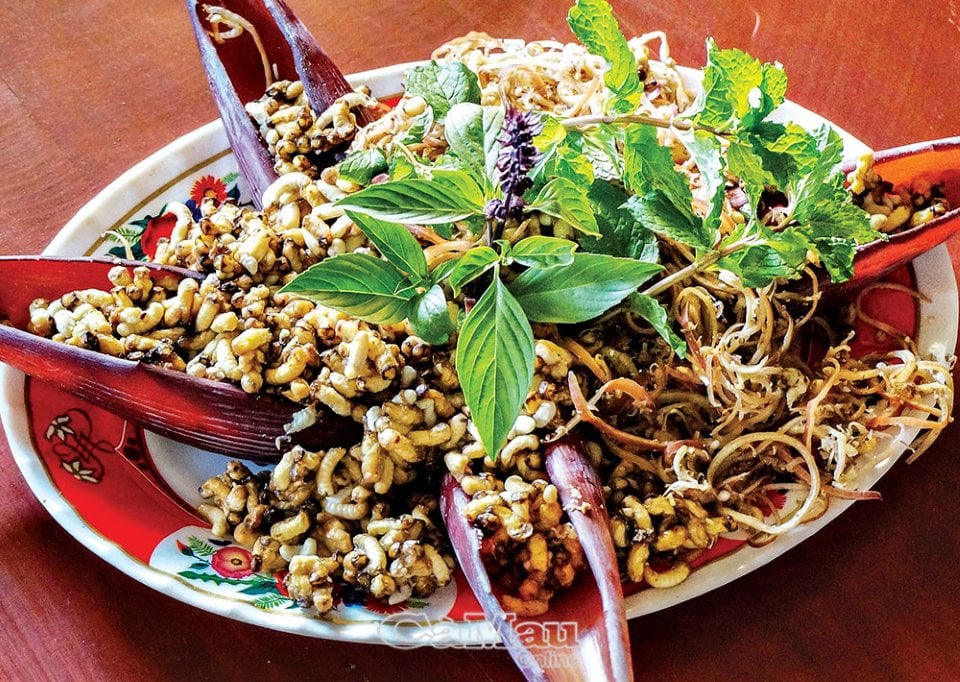
If U Minh forest honey is considered a miracle cure in the land of melaleuca flowers, then young honeybee larvae, a traditional folk food for generations, has now become a delicacy, always present at luxurious banquets for tourists whenever they travel and experience the U Minh Ha region.
Bee pupa salad is made from young bees. When harvesting honey, forest workers cut off a small amount of the bee's comb (called "removing the comb") to allow the bee colony to continue developing. The young bee comb is put into a pot of boiling water to melt the beeswax, and the young bee pupae float to the surface. Using a net, the young bees are scooped out, drained, and then processed. Bee pupae are prepared into many delicious dishes, such as battered and fried, bee pupae in fish sauce, and especially bee pupae mixed with banana blossom, a unique and popular dish from the forest region.
Fish hotpot with wild vegetables
This is a signature dish dating back to the time of land reclamation in the U Minh Ha forest. The main ingredients of U Minh fish sauce hotpot are fermented fish paste, freshwater fish, and wild vegetables such as water spinach, morning glory, water hyacinth, water lilies, young banana blossoms… and especially water chives.
Clean and drain the snakehead fish (tilapia, striped catfish, and other types of catfish), then marinate them with garlic, fish sauce, and sugar to remove the fishy smell. The broth is made with fresh coconut water, seasoned with sugar, seasoning powder, chili, garlic, and coriander. Boil the fish sauce with water, then strain to remove the bones. Season to taste, then add all the freshwater fish. U Minh fish sauce hotpot is best enjoyed hot over a charcoal fire, dipped in various wild vegetables – nothing beats that!
The Vietnam Record Organization (Vietkings) recognized the largest U Minh fish sauce hotpot in Vietnam at the "U Minh Forest Flavors - 2022" Festival, recently held in Ho Chi Minh City. The organization also announced 11 Vietnamese specialty dishes, natural specialties, and gift specialties that set Asian records according to the criteria for establishing Asian culinary values, including the U Minh fish sauce hotpot.
Eel stewed with noni leaves
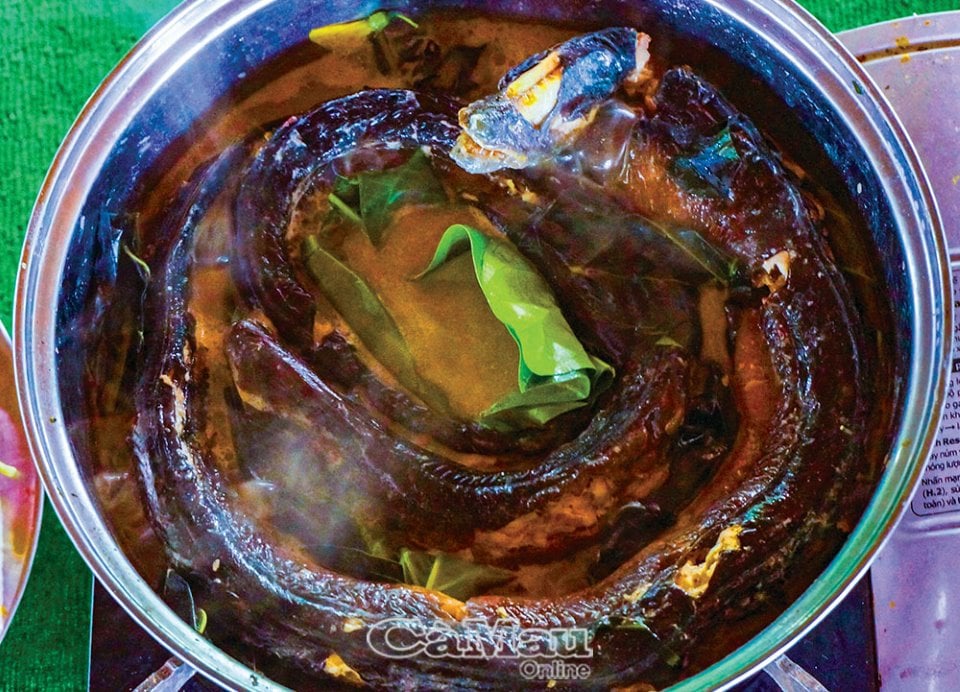
The U Minh Ha forest is full of fascinating stories. From the early days of clearing land and establishing villages in the South, there were chilling tales of giant king cobras, longer than a bamboo fishing rod, weighing several tens of kilograms, coiled around melaleuca trees across fishing canals; or snakehead fish weighing 5-6 kg, and countless snakes and turtles, some seemingly possessing supernatural powers, weighing several kilograms.
Nowadays, the number of snakes, turtles, eels, etc., has decreased significantly due to overexploitation by the local people. However, in some parts of the U Minh forest, there are still many wild eels weighing 1-2 kg, with bodies as thick as a wrist and golden-yellow skin. Local farmers cook these eels into many delicious and rustic dishes, such as eel porridge with taro leaves, eel sour soup, eel braised in fish sauce, eel stir-fried with lemongrass and chili... especially eel stewed with noni leaves. The preparation of this dish is very simple: the eel is cleaned of slime using wood ash, gutted, washed, and drained, then marinated with spices such as onions, garlic, salt, and seasoning; noni leaves should be chosen, neither too old nor too young, with the veins removed; dried coconut is grated and the coconut milk is extracted, keeping the second batch separate. Place a pot on the stove, add a little cooking oil, sauté onions and garlic until fragrant; arrange lemongrass stalks at the bottom of the pot, followed by a layer of noni leaves, then a layer of eel, and finally, place all the noni leaves on top of the pot, then add the second batch of coconut milk to stew the eel.
Eel stew should be cooked over medium heat so that the eel absorbs the coconut milk and noni leaves until just cooked through. Finally, add coconut cream to the stew. The dipping sauce for eel stew is made from coconut milk, crushed roasted peanuts, a little fermented soybean paste, chili peppers, and fish sauce. Eel stew with noni leaves is a delicious dish, combining the sweetness of the eel meat with the richness of the coconut milk and the sweet and bitter taste of the noni leaves, creating an irresistible flavor.
Performed by Huynh Lam
Source: https://baocamau.vn/dac-san-u-minh-a2876.html


![[Image] Ho Chi Minh City simultaneously commences construction and breaks ground on 4 key projects.](/_next/image?url=https%3A%2F%2Fvphoto.vietnam.vn%2Fthumb%2F1200x675%2Fvietnam%2Fresource%2FIMAGE%2F2026%2F01%2F15%2F1768472922847_image.jpeg&w=3840&q=75)




Comment (0)