

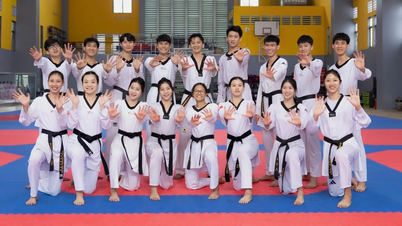
Currently, four national teams (boxing, archery, shooting, and taekwondo) are applying AI through collaboration with a domestic technology company, along with using training software from a French company. Following trials with these four teams, and based on the evaluation of actual results, the sports sector plans to deploy AI combined with technology and intensive training in many key sports in 2026 to achieve optimal effectiveness.
In reality, Vietnamese sports are moving quite slowly in applying AI, even though managers have recognized this trend. Last year, the then Director of the Vietnam Sports Department, Mr. Dang Ha Viet, planned to apply AI to training and management early. Vietnamese sports urgently need to build a data bank to analyze each indicator related to the training volume of athletes. However, there is a huge gap between desire and reality. AI and related technological applications require large amounts of data (Big Data) that are continuously "fed" with high accuracy, in real time, especially during the training phase.
Unfortunately, the current infrastructure in Vietnam is not yet capable of meeting the demand, or if it exists, it is only for a very small group, making it difficult to establish a training process with synchronized technology. Even for some sports that require detailed data such as volleyball, athletics, swimming, and gymnastics, we do not yet have swimming pools, running tracks, or stadiums equipped with sensors and specialized cameras to measure athletes' parameters. Objective difficulties make the quality of input data a significant challenge.
The sports industry also needs a highly skilled workforce, from coaches and doctors to data specialists and technology engineers. AI can provide accurate analyses and intelligent recommendations, but it is these experts who ultimately decide how to use that information. To effectively apply AI to training, we should also upgrade aspects such as nutrition, sports medicine, and international competition. It is precisely the demands of technology that give the sports industry the impetus to transform itself. By applying AI to training, instead of relying on subjective experience, Vietnamese sports can move towards establishing a scientific , transparent model based on serious investment, a clear roadmap, and a long-term commitment from industry leaders and technology partners.
This necessitates that those involved in sports proactively collaborate and promote a stronger, more substantive process of socialization to diversify investment resources. The state budget certainly cannot bear the entire burden, so the main role lies with the units and organizations managing each sport. In the long term, the application of AI will put pressure on coaches and athletes to improve training effectiveness and evaluate results using numbers and data. This also provides a compelling basis for attracting investment through highly reliable figures.
Source: https://www.sggp.org.vn/ai-thuc-day-nang-chat-van-dong-vien-post804414.html
![[Photo] The courage of new recruits of Brigade 144 on the training ground.](https://vphoto.vietnam.vn/thumb/1200x675/vietnam/resource/IMAGE/2026/05/27/1779881651341_anh-man-hinh-2026-05-27-luc-18-32-52.png)




![[Photo] The heat at the fireworks display site on the opening night of the Da Nang International Fireworks Festival 2026](https://vphoto.vietnam.vn/thumb/1200x675/vietnam/resource/IMAGE/2026/05/27/1779889741485_ndo_br_z7872039145157-fecaba5112f39e8352544099d7ef4738-5140-jpg.webp)



























































![[Photo] The courage of new recruits of Brigade 144 on the training ground.](https://vphoto.vietnam.vn/thumb/402x226/vietnam/resource/IMAGE/2026/05/27/1779881651341_anh-man-hinh-2026-05-27-luc-18-32-52.png)





























Comment (0)