

The proposal is part of a package of measures being considered by the UK government to curb rising food prices. Measures under consideration include temporarily waiving import duties on certain essential items such as bread, biscuits, and bananas, and suspending some taxes on fertilizers to reduce production costs and limit the risk of farmers abandoning their farmland.
However, according to sources, disagreements still exist between the UK Treasury and the Department for Business and Trade (DBT) regarding the implementation plan.
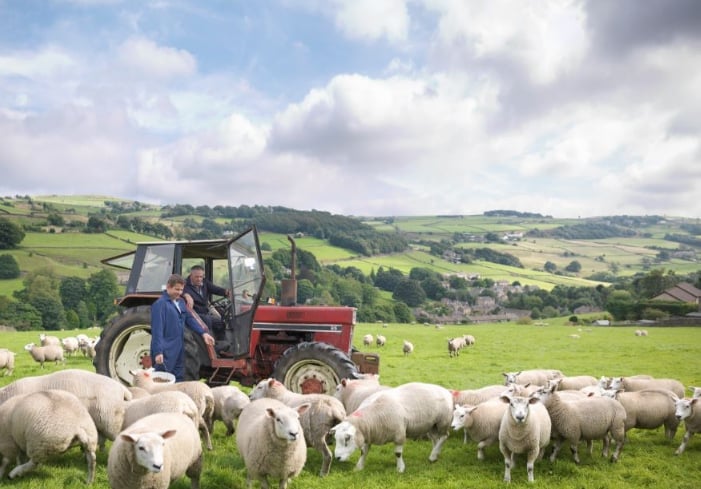
The UK is considering suspending the carbon tax on fertilizers to curb food price inflation. Photo: Gov.UK.
The Treasury is unwilling to amend the Finance Act 2026, a necessary condition for suspending certain carbon taxes. Meanwhile, the DBT is consulting on various options to lower fertilizer prices for agriculture , while also working with farmers to review all related taxes. Currently, fertilizer import duties in the UK are at 6%.
Rising cost pressures are causing many farmers to consider leaving their land fallow instead of planting, fearing losses in the 2027 crop year. Fertilizer prices have surged since the conflict in Iran erupted and the Strait of Hormuz was blockaded. Approximately 35% of global fertilizer shipments pass through this strategic waterway. Since February, around 1 million tons of fertilizer have been stranded in the Persian Gulf region.
These developments raise concerns that food inflation will continue to rise amid already escalating fuel and fertilizer prices due to geopolitical tensions in the Middle East.
Fertilizer manufacturers warn that a new tax mechanism, modeled after the European Union (EU), could increase costs by around $135 per ton. According to the UK's Agriculture and Horticulture Development Board (AHDB), fertilizer prices are already at around $834 per ton.
The proposed tax is the Carbon Border Adjustment Mechanism (CBAM), similar to the EU policy implemented since 2023. Under this mechanism, importers would pay a tax based on the amount of greenhouse gases generated during the production of fertilizers. Since the majority of fertilizers are produced from fossil fuels, the industry currently accounts for approximately 5% of total global greenhouse gas emissions.
In parallel, the UK government is also implementing measures to support farmers through fuel tax reductions. The Treasury announced that taxes on red diesel and subsidized biofuels have been cut by more than a third, to their lowest level in over 20 years.
According to an analysis by the Central Association of Agricultural Assessors (CAAV), a 202-hectare wheat farm could lose up to $94,500 in 2027 due to increased costs related to the conflict in Iran. As farmers plan for next year's crop, the bleak economic outlook may force many to make difficult decisions, including leaving land fallow rather than continuing to plant.
CAAV Secretary-General Jeremy Moody believes that temporarily suspending the tariffs will help alleviate the burden on the agricultural sector. He stated that the UK currently only meets about 40% of its domestic nitrogen fertilizer needs, with the remaining 60% dependent on imports. Therefore, maintaining the new tariffs risks further increasing production costs. If fertilizer prices continue to escalate due to prolonged tensions in the Gulf, large areas of farmland could be left fallow as production becomes unprofitable.
A UK government spokesperson said the current consultation aims to gather opinions on the possibility of temporarily suspending certain taxes to reduce costs for businesses, while ensuring that it does not affect the country's Carbon Border Adjustment roadmap.
Source: https://nongnghiepmoitruong.vn/anh-can-nhac-hoan-thue-carbon-voi-phan-bon-d814567.html
![[Photo] Secretary of the National Assembly Party Committee, Chairman of the National Assembly presides over the meeting of the Standing Committee and Executive Committee of the National Assembly Party Committee.](https://vphoto.vietnam.vn/thumb/1200x675/vietnam/resource/IMAGE/2026/06/03/1780480353201_ndo_br_bnd-2585-jpg.webp)


![[Photo] First session of the 14th Congress of the Vietnam Trade Union](https://vphoto.vietnam.vn/thumb/1200x675/vietnam/resource/IMAGE/2026/06/03/1780465947883_ndo_br_img-3852-jpg.webp)
![[Photo] General Secretary and President To Lam presides over a meeting with the Central Organizing Committee.](https://vphoto.vietnam.vn/thumb/1200x675/vietnam/resource/IMAGE/2026/06/03/1780482764658_a1-bnd-4741-3342-jpg.webp)







































![[Video] Sunset at Lap An Lagoon – Where the sun sets over the fishing nets](https://vphoto.vietnam.vn/thumb/1200x675/vietnam/resource/IMAGE/2026/05/31/1780192137701_beach-landscape-sea-water-nature-grass-745871-pxhere-com.jpeg)


























Comment (0)