

The Wall Street Journal, citing several sources, reported that discussions between the two companies have been ongoing for over a year and a preliminary agreement was reached in recent months.
Intel shares rose nearly 14% in trading last weekend, while Apple shares gained 2%. According to CNBC, both companies declined to comment on the report.
"I'm 100% sure this will happen. I just don't know when," said Ben Bajarin, an analyst at Creative Strategies, in an interview.

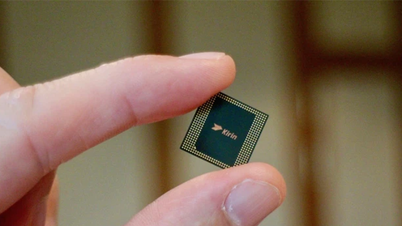
Apple and Intel are reportedly close to reaching an agreement for Intel to manufacture some of the chips for Apple's devices. (Illustrative image)
If it materializes, this deal would be "the strongest affirmation yet for Intel's struggling chip manufacturing business" in recent years. Intel's stock has risen more than 200% this year.
For Apple, this would mark the end of a historical era. Currently, the company relies almost entirely on Taiwan Semiconductor Manufacturing Co. (TSMC) to manufacture all of its most advanced chips for its devices.
However, TSMC's production capacity is also limited amidst the explosive demand for AI chips, fueling a semiconductor race among major technology corporations. Apple is no exception, continuously expanding its in-house chip development program in recent years to design almost all of the core chips for iPhones, Macs, and many other devices.
According to Bajarin, Apple is currently TSMC's second-largest customer, behind only Nvidia.
"Intel is the only place that can scale up capacity as a viable alternative supply source," said Bajarin.
Intel is actually accelerating its capacity expansion with a new chip manufacturing plant in Chandler, Arizona. The plant is now in large-scale production. Intel's plant is producing chips using advanced 18A technology, aiming to compete with TSMC's 2nm technology.
Currently, TSMC is also building several new chip factories in Arizona, where Apple has committed to manufacturing some of its chips.

Apple is taking steps to diversify its chip supply sources (Photo: AP)
Bajarin suggested that Apple will likely wait for Intel's next-generation process, 18A-P, to manufacture chips. This could begin to expand next year. He described Intel's current 18A process as "still somewhat crude," while 18A-P would "solve many problems."
For many years, Intel's on-demand chip manufacturing business faced delays and low productivity, raising doubts about the tech giant's chip manufacturing capabilities. However, according to Mr. Bajarin, that difficult period is over.
"They have overcome the difficult phase and can now be considered a reliable alternative source of supply," said Bajarin.
Last month, Elon Musk announced his plans to use Intel's future 14A chip process for his $119 billion Terafab project in Austin, Texas. This facility is expected to manufacture chips for Tesla, SpaceX, and SpaceXAI. Intel CEO Lip-Bu Tan said that mass production of 14A will begin in 2029.
Intel now also has major customers like Amazon and Cisco in the advanced chip packaging sector.
According to Bajarin, an agreement between Apple and Intel would not significantly affect TSMC because "they are already producing at maximum possible speed."
However, TSMC made a notable shift in its rhetoric about Intel last month when Chairman and CEO CC Wei called Intel a "formidable competitor."
"If one of your biggest customers is about to sign a deal with a competing chipmaker, that's the kind of statement you'd make to somewhat mitigate the impact," Bajarin observed.
Apple executives are also said to have visited Samsung's new chip manufacturing plant under construction in Texas.
Samsung, Intel, and TSMC are currently the only three companies in the world capable of producing the most advanced chips for AI, and according to Bajarin, "no one can build factories fast enough to meet this demand."
Source: https://vtv.vn/apple-co-the-giao-intel-san-xuat-chip-iphone-nganh-ban-dan-sap-doi-chieu-100260511100312683.htm
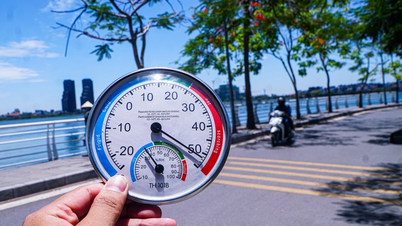
![[Image] Hanoi's urban life under the challenge of a "scorching hot" environment](https://vphoto.vietnam.vn/thumb/1200x675/vietnam/resource/IMAGE/2026/05/25/1779706979265_nang-nong-t5-2026-minh-duy-7-4636-jpg.webp)
























































































Comment (0)