

New shocks are putting pressure on the region.
Southeast Asia is entering a period of significant change as climate, energy, and financial risks increasingly tend to intertwine.
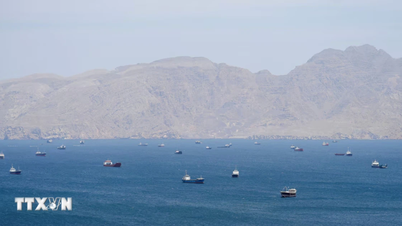
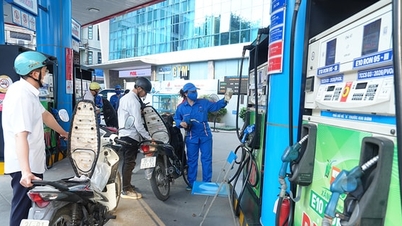
Recent conflicts in the Middle East have disrupted global oil and gas supplies, driving up energy and fertilizer prices. For a region like ASEAN, which is heavily reliant on fuel imports, the impact quickly spreads to food prices, logistics costs, and the cost of living.
Simultaneously, many ASEAN countries are expected to experience successive floods, droughts, and extreme weather events during 2025-2026. These natural disasters cause crop damage, disrupt supply chains, and increase pressure on public budgets. Rising energy and food prices continue to strain people's lives, while also increasing the risk of bad debt and impacting the financial system.
Notably, shocks are creating a ripple effect in the regional economy . Energy crises are increasing production costs, natural disasters are driving up food prices, while persistent inflation is forcing central banks to maintain tighter monetary policies. This development is increasing the risk of financial instability in the region. Many ASEAN countries have narrowed their fiscal space after the Covid-19 pandemic, while the growing need for spending on social welfare, climate adaptation, and energy transition limits public investment in long-term infrastructure projects.
In this context, many experts argue that ASEAN central banks need to broaden their role, focusing not only on controlling inflation but also on supporting the resilience of their economies to climate and energy shocks.
In 2026, the Philippines will assume the ASEAN chairmanship with the theme “Together Shaping the Future”. At the 13th ASEAN Finance Ministers and Central Bank Governors Meeting in April, the countries reaffirmed their commitment to strengthening policy coordination, consolidating financial stability, and promoting sustainable finance.
The conference also noted shared concerns about the impact of geopolitical tensions, energy volatility, and global economic fragmentation. At the same time, the countries welcomed the Asian Development Bank's (ADB) proposal for a $30 billion support package for ASEAN between 2026 and 2030 to strengthen resilience to external shocks.
The new role of central banks in the energy transition.
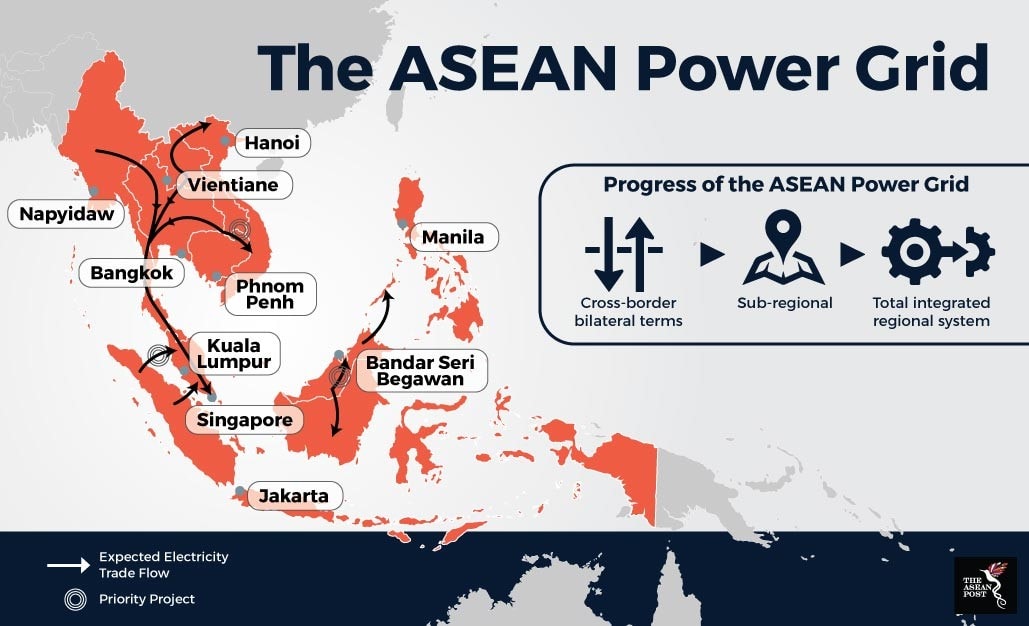
One of ASEAN's current strategic priorities is the development of the ASEAN Power Grid – an initiative to connect the power systems of member states to enhance energy security and promote the transition to a low-carbon economy.
This is not just an energy infrastructure project, but also seen as a tool for mitigating long-term economic risks. Grid interconnection helps member countries share electricity more efficiently, reduce dependence on imported fuels, and limit energy price fluctuations in an uncertain global market.
However, the biggest challenge lies in funding. Cross-border power projects require massive investments, have long payback periods, and carry a high level of risk. This makes many commercial banks cautious because current capital adequacy regulations do not really encourage financing long-term infrastructure projects.
Against this backdrop, there is growing debate over the need for ASEAN central banks to become more actively involved through targeted refinancing programs. Under this mechanism, central banks provide concessional funding to commercial banks, provided that the funds are allocated to projects within the ASEAN Power Grid.
This approach can help reduce capital costs for strategic infrastructure projects while increasing private sector confidence in the long-term sustainability of the energy transition.
In fact, the trend of expanding the role of central banks in green finance is not new. The European Central Bank (ECB), the Bank of England, and the People's Bank of China have all implemented programs to support green credit or preferential liquidity for sectors serving the energy transition.
For ASEAN, coordination at the regional level is considered to be more effective than coordination among individual countries. A joint working group among ASEAN central banks or ASEAN+3 could be considered to develop a refinancing mechanism for strategic energy projects before the end of 2026.
At the AFMGM 2026 Conference, participating countries also welcomed the initiative to establish a Regional Energy Connectivity Fund to support the development of the ASEAN Power Grid and enhance regional energy security.
Amidst continued energy price volatility fueled by geopolitical instability, the need to strengthen regional energy coordination mechanisms is becoming increasingly urgent. Recent discussions within ASEAN have also addressed the possibility of establishing a common oil reserve mechanism and enhancing transnational power grid connectivity to mitigate supply risks.
Increase the resilience of the financial system.
Besides energy issues, ASEAN is also facing the risk of increasing financial instability due to increasingly overlapping economic shocks.
Current risk management mechanisms are primarily built on the assumption that economic shocks occur independently. However, reality shows that crises often occur simultaneously and amplify each other. A drought can drive up food prices; rising food prices lead to inflation; rising interest rates increase the debt burden on businesses and households, thereby impacting the banking system.
In light of this situation, many experts have suggested that ASEAN establish "systemic risk buffer zones" for financial institutions. These would involve additional capital requirements to increase the resilience of banks and insurance companies against climate and macroeconomic shocks. One notable approach is the "dual-objective" model proposed by experts Satoshi Ikeda and Pierre Monnin.
According to this model, the risk buffer consists of two components. First is “risk absorption,” which requires financial institutions to maintain sufficient capital to withstand complex shocks. Second is “prevention,” which reduces capital requirements for institutions actively financing energy transitions, climate adaptation, and low-carbon projects. This approach aims to encourage private capital flows into sectors that help mitigate long-term economic risks.
ASEAN policymakers are also strengthening coordination to bolster the region's financial safety net. At the recent ASEAN+3 meeting, finance ministers and central bank governors reaffirmed their commitment to maintaining macroeconomic stability and coordinating responses to global uncertainties.
In the long term, the two initiatives—refinancing the ASEAN Power Grid and building a systemic risk buffer—are considered to be mutually beneficial. Specifically, investment in clean energy infrastructure helps reduce energy price volatility and inflationary pressure, while financial safety mechanisms help the banking system maintain its lending capacity even during crises.
As Southeast Asia enters a new phase of significant change, expanding the role of central banks and financial supervisory authorities is seen as crucial to ensuring the region's long-term stability and growth. With its chairmanship of ASEAN in 2026, the Philippines has the opportunity to promote a more strategic financial cooperation program for the entire bloc.
Source: https://daibieunhandan.vn/asean-truoc-yeu-cau-doi-moi-cong-cu-tai-chinh-10417202.html




































































































Comment (0)