

Less than three years ago, raising turtles was considered a lucrative profession for farmers in Cat Thinh commune, Thuong Bang La commune, and some other localities in the former Van Chan district. However, the turtle farming industry here is now showing signs of decline.

Along National Highway 32, passing through the center of Cat Thinh commune, Thuong Bang La commune, and the area of the former Tran Phu Agricultural Farm town, you can see modern, spacious houses everywhere, with signs at the gates advertising the supply of turtle hatchlings and commercial turtles.
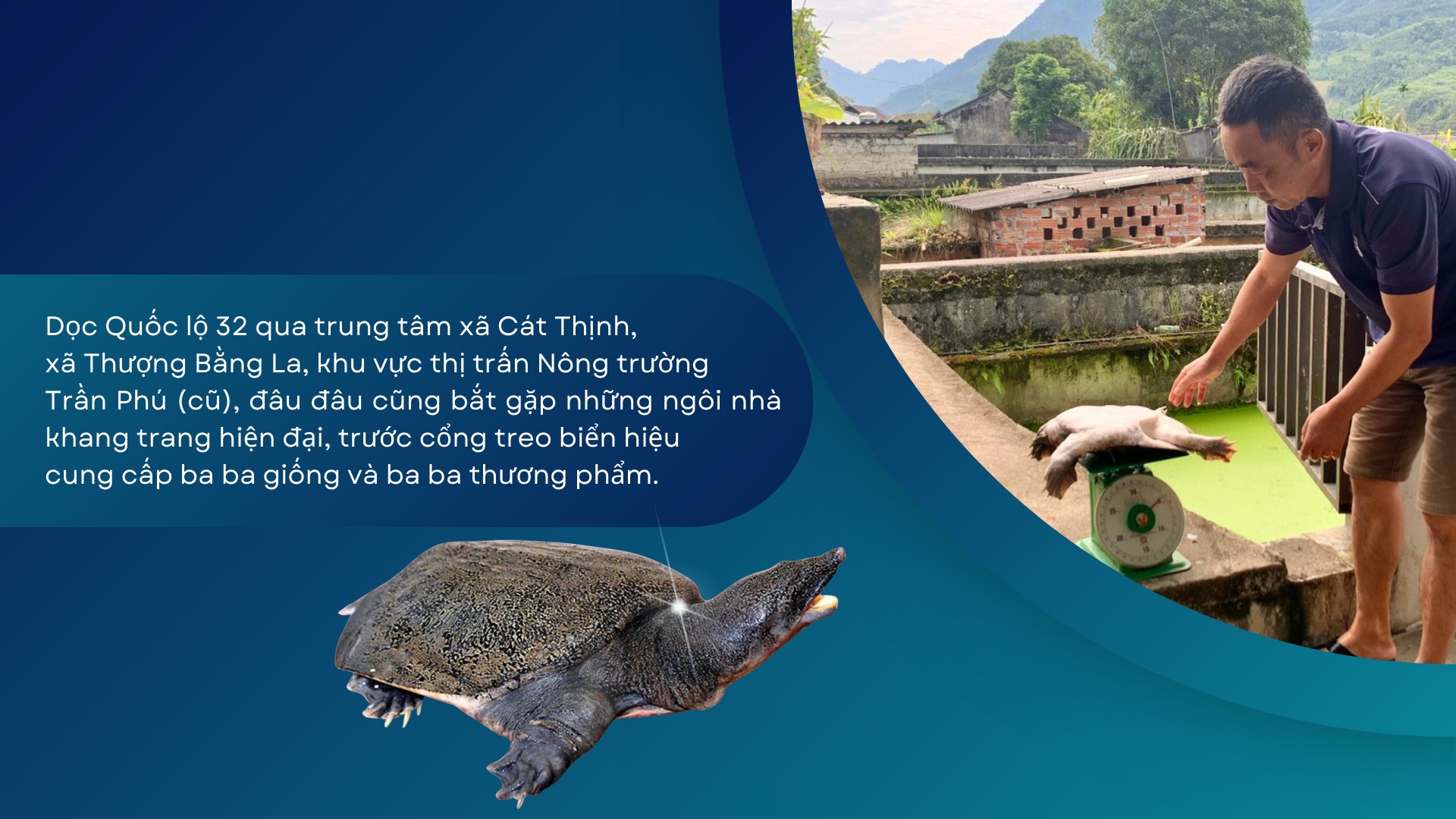
"It's all thanks to the turtles!" - Mr. Pham Vu Cuong, an official from the Economic Department of Cat Thinh commune, told us as he showed us around the turtle farming models in the commune.
In his imposing two-story house, Mr. Hoang Van Kuu, head of Ba Khe village and one of the pioneers in turtle farming, recounted: “In the early 1990s, some villagers caught wild turtles in Pha stream and released them into a pond near the stream behind their house. Seeing that they grew quickly and were capable of reproduction, they began collecting turtles from the wild to raise them.”
Seeing the thorn-like bumps on the shell and the edges near the neck of the softshell turtle, locals call them "thorny softshell turtles," replacing their original name, "stream softshell turtles." The meat of the Van Chan thorny softshell turtle is lean, firm, and crispy. When simmered for a long time, the meat and shell become tender but not mushy, and do not shrink significantly.
“During peak season, the price of commercially raised softshell turtles reached 2.5 million VND/kg, and the price of hatchlings was 700,000 - 800,000 VND/each, yet we still couldn't meet the demand from customers in Hai Duong (formerly), Quang Ninh, Nghe An ... and China. Before 2023, the price of hatchlings weighing 40-50 grams/each was still 200,000 - 300,000 VND/each, while commercially raised spiny softshell turtles cost 500,000 - 600,000 VND/kg, double the price of smooth softshell turtles and more than 30% higher than spiny softshell turtles raised in other regions,” Mr. Kửu recalled.
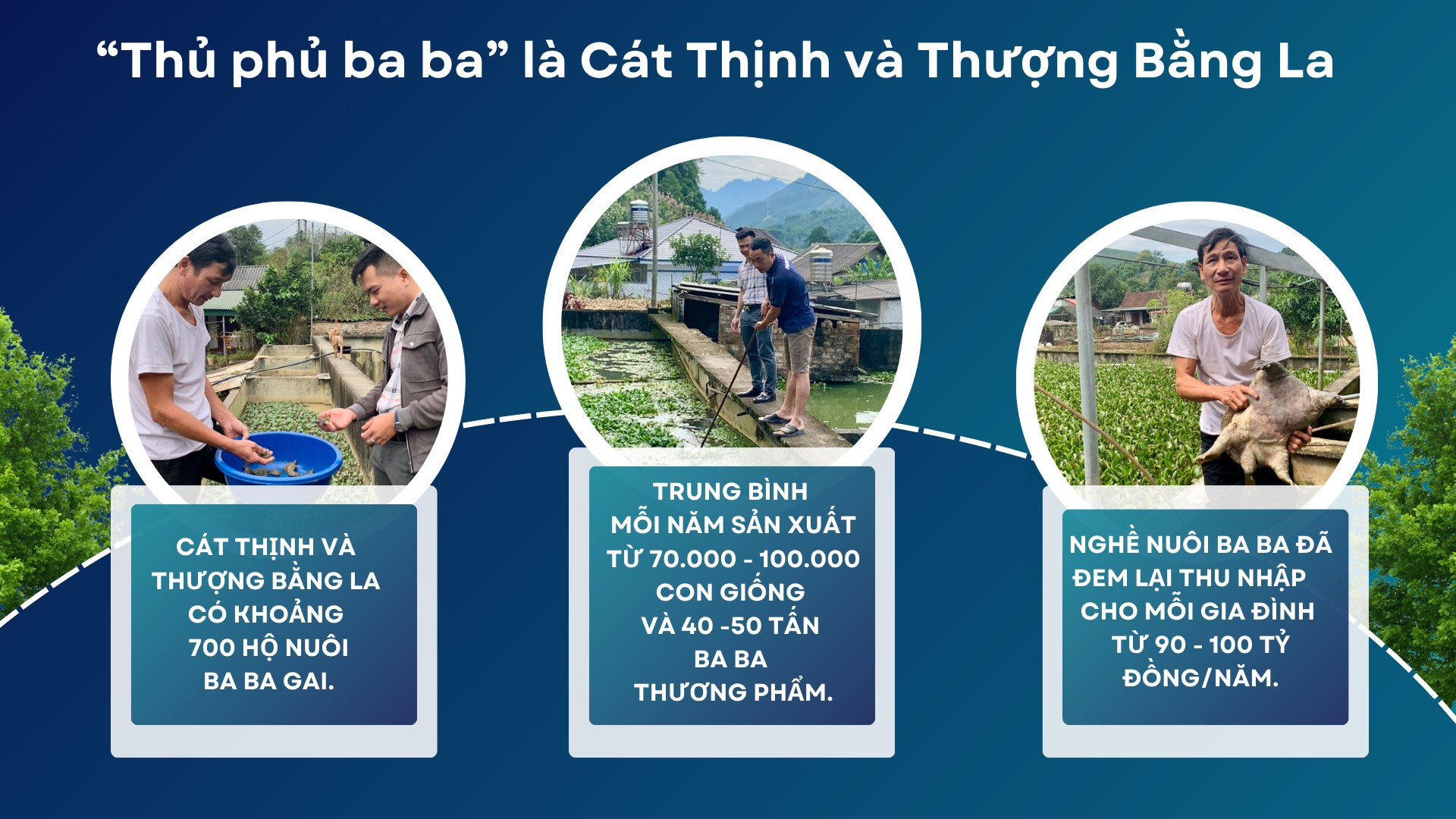
According to statistics, the "turtle capital" area is Cat Thinh and Thuong Bang La, with approximately 700 households raising spiny softshell turtles. On average, they produce 70,000-100,000 hatchlings and 40-50 tons of commercial turtles annually, with an estimated total income of 90-100 billion VND. Turtle farming has contributed to poverty reduction and wealth creation for the local people. With an income of around 1 billion VND per year, households have the means to invest in expanding production, building houses, and providing for their children's education.
"Raising turtles has contributed to a sharp reduction in the poverty rate from over 30% (in 2015) to below 10% (in 2022); it has also made a positive contribution to building new rural areas and changing the face of the locality," assessed Pham Van Vinh, Vice Chairman of the People's Committee of Cat Thinh commune.

Things started to change after the COVID-19 pandemic. The price of commercially raised turtles dropped to only about 270,000 - 300,000 VND/kg, while hatchlings cost from 30,000 - 70,000 VND/each depending on the type. Not only did income decrease, but sales became very difficult. With 500 - 700 breeding pairs of turtles, households like Nguyen Ngoc Bac, Hoang Van Kuu, Nguyen Van Nghi, Tran Van Toi, etc., previously earned from 700 million to 1 billion VND per year, but now their income has dropped to one-third, and the number of hatchlings remaining has been halved.
In Thuong Bang La commune, there are currently over 300 households raising softshell turtles, of which about 50 households operate on a farm scale, each farm producing 5,000 to 10,000 hatchlings per year. "Currently, most farms only sell about 50% of their hatchlings, and the price of marketable softshell turtles has also dropped sharply, causing many difficulties for farmers," said Mr. Duong Van Tu, Head of the Economic Department of Thuong Bang La commune.
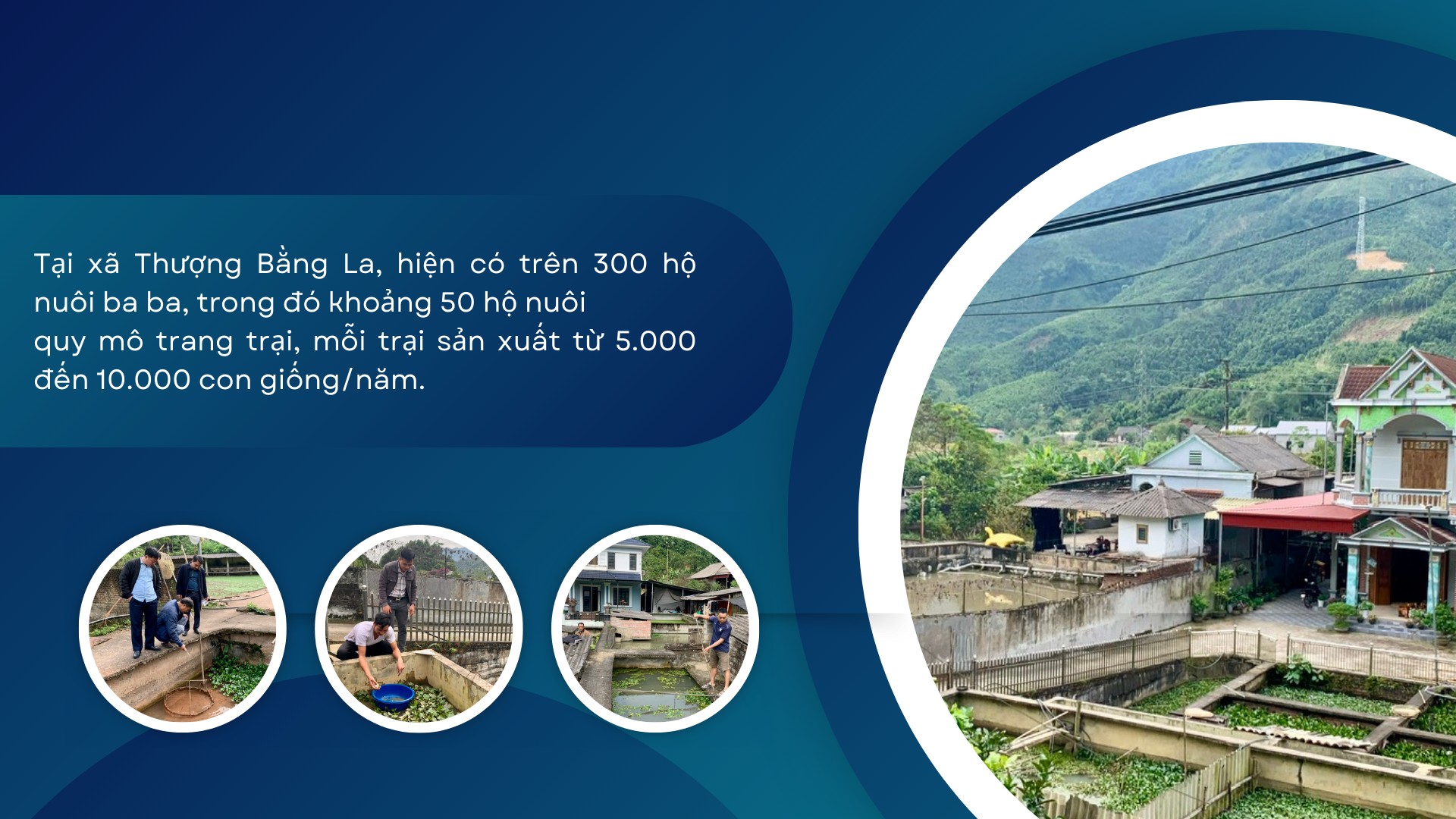
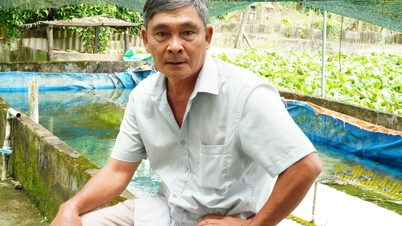
The family of Mr. Bui Dinh Hau, in Hamlet 9, Thuong Bang La Commune, has invested over 3 billion VND in building a breeding pond and currently has 600 pairs of adult turtles. Previously, they produced 10,000 hatchlings annually, but due to a more than 60% decrease in income, they have converted a portion of their land to frog farming to maintain their livelihood.
Mr. Nguyen Ngoc Bac, from Van Hung village, commented: “Partly due to economic difficulties, and partly due to the rapid increase in supply while demand is unstable. Many localities are developing turtle farming models, leading to a surplus of products. The output still mainly depends on traders; there is no sustainable supply chain linking with restaurants, supermarkets, or official export channels. The product has not been widely promoted, and the brand is not strong enough to compete...”

Despite the difficulties, most people still maintain their faith in turtle farming. Mr. Vu Trong Quyen, from Thuong Bang La commune, affirmed: "Income from turtle farming is still higher than raising other livestock, so even with low prices and limited market demand, we are determined to continue." Turtle farming has proven effective, but helping people overcome difficulties and achieve sustainable development is a problem that needs a solution.
Mr. Pham Van Vinh, Vice Chairman of the People's Committee of Cat Thinh commune, said: "In 2020, the Intellectual Property Office ( Ministry of Science and Technology ) granted a Certificate of Registration for Geographical Indication for the product 'Van Chan commercial spiny softshell turtle'. In 2022, Cat Thinh commune established a spiny softshell turtle farming cooperative with 9 members. However, to date, farming is still mainly spontaneous, consumption is unregulated, and it depends heavily on traders."
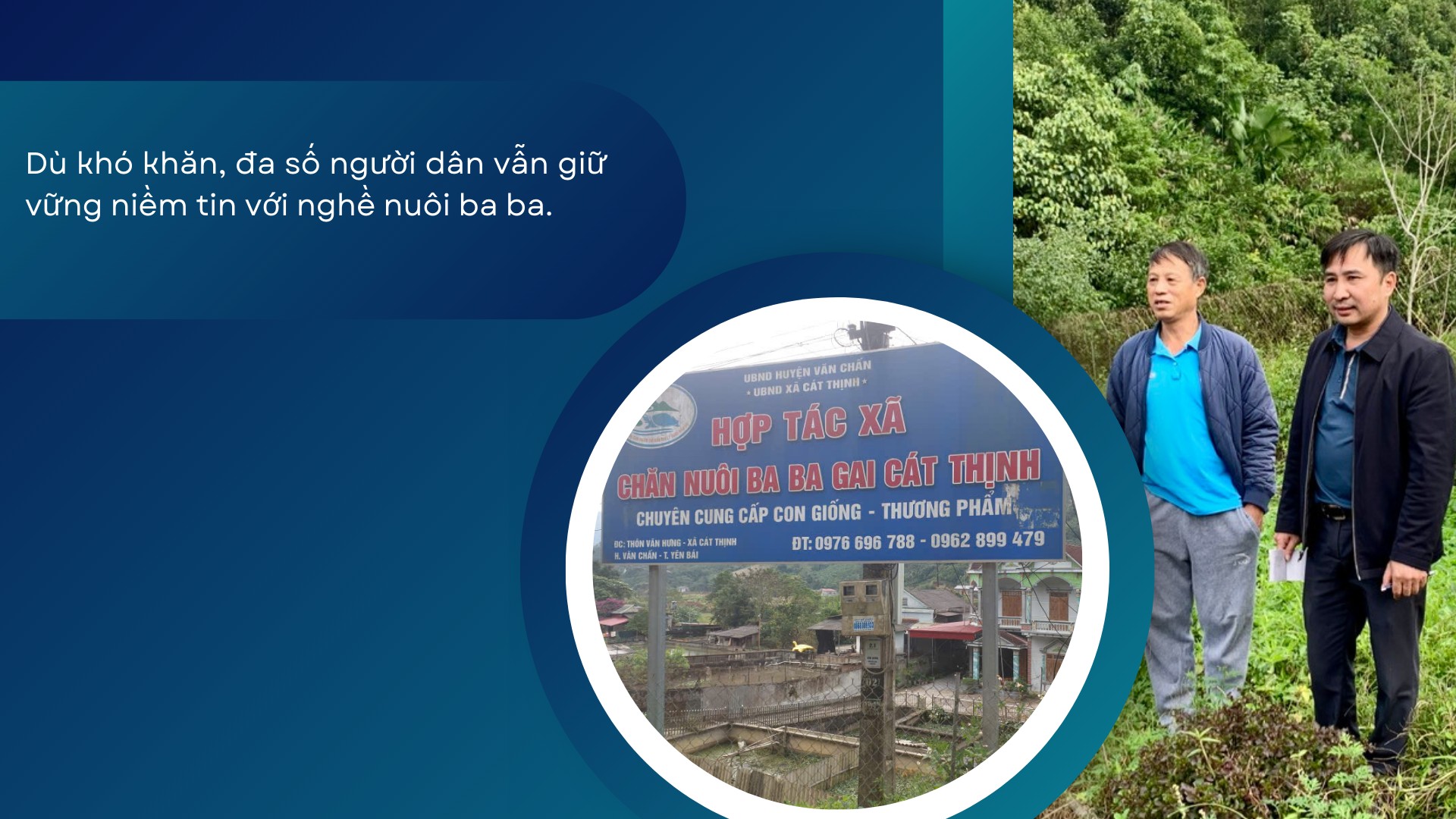
According to Mr. Vinh, geographical indications are a great advantage for brand building. The government will continue to support cooperatives, connecting households with businesses, restaurants, and supermarkets, with the hope of making Van Chan spiny softshell turtles an OCOP product.
Meanwhile, Mr. Duong Van Tu, Head of the Economic Department of Thuong Bang La commune, said: "To help people maintain production, we need preferential credit policies and pilot aquaculture insurance programs to give people peace of mind in production. At the same time, we need support in promoting products through agricultural fairs, e-commerce platforms, and culinary tourism..."
With a unique advantage in producing high-quality turtle hatchlings and commercial turtles, the people of Van Chan still maintain their faith in the profession. Hopefully, through the development of a value chain, Van Chan turtle farming will return to its golden age, and the turtle farming profession will continue to carry the dream of wealth creation for farmers here in a more sustainable way.
Presented by: Thuy Thanh
Source: https://baolaocai.vn/ba-ba-con-cong-giac-mo-lam-giau-post887707.html

![[Photo] The General Secretary, President and his wife begin their state visit to the Philippines.](https://vphoto.vietnam.vn/thumb/1200x675/vietnam/resource/IMAGE/2026/05/31/1780230559452_anh-man-hinh-2026-05-31-luc-19-28-11.png)
![[Photo] Admire the coral "masterpiece" amidst the million-year-old heritage of Dak Lak province.](https://vphoto.vietnam.vn/thumb/1200x675/vietnam/resource/IMAGE/2026/05/31/1780221235105_anh-man-hinh-2026-05-31-luc-16-53-27.png)

![[Photo] Solemn bathing ceremony and Buddha procession in Hue](https://vphoto.vietnam.vn/thumb/1200x675/vietnam/resource/IMAGE/2026/05/31/1780228263543_1-jpg.webp)
![[Image] Hanoi Police officially crowned champions of V-League 2025/2026](https://vphoto.vietnam.vn/thumb/1200x675/vietnam/resource/IMAGE/2026/05/31/1780244769054_ndo_br_039d561b692be875b13a-jpg.webp)
![Mastering knowledge to reduce poverty: [Part 1] People living near Dau Tieng Lake change their lives.](https://vphoto.vietnam.vn/thumb/402x226/vietnam/resource/IMAGE/2025/11/13/1763022074414_3026-1-4-062713_608.jpeg)














![[Video] Sunset at Lap An Lagoon – Where the sun sets over the fishing nets](https://vphoto.vietnam.vn/thumb/340x192/vietnam/resource/IMAGE/2026/05/31/1780192137701_beach-landscape-sea-water-nature-grass-745871-pxhere-com.jpeg)































![[Photo] Admire the coral "masterpiece" amidst the million-year-old heritage of Dak Lak province.](https://vphoto.vietnam.vn/thumb/402x226/vietnam/resource/IMAGE/2026/05/31/1780221235105_anh-man-hinh-2026-05-31-luc-16-53-27.png)






























Comment (0)