

Throughout that period, the newspaper not only propagated the Party and State's guidelines, policies, and decisions of the City Party Committee, People's Council, and People's Committee in building and developing the capital, but also promoted and spread the historical traditions, culture, and elegant lifestyle of Hanoi, a city with a thousand years of civilization. Particularly in the 1990s, HanoiMoi was a pioneering local Party newspaper in the field of combating corruption and negative practices.
To this day, many believe that the newspaper at the forefront of the fight against corruption and negative practices after 1954 was the News Agency's Tin Tuc (News) newspaper, which published a series of articles about the abuse of power by the Secretary of the Thanh Hoa Provincial Party Committee, Ha Trong Hoa, in 1985. It must be said that the first time information about a Central Committee member violating discipline appeared in the newspaper through investigative reports, it created a "seismic shock" in society at the time. This demonstrated the courage and responsibility of the leaders and reporters of the Vietnam News Agency. In the prevailing societal perception, the press in North Vietnam from 1954 to 1975, and the press nationwide after 1975, mainly focused on reflection, praise, and glorification. However, a closer examination of the history of revolutionary journalism reveals that this is not entirely true.
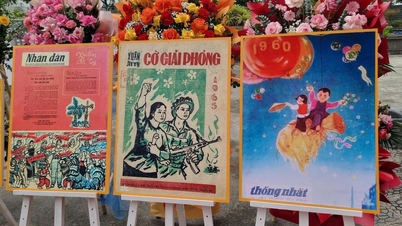
Going back in time to 1965, the Hanoi Capital Newspaper (in 1968, the Hanoi Capital Newspaper and the Thoi Moi Newspaper merged to form the Hanoi Moi Newspaper) published an article about an employee at a food store on Ngo Thi Nham Street (Hai Ba Trung district) embezzling 1,600 kg of food ration coupons. At this time, the US Air Force was bombing North Vietnam, and the entire country was in a state of war. However, the Hanoi Capital Newspaper's publication of this article demonstrated that the newspaper not only carried out propaganda and encouraged the resistance against the US by the entire nation, but also fulfilled its social responsibility, criticizing wrongdoing and fighting against corruption in socio-economic life.
HanoiMoi is one of the daily newspapers that regularly features "humorous satirical cartoons," with drawings no bigger than a matchbox, intended to offer constructive criticism of undesirable behaviors in culture, those that go against national culture and traditional morality, or to criticize the self-serving, irresponsible, and self-serving attitudes of some officials and party members.
Entering the Doi Moi (Renovation) period, Hanoi Moi Newspaper published a supplement called Hanoi Moi Sunday, released on Sundays. This was a major milestone for the newspaper after 1975, and it's worth noting that the content was broader, the writing style more open, and the perspectives more innovative. Many articles by contributors were of macro-level significance, such as "The Psychology of Industrial Chickens," "The Street Vendor's Cart," and "Culture in the Development of the Capital," alongside sharp political commentary such as "The Dog Barks, the Man Keeps Walking," or the series "Memoirs of Erich Honecker" about the collapse of the German Democratic Republic... Hanoi Moi Sunday became a phenomenon in the Northern press with its large circulation, significantly improving the lives of the newspaper's staff and reporters.
The second important milestone was in 1995, when Hanoi Moi published its third issue (the monthly Hanoi Today was published in 1994), the Sunday edition (the previous Hanoi Moi Sunday edition was renamed Hanoi Moi Weekend). This publication was headed by journalist Nguyen Trieu, with a small staff of reporters, aiming to invite well-known writers from Hanoi's journalistic and literary circles to contribute. Nguyen Trieu was a writer with a unique style, using ambiguous and metaphorical language. When he was a reporter for the Economic Department, he wrote articles that stirred public opinion such as "The Invisible 500kV Power Line" and "Respectfully Forwarded to Party A," which even Prime Minister Vo Van Kiet, despite his busy schedule, took the time to read and give instructions to the units constructing the North-South 500kV power line.
There has long been an unwritten rule that newspapers affiliated with provincial and city Party committees tend to be cautious or reluctant to publish articles reflecting negative events, especially those occurring within their own province or city. However, the then Editor-in-Chief of Hanoi Moi Newspaper, journalist Ho Xuan Son, bravely published investigative articles against corruption, even though he knew it was self-defeating. He was driven by "the command of his heart," his civic and journalistic ethics. The first "shot" fired in the fight against corruption and negative practices on Hanoi Moi Sunday was "Half-hearted," about the outdated mechanism at Tam Thien Mau Farm, and how the unit's leaders concealed violations and weaknesses in production and management. After the article was published, the management board reacted fiercely, coming to the editorial office demanding a confrontation and a correction. However, faced with irrefutable documents, they had to remain silent.
However, the event that shocked the press in particular and society in general at this time was the series of articles about Vietnam Airlines' wrongdoings in the Fokker aircraft purchase, written by journalist Nguyen Trieu. Editor-in-Chief Ho Xuan Son carefully read the articles and requested to see the documents. After finding them reliable, he approved their publication. Immediately after the newspaper was published that morning, Editor-in-Chief Ho Xuan Son received a phone call from a high-ranking official in the press management agency requesting that the second article not be published. But he replied that readers were waiting for the second part and continued to approve the second and third parts. Naturally, the officials at the unit exposed in the newspaper would react. However, Editor-in-Chief Ho Xuan Son and journalist Nguyen Trieu did not anticipate the situation taking a different turn. While the wrongdoing was ignored, the newspaper was accused of "violating the Security Ordinance" and "leaking national secrets" because the documents were stamped "Confidential." For three consecutive months, journalist Nguyen Trieu had to work with the investigating agency just to answer one question: "Who provided the documents?" And his answer remained unchanged for three months: "Someone sent the documents to the newspaper's mailbox." Then the authorities realized that the "Confidential" mark on the company's documents did not fall under the category of "national security," and things gradually calmed down. After that shocking incident, HanoiMoi Sunday continued to publish many investigative articles against corruption, most notably the irregularities at the Vietnam Tea Corporation. Reporters, the professional team, and the newspaper were exhausted from confrontations and explanations, but no one lost heart because of their belief in the truth.

Although aware that the fight against corruption and negative practices was not simple, and even dangerous, Editor-in-Chief Ho Xuan Son dared to take the plunge, demonstrating that he was an exemplary Party member leading the way in implementing the Party's policies. And not only Hanoi Moi Sunday, but also the daily issues and the Hanoi Moi Weekend edition published many articles with a strong fighting spirit against corruption and negative practices at that time.
In 2008, in accordance with Resolution No. 15/2008/QH12 of the National Assembly, Ha Tay province was merged into Hanoi city, and consequently, Ha Tay Newspaper merged with Hanoi Moi Newspaper. Since then, Hanoi Moi Newspaper's publications have continued to feature many articles on this topic, gaining popularity among readers and further affirming the social responsibility of the capital's Party newspaper towards the country and its people.
Source: https://hanoimoi.vn/ban-linh-cua-to-bao-dang-thu-do-706291.html
![[Photo] Standing Committee member of the Party Central Committee Tran Cam Tu working with the Central Inspection Committee](https://vphoto.vietnam.vn/thumb/1200x675/vietnam/resource/IMAGE/2026/05/28/1779969579668_ndo_br_bnd-2495-jpg.webp)





























































Comment (0)