


On April 2nd, Children's Hospital 2 in Ho Chi Minh City announced that it had successfully treated a case of autoimmune encephalitis with multiple complex symptoms.
Over a month ago, KN (14 years old, residing in Lam Dong province) began exhibiting strange symptoms such as severe headaches, difficulty sleeping, withdrawn behavior, shouting, agitation, and unexplained crying and laughing. N. did not remember or recognize her family members. Her condition did not improve despite her family taking her to a local hospital for examination.
Upon arrival at Children's Hospital 2 in Ho Chi Minh City, the child was constantly screaming, tensing their arms and legs, strangling themselves, biting their lips and tongue, causing soft tissue damage, broken teeth, and profuse bleeding.
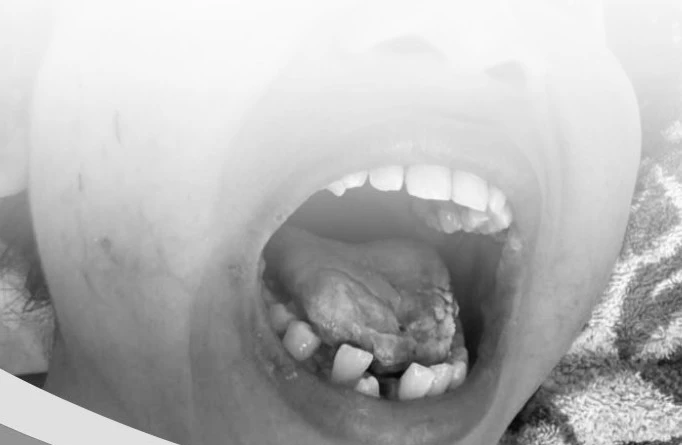
The family mobilized 3-4 people to hold the child's arms and legs to prevent self-harm. Doctors had to administer sedatives and anticonvulsant medication to alleviate the condition. Despite this, the child suffered a severe laceration to the tongue, lost a front tooth, and had numerous abrasions on their arms and legs.
According to Dr. Pham Hai Uyen, Deputy Head of the Neurology Department at Children's Hospital 2, the patient underwent cerebrospinal fluid testing, a cranial MRI, and samples were sent for testing for autoimmune encephalitis.
The results showed that N. had autoimmune encephalitis with antibodies against the NMDA receptor. This is a rare disease that is treatable if detected early.
Immediately afterward, doctors initiated treatment according to the autoimmune encephalitis protocol with high-dose corticosteroids at 30mg/kg for 5 days. However, the child did not respond.
After consultation, the treatment team decided to use plasma exchange therapy, performing 5 cycles over 10 days. By the 3rd cycle, the child was able to sleep and the screaming had decreased. By the completion of the 5th cycle, the child could speak short words, walk slowly, and eat orally.
Currently, KN is gradually recovering, her awareness is improving, and she no longer experiences hallucinations. However, she still needs regular treatment and monitoring to prevent the risk of relapse.
According to Dr. Pham Hai Uyen, autoimmune encephalitis is a difficult disease to diagnose, progresses slowly, and is easily confused with mental disorders, leading many families astray in the search for the disease. This results in delays in diagnosis and treatment.
Doctors warn that when children exhibit unusual behavior, cognitive issues, or sleep patterns, parents should take them to specialized medical facilities for examination as soon as possible.
Source: https://www.sggp.org.vn/benh-la-khien-co-be-14-tuoi-tu-hanh-ha-ban-than-post788803.html


![[Image] Pleasant weather helps students enter the 10th grade entrance exam with confidence.](https://vphoto.vietnam.vn/thumb/1200x675/vietnam/resource/IMAGE/2026/05/29/1780034401612_ngay-1-thi-lop-10-minh-duy-8-5009-jpg.webp)


![[Photo] Ba Lang An Lighthouse - the "eye of the sea" amidst the "rock museum" of Quang Ngai province.](https://vphoto.vietnam.vn/thumb/1200x675/vietnam/resource/IMAGE/2026/05/29/1780038698840_anh-man-hinh-2026-05-29-luc-14-10-42.png)






















































































Comment (0)