

 |
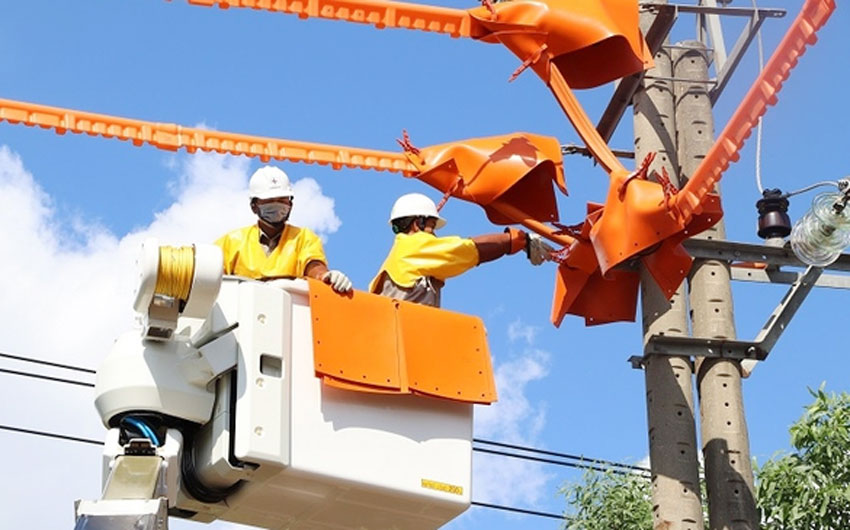
| According to many energy experts, in the context of rapidly growing electricity demand, relying solely on technical solutions will make it difficult to reduce pressure on the power system without the cooperation of citizens and businesses in using electricity economically and efficiently. |
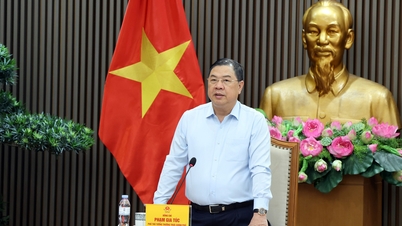
According to Deputy Minister of Industry and Trade Nguyen Sinh Nhat Tan, the intense heat and increasing production activities have put significant pressure on the power system. Therefore, in addition to the power sector continuing to implement solutions to ensure electricity supply for socio-economic development, the Ministry of Industry and Trade also hopes that people and production facilities will cooperate in using energy efficiently and effectively.
In addition to several solutions already clearly outlined in the Prime Minister 's Directive 09, the Ministry of Industry and Trade has also proposed another solution. Specifically, it is necessary to shift electricity usage times, avoiding peak hours. This solution aims to facilitate production and reduce pressure on the power system during periods of high load demand.
According to Deputy Minister Nguyen Sinh Nhat Tan, first and foremost, the State, ministries, and agencies must adjust operating hours accordingly. The Ministry of Industry and Trade proposes that, in addition to businesses, state agencies and large electricity consumers should also calculate plans to adjust operating hours to suit the actual load situation.
The Ministry of Industry and Trade has assigned units to work with localities, and at the same time requested localities to coordinate with production and business establishments to develop plans to adjust electricity usage plans and limit load during peak hours.
The Ministry has also assigned agencies and units to work with localities, and requested localities to coordinate with production and business establishments in adjusting electricity usage plans. For example, industrial production facilities usually have plans to balance production activities to limit load during peak hours.
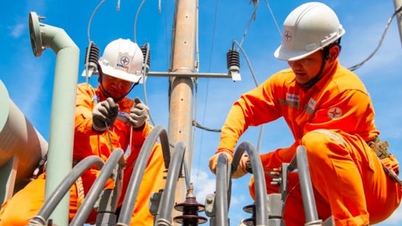
In addition, a comprehensive review of the entire power system is needed, from infrastructure to transmission and distribution grids; and timely repairs and handling of potential failure points are necessary to ensure stable operation during peak periods of hot weather.
Electricity demand continues to reach new peaks.
In late May 2026, intense heat covered many areas across the country, especially in the North, with temperatures consistently remaining high, causing a surge in electricity demand and putting immense pressure on the operation of the national power grid.
According to a report by the Ministry of Industry and Trade on May 26th, domestic and international meteorological agencies predict that 2026 will face numerous climate anomalies, with an 80% chance of a "Super El Niño" phenomenon occurring from July onwards. This phenomenon could lead to prolonged heatwaves, droughts, and a decrease in water levels in hydroelectric reservoirs.
Extreme weather is not only impacting people's lives but also putting unprecedented pressure on the power system. From the beginning of April until now, especially during the heatwaves from May 13-15 and May 23-27, the nationwide electricity load has continuously set new record levels.
Data from the National Power System and Electricity Market Operation Company (NSMO) shows that, as of May 25th, the peak power capacity of the entire system reached 57,120 MW, an increase of 13.5% compared to the same period in 2025; electricity consumption reached 1.171 billion kWh, an increase of 11.8%. In the North alone, the peak power capacity reached 29,667 MW, a significant increase of 26.2% compared to the same period last year; electricity consumption reached 603 million kWh, an increase of 20.2%.
In particular, peak load demand is no longer concentrated during the day but has shifted significantly to the evening hours from 8 PM to 11 PM. This is the time when the power system faces the greatest pressure because solar power sources are no longer generating electricity, while many small hydropower reservoirs lack water, significantly limiting the ability to mobilize resources.
Faced with increasing load pressure, the Ministry of Industry and Trade has directed the National Power Grid Corporation (NSMO) and power companies to implement a comprehensive range of solutions to ensure safe and stable electricity supply during the peak hot season.
Accordingly, the electricity sector is focusing on improving the availability of the power transmission and distribution system, especially for power supply projects in the North such as increasing the capacity of the AT1 Hoa Binh transformer, putting into operation the AT1 T500 Pho Noi transformer and the AT7 T220 Ha Dong transformer.
Regarding hydropower, reservoirs are operated flexibly, prioritizing water storage and power generation during peak evening hours. The National Hydropower Project Management Board (NSMO) has also requested small hydropower plants in the North to adjust their power generation schedules to support the system during high load hours. To date, 301 out of 301 plants with a total capacity of approximately 3,000 MW have made the adjustments as requested.
For coal-fired power plants, available units are being utilized to their maximum capacity to increase system redundancy. Power generation units are required to urgently resolve incidents and increase available capacity to meet the increased load demand during peak evening hours.
Meanwhile, gas-fired and oil-fired power plants are also being utilized flexibly. NSMO is coordinating with PV GAS to optimize gas supply, while switching between domestic gas, LNG, and diesel oil to ensure power generation capacity and reduce system costs. Some high-cost oil-fired power plants such as O Mon I, Thu Duc, and Can Tho are also being utilized to ensure a secure electricity supply.
Notably, to align with the characteristics of summer load, NSMO has proposed implementing new peak, off-peak, and normal hours as early as June 2026 to regulate electricity demand, especially during the hours from 5:30 PM to 10:30 PM.
However, according to many energy experts, in the context of rapidly growing electricity demand, relying solely on technical solutions will make it difficult to reduce pressure on the power system without the cooperation of citizens and businesses in using electricity economically and efficiently.
Source: https://baothainguyen.vn/xa-hoi/202605/bo-cong-thuong-de-xuat-dieu-chinh-gio-dung-dien-8413dd8/
![[Photo] General Secretary and President To Lam presides over the meeting to approve the draft report on the results of the second inspection by the Politburo of the Standing Committee of the Hanoi City Party Committee.](https://vphoto.vietnam.vn/thumb/1200x675/vietnam/resource/IMAGE/2026/05/26/1779789811432_a2-bnd-4430-9620-jpg.webp)





















































































Comment (0)