

A heartbreaking scene.
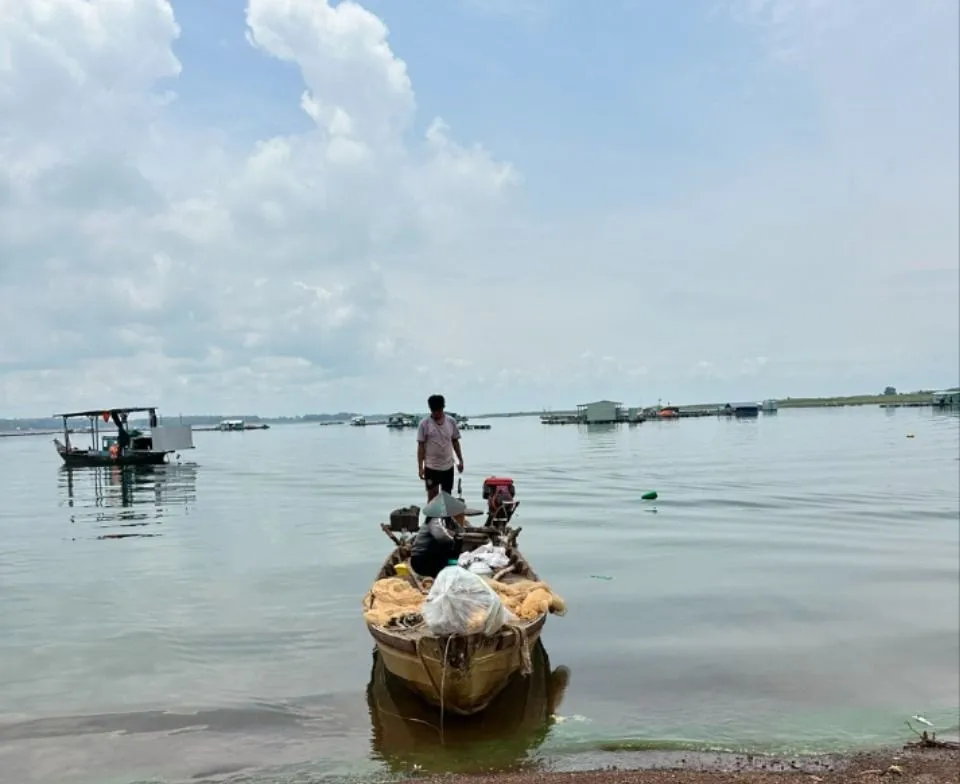
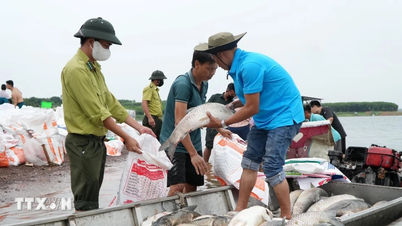
We arrived at the fish farming area on Tri An Lake (located in Ward 1, Tri An Commune) on the morning of June 2nd.
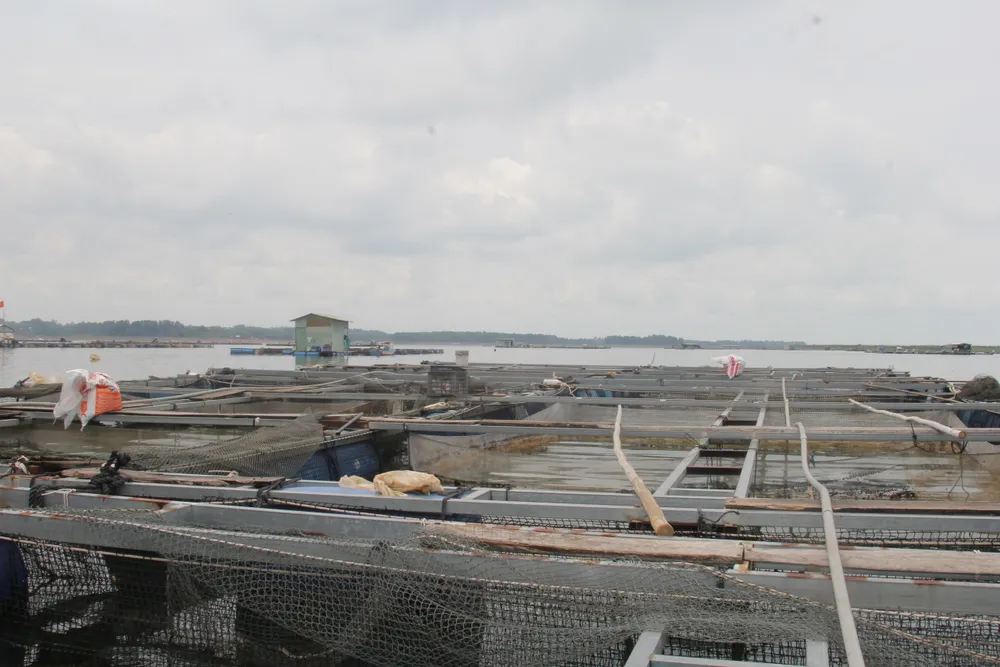
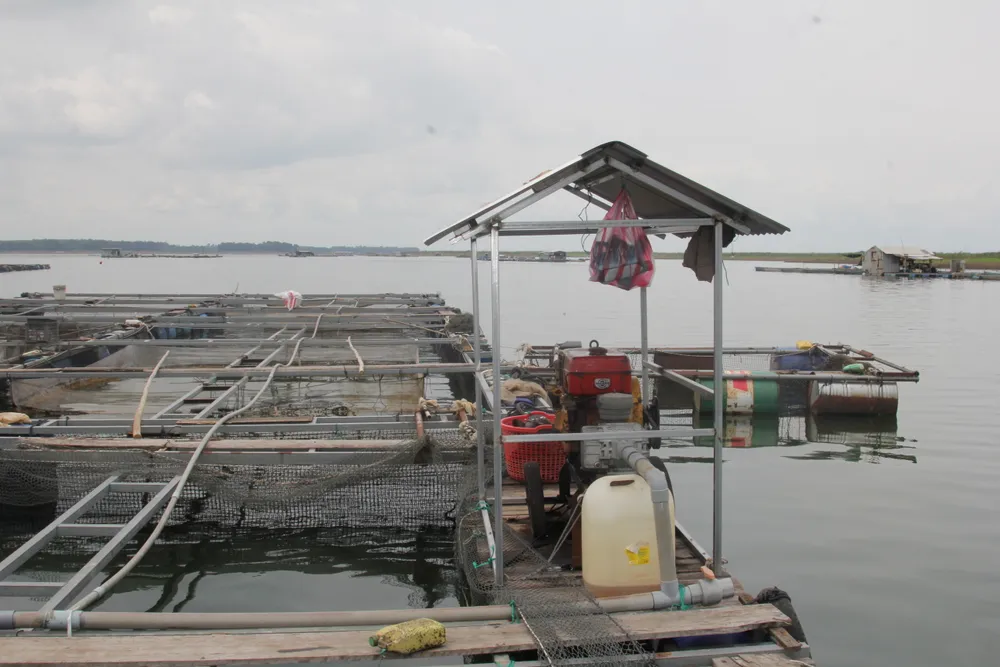
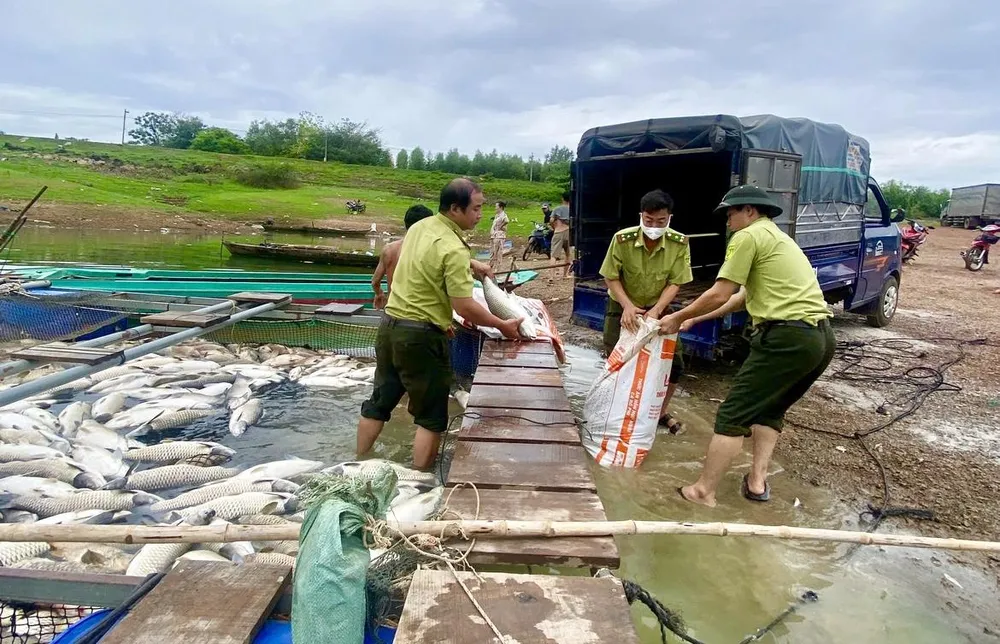
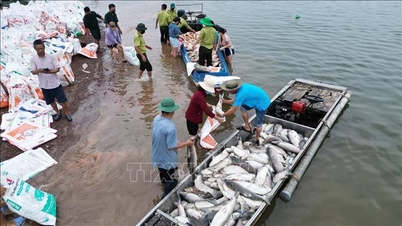
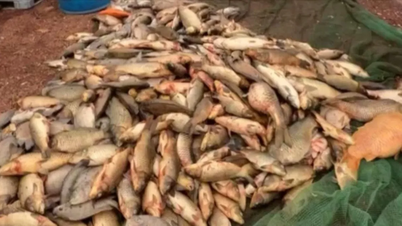
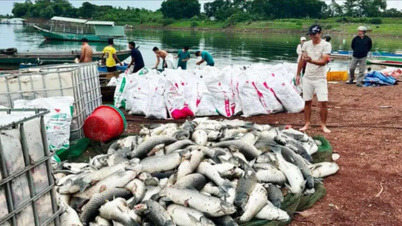
The stench of dead fish was overwhelming, boats lay motionless on the water, and the fish farms were sparsely populated.
The fish kill incident affecting 15 households has left the area looking desolate.
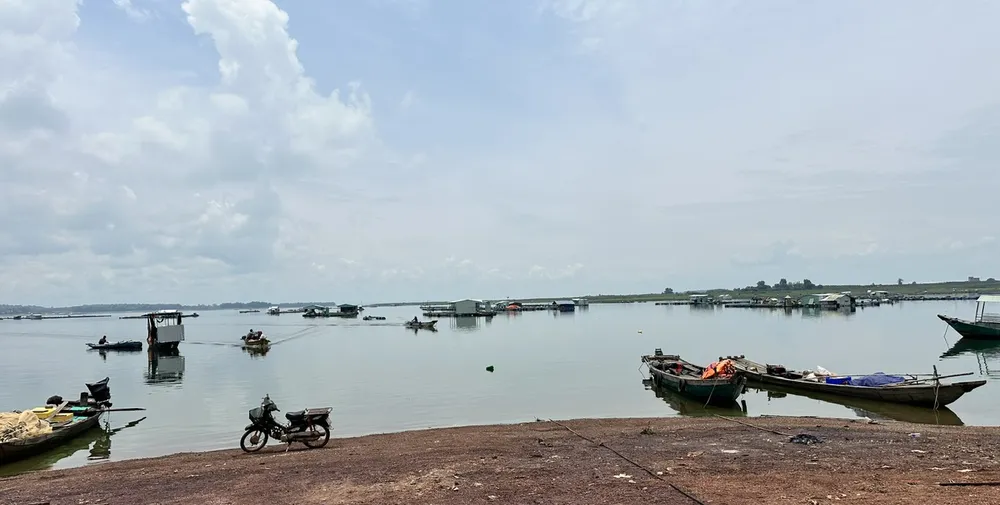
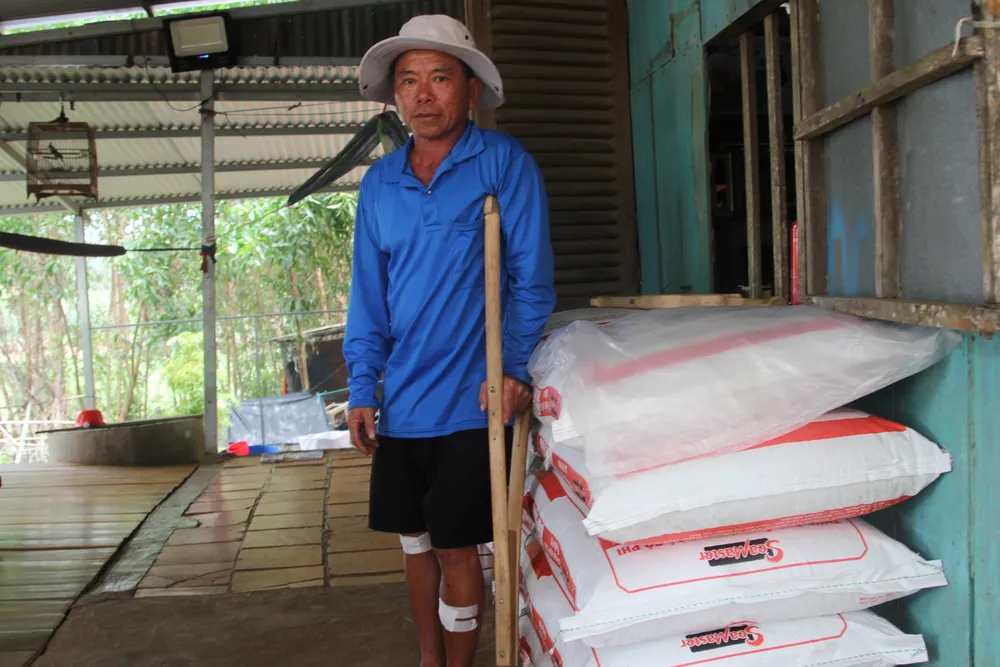
Mr. Nguyen Van Manh (52 years old, residing in Tri An ward) said that his family has been raising fish on the lake for over 20 years, but they have never seen such a mass fish kill as recently occurred.
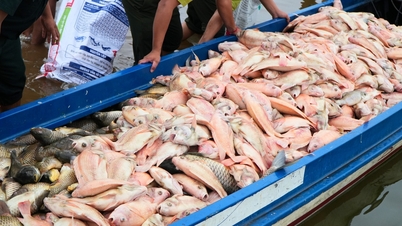
Mr. Manh's family is one of the largest fish farming households and suffered the heaviest losses: more than 64 tons of grass carp, common carp, catfish, and koi, which had been raised for 17 months and were awaiting purchase by traders, were lost; the total estimated value was over 3 billion VND.
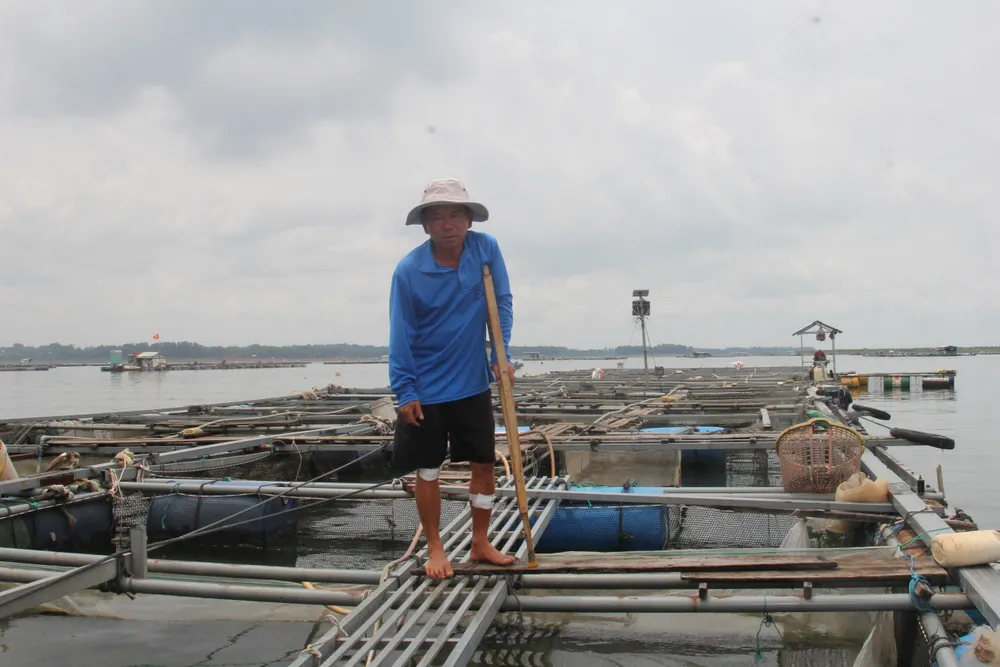
"As soon as we saw the fish surfacing, I increased the oxygen supply with one pump, then turned the motorboat's stern to full power to create more oxygen in the water. But the fish died too quickly, we couldn't react in time, so we had to work with relatives to collect the dead fish from evening until morning and ask for help in disposing of them as fertilizer," Mr. Mạnh recounted sadly.
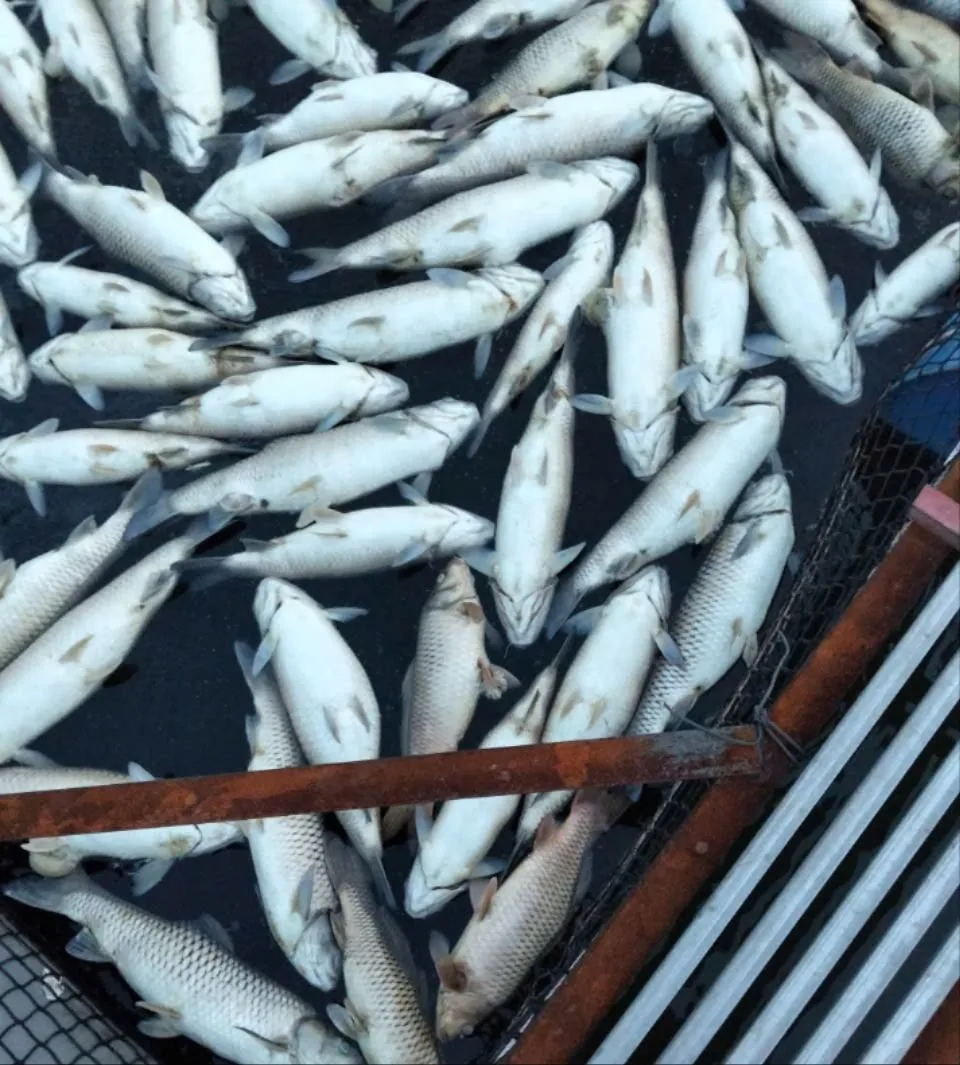
Heartbroken over the loss of his fish, which were ready for harvest, and the majority of his assets invested in this crop, Mr. Mạnh was stunned and fell. He suffered injuries to both elbows as he stepped from the boat onto the shore, requiring five stitches and the use of crutches to move around.
Nevertheless, he still found a way to save the 200kg of dying fish fry.
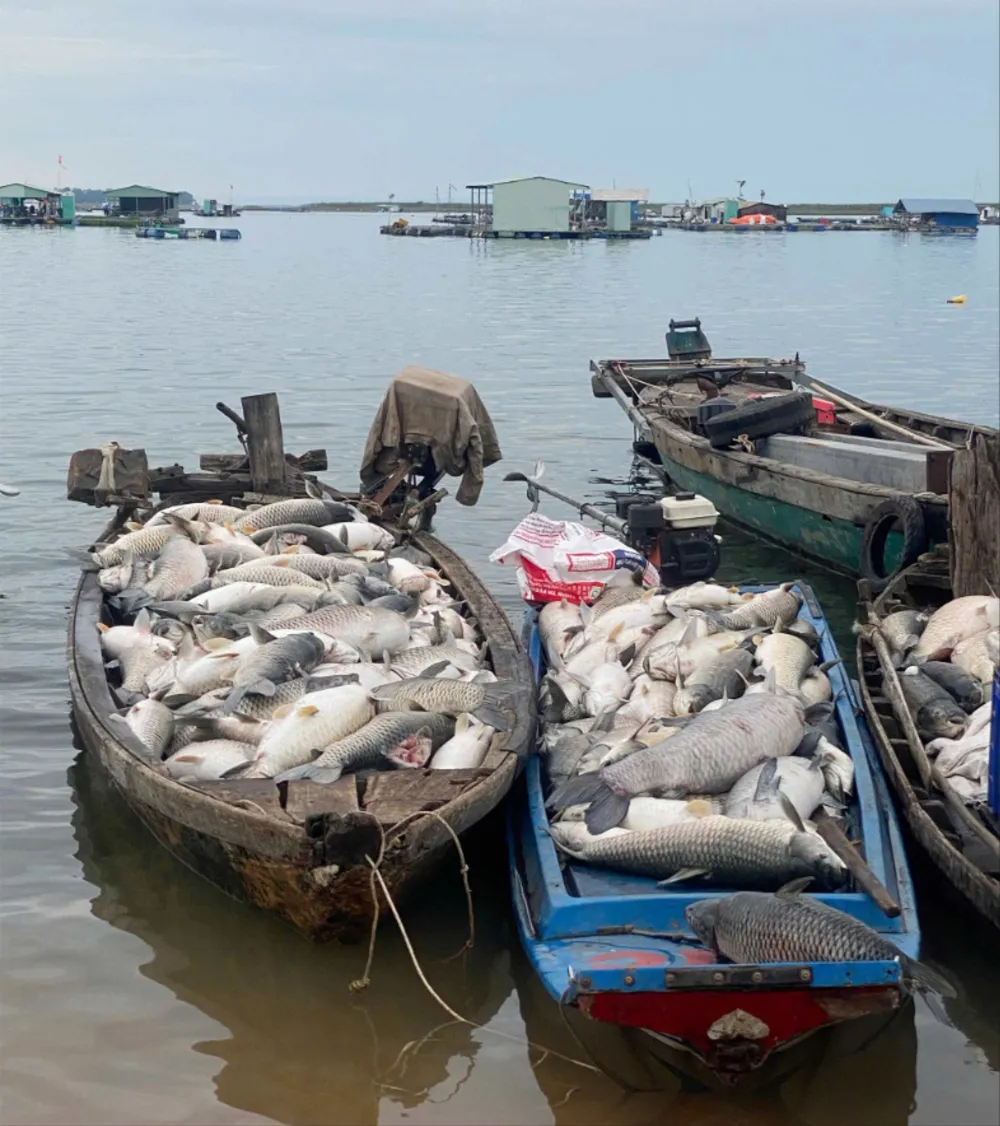
According to Mr. Manh, the aforementioned losses are only temporary; there are currently 300 bags of feed that have been imported in surplus, amounting to nearly 1.5 billion VND, for which there is no source of payment.
From being considered a well-off household in the area, he lost everything overnight, his life is in turmoil, and he doesn't know when he will be able to recover and resume production.
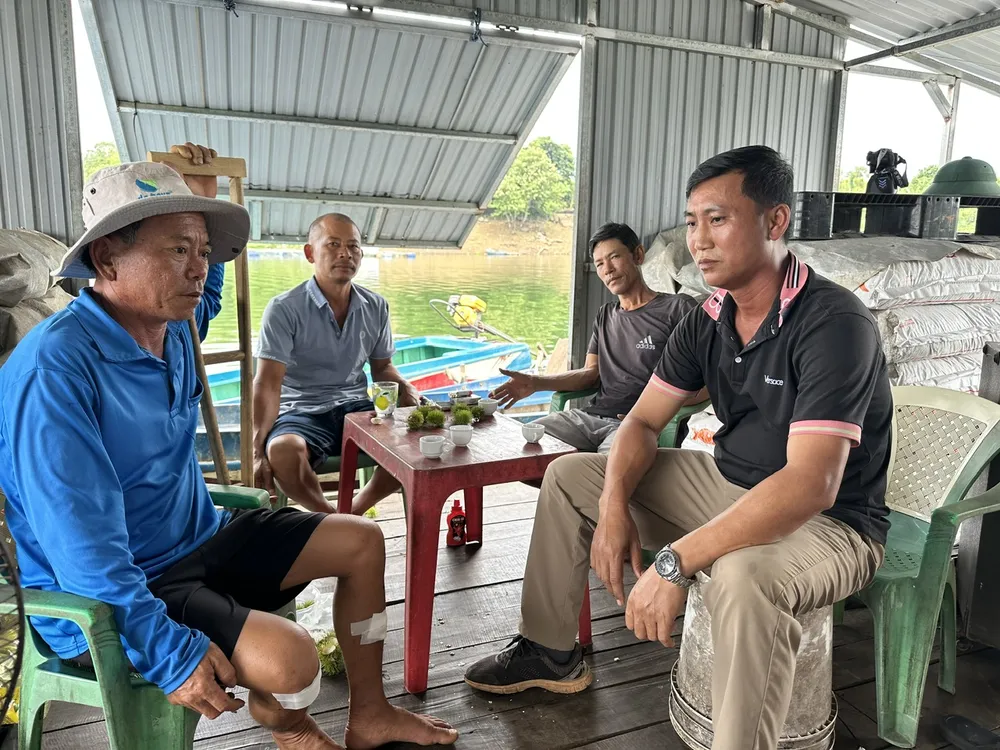
At the fish farm of Mr. Le Van Trung (51 years old, with 8 years of experience raising fish in cages on Tri An Lake), we found him and three friends chatting and encouraging each other to persevere and overcome difficulties.
Mr. Trung choked up as he said, "All the fish I was raising in the cages, about 25 tons, died. My entire fortune was swept away with the fish."
Like many fishermen involved in fish farming in this area, Mr. Trung hopes that in the future, the local government and relevant agencies will have policies to support capital and create conditions for fishermen to have stable production. Above all, he hopes for a plan to expand the market for his products, avoiding dependence on a few purchasing agents, which leads to price instability.
Fundamental solution
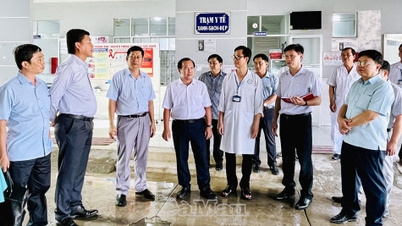
According to Mr. Nguyen Van Thang, Deputy Director of the Department of Agriculture and Environment of Dong Nai City, in the immediate future, functional forces have assisted people in collecting dead fish, cleaning up the environment, and relocating fish cages to safe areas.
The department is also reviewing the conditions to study and propose support for the people in accordance with regulations.
The Department continues to coordinate with the Dong Nai Nature and Culture Reserve and local authorities to implement the Project on reorganizing cage fish farming areas, relocating and clearing surplus cages on Tri An Lake (Phase 1).
Specifically, the focus is on reorganizing farming areas, reducing cage density, clearing surplus cages, and encouraging the development of high-tech, modern, and environmentally friendly cage fish farming models. This will contribute to improving production efficiency, protecting the water quality of Tri An Lake, and developing sustainable aquaculture.
In May 2019, in Dong Nai province (formerly), a mass die-off of fish raised in cages on the La Nga River (the section passing through La Nga and Phu Ngoc communes, former Dinh Quan district) also occurred.
Specifically, approximately 81 households suffered losses of over 976 tons of fish, including tilapia, catfish, and carp. The cause was determined to be heavy rain, which increased the water flow into the fish farming area and may have carried pollutants, increasing the toxicity of certain gases, leading to fish shock and mass deaths.
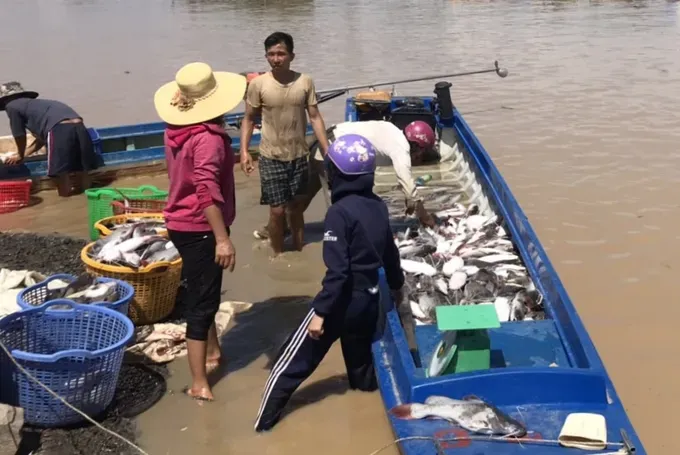
Exactly one year earlier, in May 2018, 1,500 tons of fish belonging to fish farmers on the La Nga River died, the cause believed to be adverse environmental changes following prolonged heavy rains in the area.
At that time, water sample tests conducted by the Dong Nai Provincial Fisheries Department showed that the dissolved oxygen (DO) content was low, fluctuating between 2.6 and 3.2 mg/liter of water, while the optimal DO level recommended for aquaculture is 4 mg/liter of water or higher.
In addition, the ammonia (NH4) content also exceeded the permissible limit according to the national technical standard on surface water quality for fish farming by about 5-11 times, and the nitrogen dioxide (NO2) content exceeded the permissible limit by 10-20 times.
Source: https://www.sggp.org.vn/ca-chet-trang-be-nguoi-dan-trang-tay-post855603.html

![[Photo] Secretary of the National Assembly Party Committee, Chairman of the National Assembly presides over the meeting of the Standing Committee and Executive Committee of the National Assembly Party Committee.](https://vphoto.vietnam.vn/thumb/1200x675/vietnam/resource/IMAGE/2026/06/03/1780480353201_ndo_br_bnd-2585-jpg.webp)

![[Photo] General Secretary and President To Lam presides over a meeting with the Central Organizing Committee.](https://vphoto.vietnam.vn/thumb/1200x675/vietnam/resource/IMAGE/2026/06/03/1780482764658_a1-bnd-4741-3342-jpg.webp)
![[Photo] First session of the 14th Congress of the Vietnam Trade Union](https://vphoto.vietnam.vn/thumb/1200x675/vietnam/resource/IMAGE/2026/06/03/1780465947883_ndo_br_img-3852-jpg.webp)










































![[Video] Sunset at Lap An Lagoon – Where the sun sets over the fishing nets](https://vphoto.vietnam.vn/thumb/1200x675/vietnam/resource/IMAGE/2026/05/31/1780192137701_beach-landscape-sea-water-nature-grass-745871-pxhere-com.jpeg)




























Comment (0)