

 |
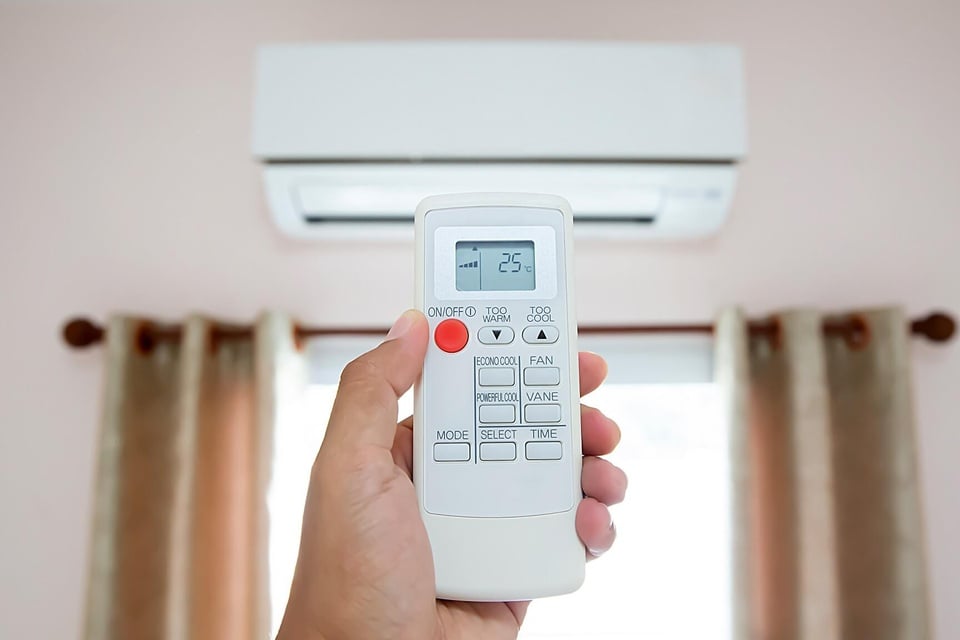
Common mistakes people make when leaving air conditioners on all day in the summer. Photo: Freepik . |
During hot weather, using air conditioning has become almost indispensable for many families. From the moment they return home after work until they go to bed, many people have the habit of keeping the air conditioner on continuously to maintain a comfortable environment.
However, many families still over-cool their rooms, wasting energy or neglecting simple habits that help their air conditioners work more efficiently. From choosing the right temperature for daily living to calculating the number of air conditioners needed in a new home, there are many smart ways to optimize cooling performance, according to CNA .
According to Eric Tan Kuo Hon, training manager at Daikin Airconditioning, efficient air conditioning use is not just about choosing the right temperature in degrees Celsius, but also involves cooling the room effectively, controlling costs, eliminating unpleasant odors, and addressing maintenance issues.
Use air conditioners correctly to stay cool while saving electricity.
According to Mr. Tan, users should turn on the air conditioner about 15-30 minutes before returning home if they have a remote control app. The recommended temperature is around 25 degrees Celsius combined with a medium fan speed.
He suggested that only spaces that would be used immediately, such as the living room or bedroom, should be cooled down beforehand, instead of turning on the entire apartment.
"Cooling rooms that aren't being used is like turning on extra lights where you can't see them. It only increases the bill without making things more comfortable," he said.
For families without smart home control systems, he suggests setting the temperature to 23-24 degrees Celsius for the first 10-15 minutes to cool down quickly, then raising it back to 25 degrees Celsius.
He also noted that setting the temperature too low, like 18 degrees Celsius, doesn't cool the room faster; it only makes the machine run longer and consume more electricity.
 |
Before going to sleep, it's better to set the air conditioner to 25 degrees Celsius and use a fan instead of maintaining it at 22 degrees Celsius all night. Photo: Prathan Chorruangsak/iStock. |
To make the room feel cooler without drastically lowering the temperature, users can turn on additional ceiling fans or standing fans to create airflow. Once the room is comfortable enough, the temperature can even be increased to 26 degrees Celsius and the fans can be used again.
Additionally, closing doors and windows and drawing curtains in rooms exposed to direct afternoon sunlight can help air conditioners work more efficiently. Users should also limit the use of clothes dryers, ovens, or other heat-generating appliances while the air conditioner is on.
For bedrooms, Mr. Tan advises drawing the blackout curtains around 5 PM, especially in west-facing rooms, to reduce the amount of heat that builds up before bedtime.
Instead of leaving the air conditioner at 22 degrees Celsius all night, he recommends setting it to around 25 degrees Celsius, combined with a fan, and using sleep or energy-saving mode.
"Many families have noticed a significant reduction in their electricity bills by switching from 22°C to 25°C, combined with a fan and a 2-3 hour timer. The comfort level remains almost unchanged, but the compressor works less," he said.
According to Mr. Tan, using the timer or sleep mode also helps prevent the machine from running at full capacity in the early morning when the room is already cool enough.
Habits that help reduce damp odors in your home and make your air conditioner last longer.
Besides the issue of electricity bills, many families also experience the problem of their air conditioners developing a musty smell after a period of use.
According to Mr. Tan, air conditioners themselves don't create pollutants, but they can trap and circulate things already present in the air, such as fine dust, cooking fumes, pet dander, or compounds from new furniture, paint, and cleaning products.
He explained that the musty smell occurs when condensation combines with dirt, cooking grease, or dead skin cells that accumulate on the air conditioner's cooling coils and surrounding surfaces.
"When the air conditioner is running, condensation forms. If some parts remain damp for too long, it will create a breeding ground for microorganisms and produce odors," he said.
To mitigate this problem, he recommends opening windows for about 10-15 minutes each morning to allow for air circulation instead of keeping them closed all day.
Additionally, setting the temperature too low can cause surfaces in the room to become excessively cold, leading to condensation when the door is opened.
He suggested that using additional fans would improve air circulation, especially in enclosed spaces prone to dampness. Users should also check the air conditioner's drainage system, as slow drainage can leave the unit constantly damp.
"If your air conditioner has a drying or anti-mold function for the evaporator coil, use it. If not, turn on the fan for 10-20 minutes before turning off the unit to dry out any moisture inside," he recommended.
He also noted that wet clothes should not be hung out to dry in a room with the air conditioner on, and that the filter should be cleaned regularly for more effective dehumidification.
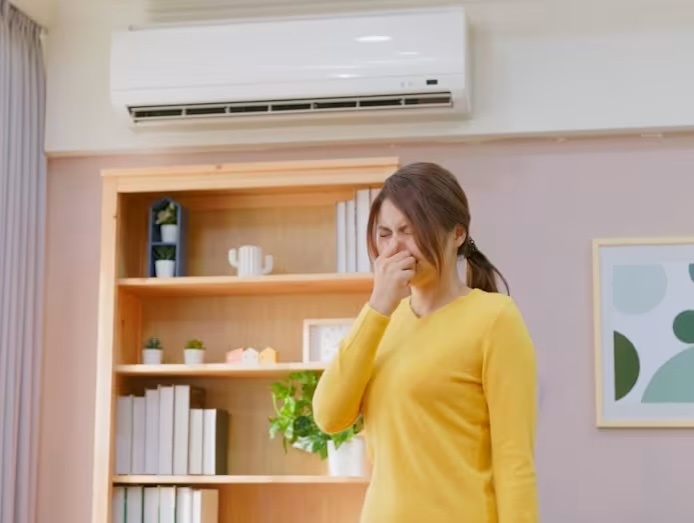 |
Even newly renovated apartments can develop unpleasant odors if the air conditioner is left on all day and the windows are kept closed. Photo: Pony Wang/iStock. |
Regarding maintenance, Mr. Tan stated that self-cleaning the filter is necessary but cannot completely replace professional cleaning.
According to him, fine dust and grease can still accumulate inside the cooling coil, fan, or drainage system even if the filter looks clean. This can lead to weaker airflow, increased energy consumption, or water leaks.
He suggested regular maintenance every 3-6 months, especially for families who use the appliance daily, have pets, or live near construction sites.
Additionally, users should consider replacing their air conditioner if the unit frequently malfunctions, cools poorly, makes strange noises, or if their electricity bills increase significantly despite consistent usage.
"Under normal daily use conditions, many residential air conditioning systems can operate for about 8-12 years if properly maintained," he said.
He also noted the issue of compatibility between devices: "If using a multi-split system (an air conditioner with one outdoor unit connected to multiple indoor units), replacing only a few indoor units may not be practical, unless the outdoor unit and refrigerant system are compatible with the new models. Technicians need to check to confirm which devices can be safely combined."
For those who have just moved into a new home, Mr. Tan advises carefully calculating their needs instead of installing additional air conditioners after moving in.
He suggested that users should choose a system that suits their actual needs instead of installing too many units. For example, they should consider which rooms will need frequent cooling, the room size, and the level of heat absorption, such as whether they receive direct afternoon sunlight, have large windows, or high ceilings.
Additionally, users should consider whether the rooms will be frequently closed, or whether they might be converted into a nursery or a home office in the future.
Source: https://znews.vn/cach-dung-may-lanh-tiet-kiem-dien-ma-van-mat-me-post1654898.html




![[Photo] Standing Committee member of the Party Central Committee Tran Cam Tu working with the Central Inspection Committee](https://vphoto.vietnam.vn/thumb/1200x675/vietnam/resource/IMAGE/2026/05/28/1779969579668_ndo_br_bnd-2495-jpg.webp)
































































































Comment (0)