

Promoting the correct leadership role of the Party
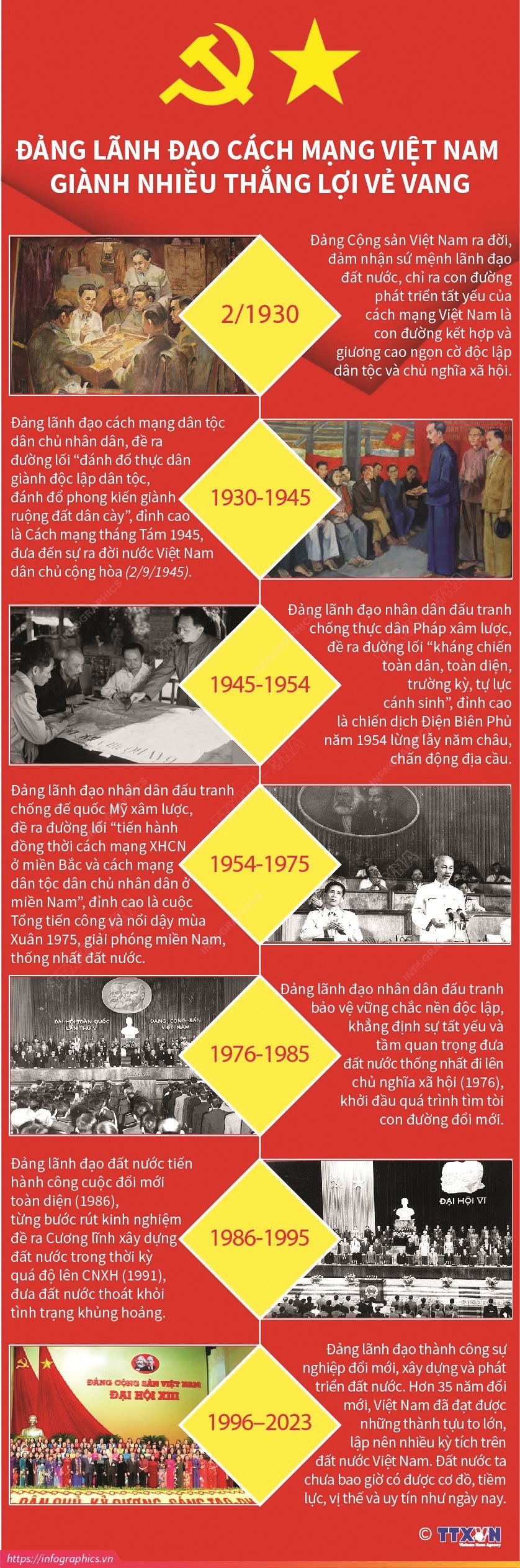
The rich and vibrant experience of the Vietnamese revolution over the more than 94 years since the founding of the Communist Party of Vietnam has affirmed that the correct and wise leadership of the Party has always been the leading factor, determining all the victories of the Vietnamese revolution. In the August Revolution of 1945, this leading decisive factor was even more clearly demonstrated, becoming an invaluable lesson.
The Party laid down the correct guidelines, appropriate to the period of struggle for power. When World War II broke out, the Central Committee of the Party wisely predicted the situation to promptly shift the strategic direction of the Vietnamese revolution. In this, the Party emphasized the task of national liberation, correctly identified the enemy, and established a political system for the country after the revolution's success; in particular, it determined the form of uprising to seize power by using revolutionary violence, combining armed violence with political violence.
In implementing that policy, the Party actively led the preparation of forces for the struggle to seize power. It focused on building revolutionary armed forces with the establishment of the Bac Son Guerrilla Team, the National Salvation Army, and especially the Vietnam Propaganda and Liberation Army (December 22, 1944) – the main force of the Vietnamese revolution under the absolute and direct leadership of the Party in all aspects. Attention was paid to building revolutionary forces in all social strata, in both rural and urban areas. In particular, the Party led the building of a great national unity, with the worker-peasant alliance as the core, creating an immense strength that, at the call of the Party, was ready to rise up and fight to overthrow the rule of the Japanese fascists and their feudal collaborators, and seize power.
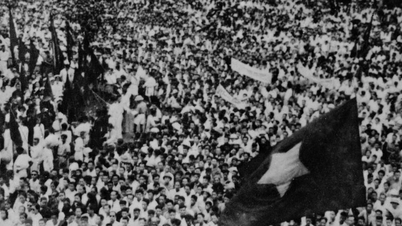
The Party wisely grasped the situation, accurately analyzed the revolutionary circumstances, and recognized the opportune moment to launch a nationwide general uprising to achieve victory. Precisely at the time when the Japanese fascists were defeated in the world war and before the Allied forces disarmed the Japanese army in Indochina, the Party pressed the button at the right moment, launching a nationwide general uprising to seize power. In particular, the victories in Hanoi, Hue, and Saigon-Gia Dinh played a crucial role, impacting the overall national victory.
Because they seized the right opportunity, possessed strong capabilities, and were led wisely and skillfully by the Party and President Ho Chi Minh, within just 15 days (from August 13 to August 28, 1945), all strata of our people rose up in unison to seize power, achieving complete victory in the general uprising.
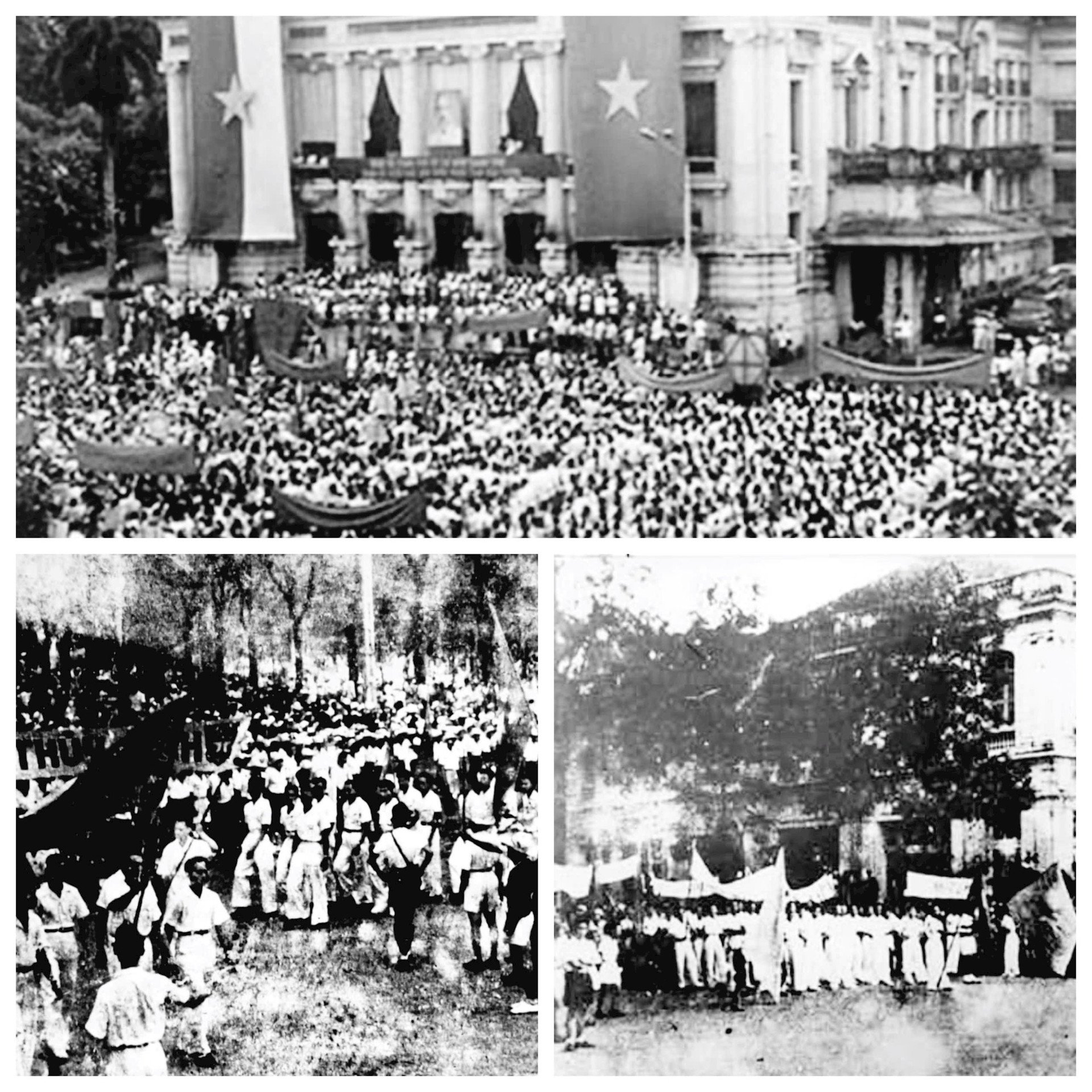
The victory of the August Revolution in 1945 affirmed that ensuring and promoting the correct leadership role of the Party is a prerequisite and a consistent condition for all victories. To fulfill its responsibilities, the Party must always innovate and be creative; when the situation changes, it must have new and timely policies.
The historical practice of over 94 years of the Party's operation shows that, faced with many turning points of the times, the Party has wisely formulated policies and guidelines appropriate to reality. A prime example is at the Sixth National Congress (December 1986), based on a deep analysis of the country's situation and through a process of practical exploration and testing, with the spirit of "looking straight at the truth, assessing the truth correctly, speaking the truth clearly," and "renewing thinking," the Party formulated the Comprehensive National Renovation Policy, marking a crucial turning point on the path of transition to socialism in Vietnam.
The victory of the August Revolution in 1945 affirms that ensuring and promoting the correct leadership role of the Party is a prerequisite and a consistent condition for all victories.
The reform line was born to meet the demands of historical reality, demonstrating the firm resolve and creative thinking of the Communist Party of Vietnam and opening a new era for the development of the country. After the Sixth Congress, the Party has gradually perfected and concretized the reform line, the basic and core content of which is expressed in the Platform for building the country during the transitional period to socialism (the 1991 Platform and the 2011 supplementary and development Platform) and important documents of the Party through the congresses, so that our country "has the foundation, potential, prestige and international position as it is today" (1) .
Building and strengthening the great national unity, combining national strength with the strength of the times.
The solid foundation for building national unity was laid out by our Party in its first political platform at the Party's founding conference on February 3, 1930. During the August Revolution of 1945, the Party built a force of national unity, with the worker-peasant alliance as its core, under the name of the Vietnam Independence League (abbreviated as the Viet Minh Front). This was an innovation of our Party compared to the guidance of the Communist International and the Soviet model.
In a colonial and feudal country like Vietnam, not only the workers and peasants, but almost all other social classes were in conflict with the oppression of colonialism and feudalism. The fundamental contradiction in Vietnamese society at that time was between the entire Vietnamese nation and the invasion and oppression of the colonial, imperialist, fascist regimes and their traitorous collaborators.
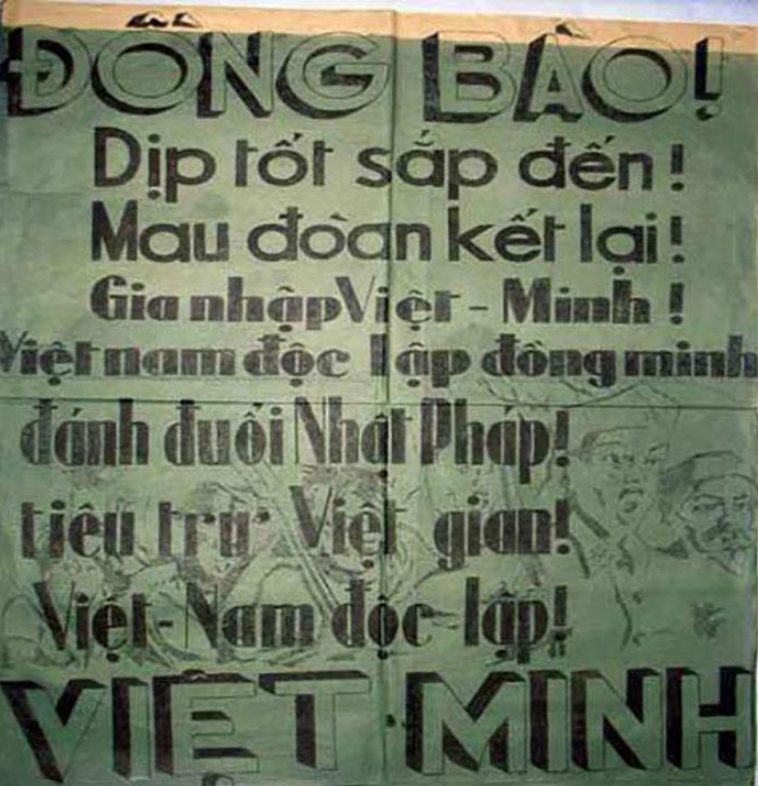
Therefore, in addition to workers and peasants, the Party also advocated for the mobilization of a large number of other patriotic social strata, such as landlords, feudal lords, national bourgeoisie, and petty bourgeoisie... All of them, although having different individual interests, shared a common "denominator": national liberation. Thus, fighting imperialism and feudalism were two strategic tasks of the Vietnamese revolution; however, based on the specific situation, the Party always acted quickly and adjusted accordingly.
During the revolutionary movement (from 1939 to 1945), our Party put forward the policy of raising the banner of national liberation, temporarily setting aside the task of fighting feudalism, and at this time, the Viet Minh Front was the most suitable and effective organization to gather revolutionary forces to rise up and win independence for the country.
The policies of the Viet Minh demonstrated the Party's goal of overthrowing the Japanese fascists and their feudalist collaborators, building a new, progressive society, and bringing basic benefits to all the people, especially land for the peasants – the vast majority of the Vietnamese population – with the practical slogan: "Land to the tiller." In reality, in many localities, when the general uprising to seize power broke out, the Viet Minh was the force that organized the struggles with a well-structured program and plan, attracting all forces, regardless of whether they were workers, peasants, landlords, capitalists, petty bourgeoisie, or even officials of the feudal regime, who were ready to side with the revolutionary forces.
Throughout the process of national renewal, construction, and defense, the Party has successfully applied the lesson of building and promoting the tradition and strength of national unity. Through the Vietnam Fatherland Front, the Party has harnessed the unity of all social strata to build and defend the nation.
Building and strengthening the great national unity, combining national strength with the strength of the times – this is a fundamental lesson learned from the August Revolution of 1945, which needs to be applied and creatively developed in the new revolutionary period.
Along with that, it is necessary to do well in social solidarity, create consensus to awaken and develop strength from all strata, sectors, and economic components, taking the goal: "building a prosperous and happy Vietnam; becoming a developed country with high income by 2045 as a common point to motivate and encourage the people to work together for the future of the nation and the happiness of the people" (3) .
At the same time, harmoniously resolve the relationships of interests between: individuals - collectives, the State - enterprises - people... Strengthen the fight against individualism and "group interests", put the interests of the Fatherland and the nation first, in the spirit of: "Ensure the highest national interests" (4) . That is a principled lesson that has been learned from the August Revolution of 1945, which needs to be applied and creatively developed in the new revolutionary period.
Raising awareness and combating historical distortion.
Every year, as the entire Party, people, and army organize meaningful activities to commemorate the successful August Revolution and National Day on September 2nd, hostile and reactionary forces, taking advantage of media and social networks, repeatedly regurgitate the rhetoric that the August Revolution was "lucky," that the Viet Minh were not particularly talented, but merely exploited the "power vacuum" (when the Japanese fascists had surrendered to the Allied forces and the Vietnamese feudal government was crumbling), like "reaching out to pick up a ripe fruit that had fallen," and therefore, the uprising did not involve bloodshed. They also claimed that Vietnam already had independence, citing as proof that Japan had granted independence on March 11, 1945, and Emperor Bao Dai had declared his acceptance. Therefore, they called the victory of the August Revolution of 1945, led by the Party, "a coup" that overthrew the independence that Japan had previously granted, and seized power from the government headed by Prime Minister Tran Trong Kim. From this, they deduced that March 11th should be celebrated annually as Vietnam's National Day!
In 1945, the opportunity for national independence existed not only in Vietnam but in all Southeast Asian countries, yet only Vietnam, Indonesia, and Laos achieved independence. That opportunity also opened up for all political forces in Vietnam, but only the Viet Minh, led by the Communist Party, emerged victorious.
There is only one truth. There is no such thing as "luck." Because, at the same time in 1945, the opportunity for national independence existed not only in Vietnam but in all Southeast Asian countries, yet only Vietnam, Indonesia, and Laos achieved independence. That opportunity also opened up to all political forces in Vietnam, but only the Viet Minh, led by the Communist Party, achieved victory. This was not a coincidence, but an inevitable victory resulting from the Party's leadership, preparation, and building of a sufficiently strong revolutionary force, along with the experience gained from "practice runs" such as the Soviet-Nghe Tinh Uprising (1930-1931); the democratic uprising (1936-1939); and the national liberation revolutionary uprising (1939-1945).
The so-called "power vacuum" is actually the delusion of narrow-minded and ignorant individuals. In reality, no vacuum existed, as the Japanese fascists remained a real entity with nearly 100,000 troops occupying Indochina, and they continued their scheme to prevent the revolutionary forces from seizing power. The existence of the Bảo Đại "puppet" government at that time was merely a ploy by the colonial and imperialist powers to save face. That government was essentially a continuation of the foreign powers' intentions to occupy and enslave our country; and there was certainly no "coup" involved. Therefore, the victory of the August Revolution in 1945 was achieved by the Vietnamese people themselves, under the brilliant and correct leadership of the Party, and through the unwavering unity of the entire nation.
The victory of the August Revolution in 1945 was achieved by the Vietnamese people themselves, under the skillful and correct leadership of the Party, and through the solid unity of the entire nation.
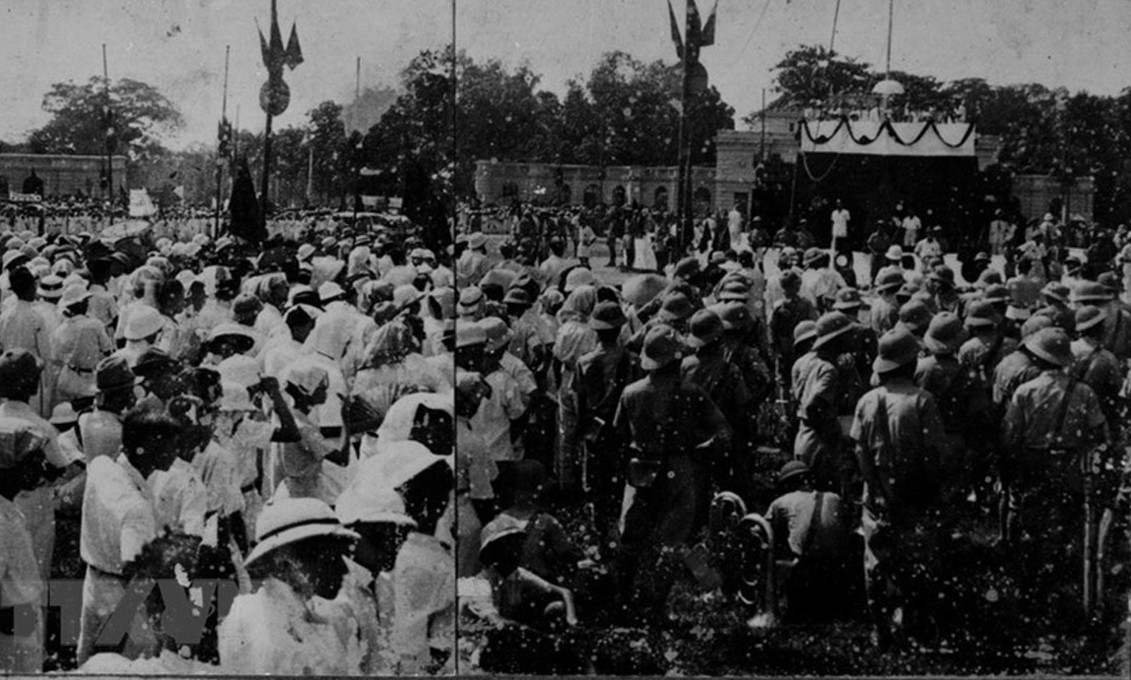
President Ho Chi Minh's stirring declaration on the Independence Platform on the afternoon of September 2, 1945, will forever remain a golden milestone marking the miraculous development stemming from the patriotic spirit of the entire nation. September 2nd has become the sacred National Day, reminding us not to forget the immense contributions of the entire Party, people, and army of Vietnam who bravely rose up to fight for independence since the historic autumn of 1945. This is also the result of implementing the correct national salvation viewpoint and policies of our Party and leader Ho Chi Minh: "using our own strength to liberate ourselves."
Nearly 80 years have passed, but the victorious spirit of the August Revolution lives on, a priceless spiritual asset that needs to be multiplied and spread in the process of renovation and building our country into an increasingly prosperous and happy nation.
1 - CPV - Documents of the 13th National Congress, Volume I, National Political Publishing House, Hanoi 2021, p. 104.
2 - Ho Chi Minh - Complete Works, Volume 15, National Political Publishing House, Hanoi 2011, p. 611.
3 - CPV - Documents of the Eighth Conference of the Central Committee of the 13th Party Congress, National Political Publishing House, Hanoi, 2021, p. 138.
4 - CPV - Documents of the 13th National Congress, Volume I, National Political Publishing House, Hanoi 2021, pp. 161-162.
Source: https://baotainguyenmoitruong.vn/cach-mang-thang-tam-va-nhung-bai-hoc-lon-con-nguyen-gia-tri-379199.html


![[Photo] General Secretary To Lam visits the exhibition space showcasing books, photo exhibitions, and achievements of digital transformation in journalism.](/_next/image?url=https%3A%2F%2Fvphoto.vietnam.vn%2Fthumb%2F1200x675%2Fvietnam%2Fresource%2FIMAGE%2F2025%2F12%2F19%2F1766110879215_1766110240024-jpg.webp&w=3840&q=75)
![[Photo] Enchanting ancient rose garden on the mountainside in Nghe An](/_next/image?url=https%3A%2F%2Fvphoto.vietnam.vn%2Fthumb%2F1200x675%2Fvietnam%2Fresource%2FIMAGE%2F2025%2F12%2F19%2F1766109900916_vuon-hong-chin-do-thu-hut-du-khach-toi-check-in-o-ha-noi-3-20162778-1671624890024-1671624890104198100259.jpeg&w=3840&q=75)























![[INFOGRAPHIC] Overview of the Hoa Phat Dung Quat Rail and Special Steel Production Plant Project](https://vphoto.vietnam.vn/thumb/402x226/vietnam/resource/IMAGE/2025/12/19/1766111183203_z7339170069817-126a3e5a095f62e606a0be41015c1b80.jpeg)



























Comment (0)