

Summer has just begun, but several tragic incidents have occurred, leaving the public deeply saddened: five 8th-grade students from Tu Yen Primary and Secondary School in Song Lo commune, Phu Tho province, died from drowning; and at the foot of the Nho Que 3 Hydropower Plant in Khau Vai commune, Tuyen Quang province, a male student was swept away by the current along with another friend while trying to save them.
These heartbreaking incidents once again demonstrate that drowning is no longer an unfamiliar or unexpected risk during the summer, but a constant threat to children, especially when they enter long holidays and have more time to play outside the regular supervision of school and family.
Quick recommendations for preventing drowning:
- Teach children survival skills, not just swimming: floating on their backs, treading water, controlling their breathing, and dealing with cramps.
- Don't be complacent just because your child knows how to swim, because a swimming pool is very different from a pond, lake, river, or the sea.
- Do not allow children to go into the water unsupervised by an adult.
- Teach children to identify dangerous places: deep water, fast-flowing currents, whirlpools, deep holes, and areas without warning signs.
- Do not jump in to save a friend if you lack the skills; instead, call for help, contact an adult, or use a lifebuoy, rope, pole, or other floating object for support from a distance.
- Families, schools, and local communities should work together to manage children, warn of risk areas, and create safe summer playgrounds.
Regular practice is necessary.
Speaking to a reporter from Tien Phong newspaper about the prevention of drowning and other accidents during the summer, Mr. Nguyen Binh Khanh Hai, a physical education teacher at Binh Long Specialized High School in Binh Long ward, Dong Nai city, said that due to the unique nature of the boarding school environment, the school has specific requirements for managing its students.
Before students leave school to participate in summer activities in their local communities, the school has implemented a series of activities aimed at equipping them with safety skills.
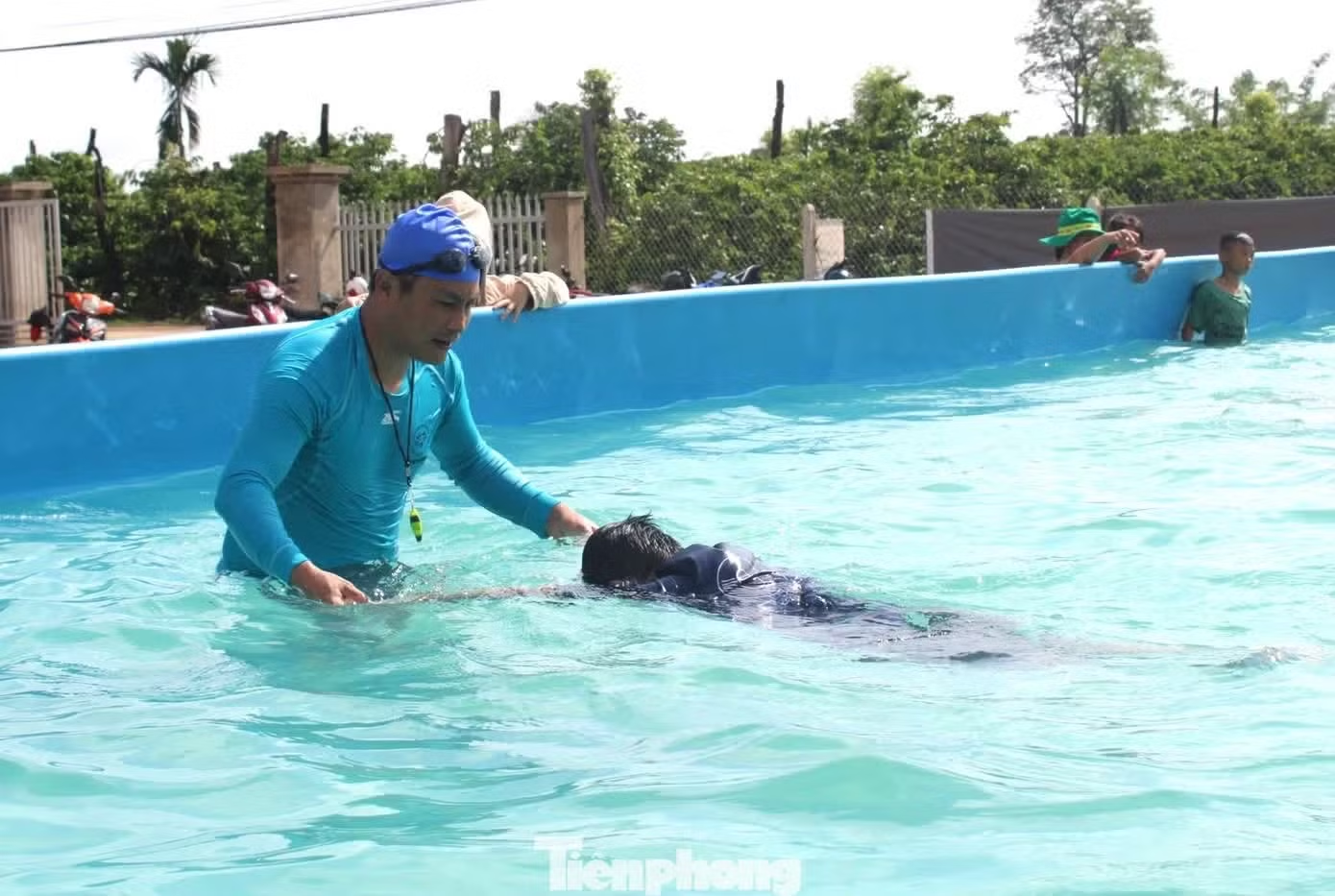
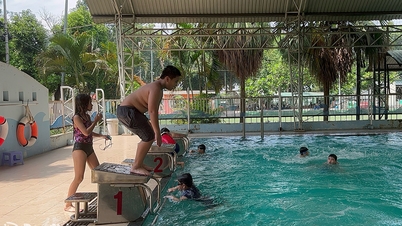
According to Mr. Hai, the school makes full use of the standard swimming pool to organize survival swimming lessons and mandatory water safety skills training before the summer break begins. Thematic dormitory activities include distributing leaflets and showing warning videos , helping students better identify common risks during summer activities.
Specifically, the school implemented a tripartite agreement between the school, students, and parents regarding compliance with safety rules during the summer break. The agreement emphasized that students should not go swimming in rivers, streams, ponds, or lakes without adult supervision.
Students get hands-on experience in the water practicing essential skills such as floating on their backs, handling cramps, and indirect rescue techniques like throwing lifebuoys, using poles, or other remote support tools. These are crucial skills that help students learn how to protect themselves and assist others in dangerous situations without putting themselves at risk.
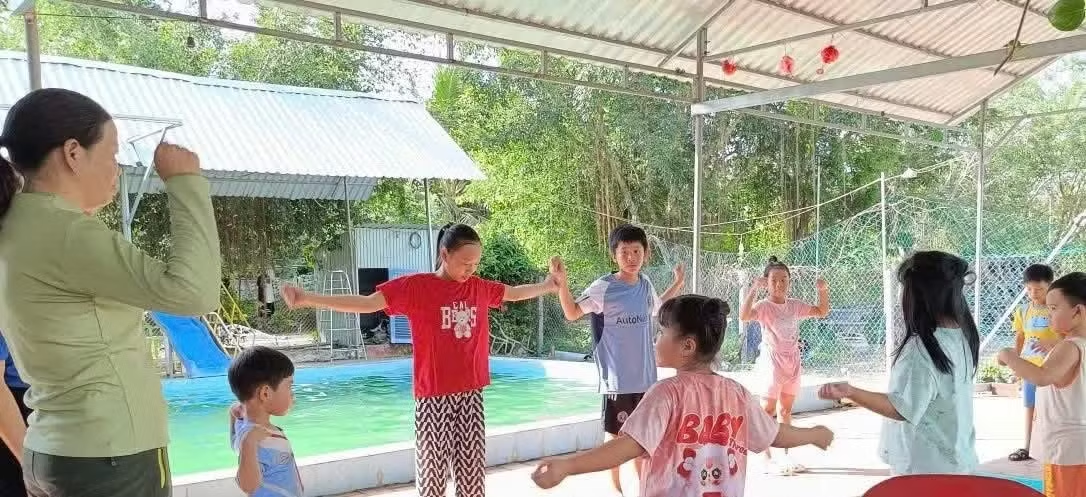
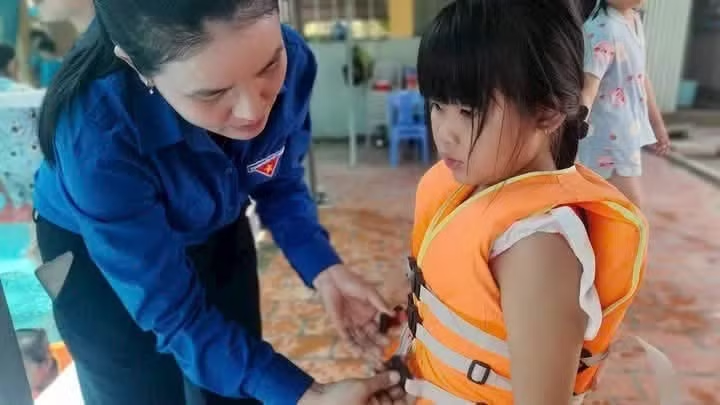
In addition to equipping students with essential skills in school, Binh Long Specialized High School also proactively builds a mechanism for close coordination with families and local authorities. Since students are boarding at the school during the academic year, when summer vacation begins, the school hands over student management responsibility to their families through electronic communication logs, while continuously updating them on weather warnings and high-risk areas in the locality.
The school also sends summer activity forms to the Youth Union in the commune or ward where the students reside. The school's Youth Union, in coordination with the local Youth Union, arranges for students to participate in volunteer activities and beneficial summer programs, thereby creating a healthy environment for recreation and training, and preventing them from venturing into unsafe areas such as rivers, ponds, and lakes.
According to Mr. Hai, the most effective educational method for preventing drowning is experience and practice. General reminders are unlikely to bring about change if students are not placed in hypothetical situations and do not practice emergency handling skills under the guidance of teachers and coaches.
Students, even those in specialized schools, can still be influenced by peer pressure and temptations like, "You're so timid, go swimming, what's the harm?" Therefore, in addition to teaching swimming and water safety skills, it's necessary to educate students on how to refuse, how to say "no" to dangerous invitations.
"Students also need to be guided on how to observe their surroundings, identify dangerous water areas, pay attention to warning signs, or proactively warn friends when they detect areas with potential safety risks. These are seemingly small skills, but they can contribute to preventing unfortunate accidents," Mr. Hai said.
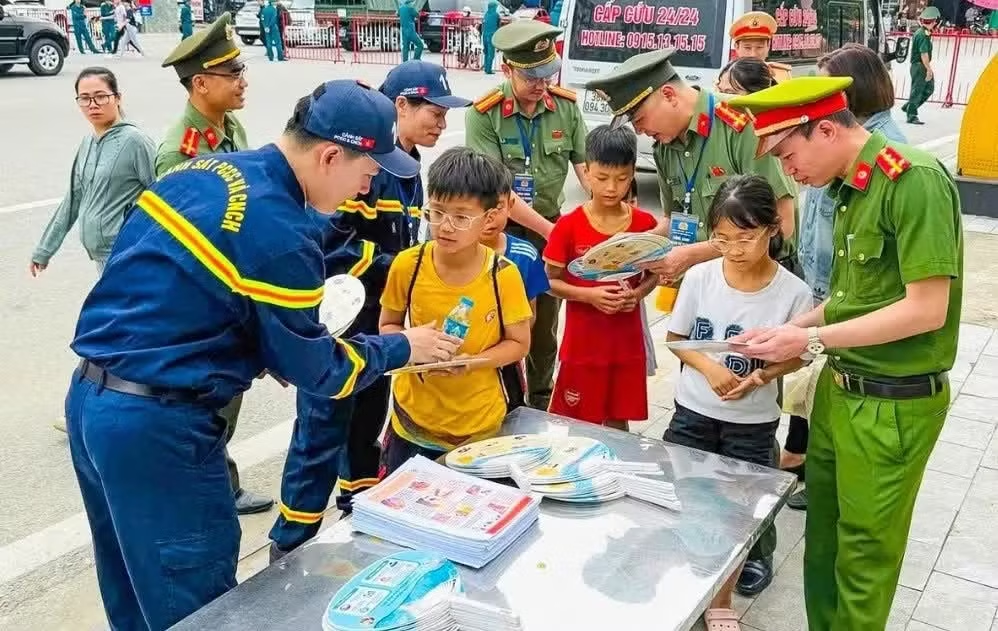
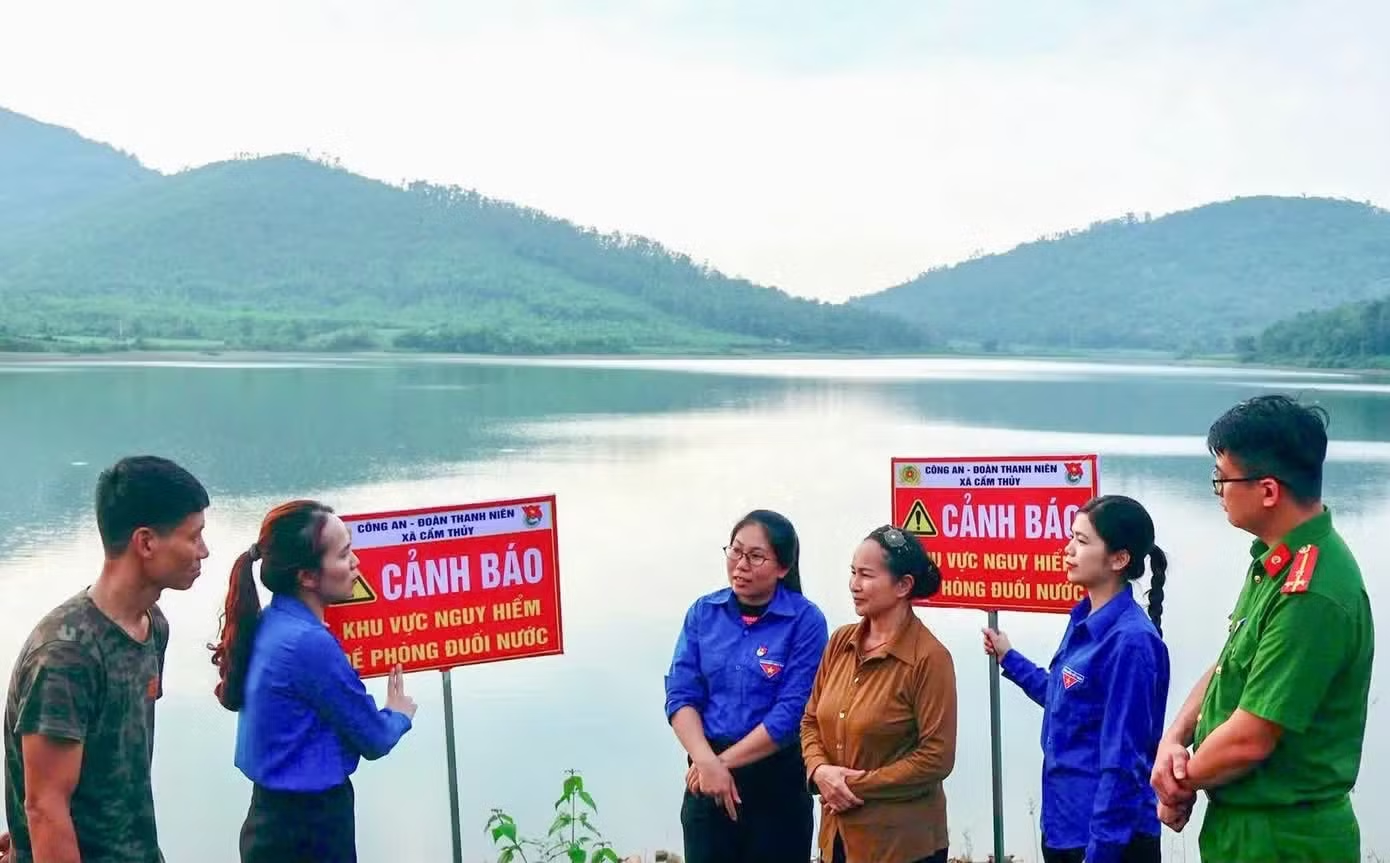
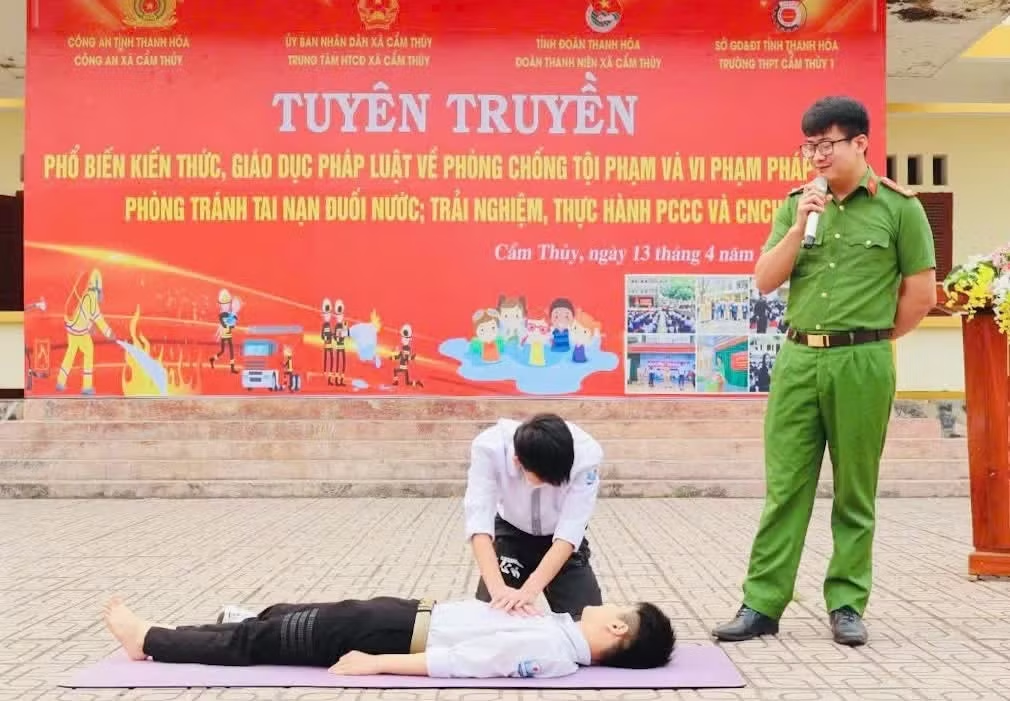
What to do if you suddenly lose your footing or get a muscle cramp?
Mr. Ho Le Thinh, coach of the Duc Hoa Swimming Club and teacher at Le Minh Xuan Primary School (Tay Ninh province), said that after more than 15 years of teaching swimming to children and directly instructing thousands of students, what children lack most when in the water is not only swimming technique, but also survival skills and the psychological ability to handle situations underwater.
According to him, many children can swim a few meters in a pool, but when faced with unexpected situations such as deep water, losing their footing, cramps, or panic, they easily lose their composure. At that point, children often thrash around violently, breathe rapidly, become disoriented, and quickly become exhausted.
Based on his teaching experience, Mr. Thinh believes that many children today lack basic skills such as floating headfirst without goggles to observe the direction towards shore, floating on their backs to rest and breathe, controlling their breathing, dealing with cramps, and recognizing dangerous areas such as strong currents, deep holes, and whirlpools. In particular, many children do not know how to properly call for rescue when in danger.
According to coach Ho Le Thinh, a child is considered capable of protecting themselves in water environments if they possess a minimum number of skills. They must be able to identify dangerous water environments, remain calm, float on the surface, breathe properly, swim continuously for 50 to 100 meters without getting exhausted, know how to tread water or float on their back to rest, and know how to move to shore when tired using learned survival skills.
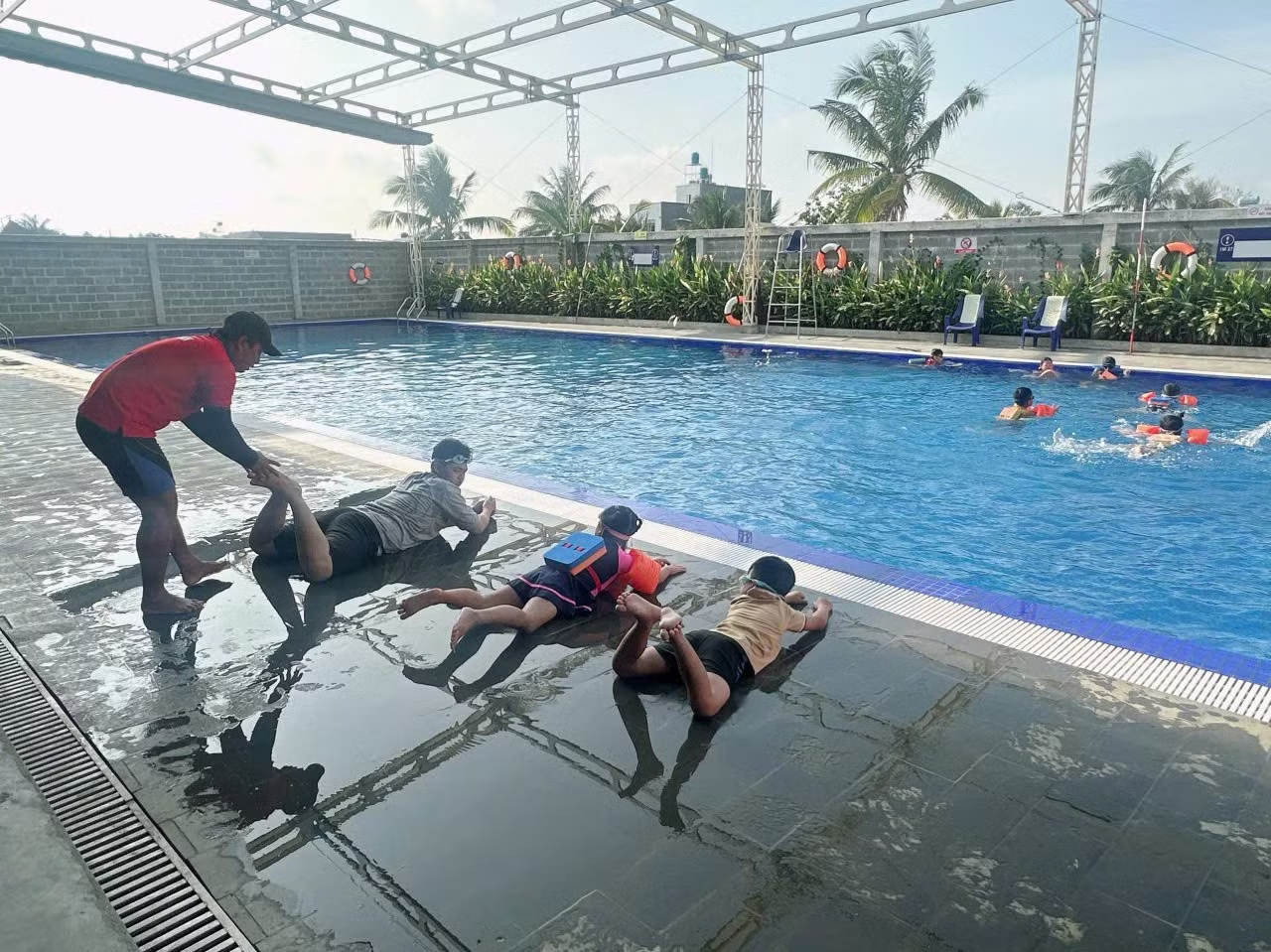
"The notion that 'after a few lessons, being able to swim one style is enough to be safe' is very dangerous. Swimming is not just a sport, but also a survival skill that requires time to practice, develop reflexes, and learn to handle real-life situations. Some children swim quite well in a pool, but when they go into a natural environment, they panic because of waves, cold water, murky water, or inability to reach the bottom. Therefore, parents should not be complacent when their children know how to swim in a pool, but need to have them learn properly, practice regularly, and always be supervised by an adult," Mr. Thinh said.
Based on recent drowning incidents, Mr. Thinh believes that the most important thing remains the ability to avoid danger, identify risks, and adhere to the principle of not going into the water without adult supervision.
When faced with dangerous situations such as deep water, whirlpools, cold water, or cramps, children should try to stay calm, relax their bodies, float on their backs, or tread water to maintain their breathing. They should not struggle vigorously, as this will cause them to lose energy more quickly. If encountering a current, children should observe the direction of the water and try to move diagonally outwards instead of trying to swim against the current.
Regarding situations where children witness someone drowning, Mr. Thinh specifically noted that children should absolutely not jump in to rescue them directly unless they have received rescue training. Instinctively jumping into the water can lead to a chain reaction of drownings, putting both the victim and the rescuer in danger.
Instead, children should calmly shout for help loudly to call nearby adults, call emergency numbers if necessary, and look for floating objects such as lifebuoys, plastic bottles, plastic containers, long sticks, or ropes to assist the victim from a distance. When assisting someone in distress, children must maintain a safe distance, keep their balance, and avoid being pulled into the water.
According to statistics from the Ministry of Health, nearly 2,000 Vietnamese children die from drowning each year. Although the drowning mortality rate among children is generally decreasing worldwide, Vietnam still has one of the highest rates in the Western Pacific region, according to a report by the World Health Organization (WHO).
Source: https://tienphong.vn/cach-nao-phong-chong-nguy-co-duoi-nuoc-o-tre-em-post1844571.tpo



![[Image] Nearly 125,000 Hanoi students completed the Literature exam for the 10th grade entrance exam.](https://vphoto.vietnam.vn/thumb/1200x675/vietnam/resource/IMAGE/2026/05/30/1780117233041_ndo_br_thiet-ke-chua-co-ten-2-png.webp)























![[Photo] Admire the coral "masterpiece" amidst the million-year-old heritage of Dak Lak province.](https://vphoto.vietnam.vn/thumb/1200x675/vietnam/resource/IMAGE/2026/05/30/1780107638639_y25-jpg.webp)





























































Comment (0)