

After months of waiting, the iPhone 17 Pro Max has finally launched with a new aluminum frame design, a "heavyweight" camera system, and superior hardware power. Apple makes no secret of its ambition to turn this model into a professional photography and videography tool in the user's pocket.
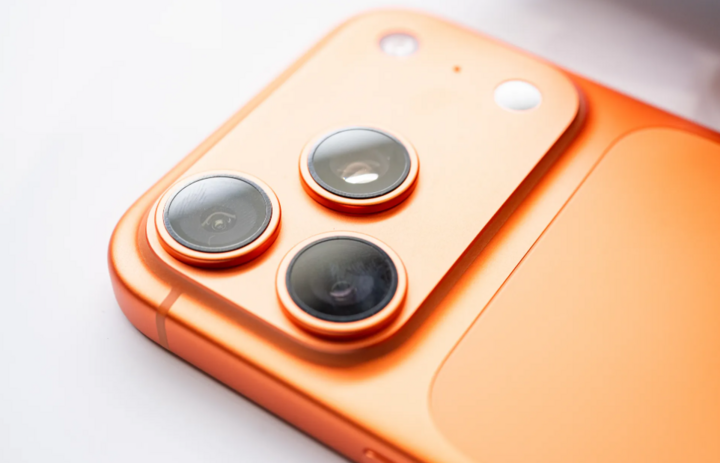
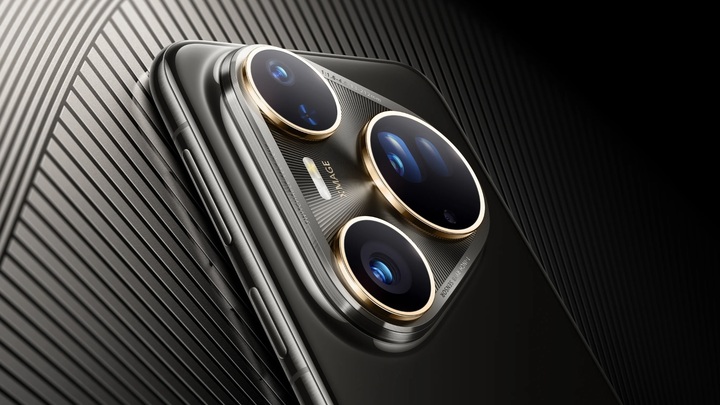
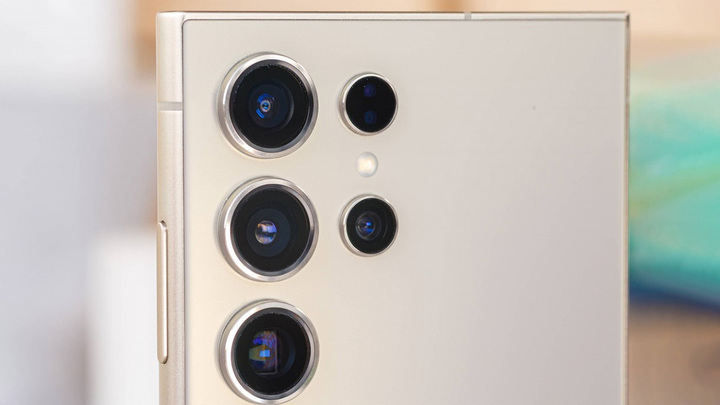
Here are close-up images of the camera clusters of the most popular flagship models currently available: iPhone 17 Pro Max, Huawei Pura 80, and Samsung Galaxy S25 Ultra.
However, despite the sensor and lens upgrades, the new camera module design is controversial. For a flagship phone positioned at the premium level, users not only expect beautiful photos but also a harmonious and sophisticated appearance – something the iPhone 17 Pro Max seems to have failed to deliver.
In terms of specifications, the iPhone 17 Pro Max features a 6.9-inch Super Retina XDR display with a 120Hz ProMotion refresh rate, a 3nm A19 Pro chip for improved performance and power efficiency, 8GB of RAM, and internal storage ranging from 256GB to 1TB.
The 4,500 mAh battery supports fast charging via USB-C and USB 3.2 for high data transfer speeds. The highlight is the triple rear camera setup with a 48 MP sensor: a 26 mm f/1.78 wide-angle lens, a 13 mm f/2.2 ultra-wide-angle lens, and a 100 mm f/2.8 telephoto lens with 4x optical zoom. The front camera has also been upgraded to 18 MP and supports Center Stage.
The protruding camera module looks disproportionate.
Unlike previous generations, the iPhone 17 Pro Max features a camera module mounted on a "plateau"—a raised bezel that extends almost across the entire top of the back. The three lenses protrude significantly from the surface, making the camera module the visual focal point but also making the back of the phone less aesthetically pleasing.
The camera setup on the iPhone 17 Pro Max has sparked controversy.
This is also the largest protruding camera module ever on an iPhone, making the device look like it's wearing a "hat" on top.
When placed on a table, the plateau prevents the device from lying flat, making it prone to wobbling with every touch. For those accustomed to the minimalist and refined design characteristic of Apple, this change may be disappointing.
Furthermore, the large camera module makes choosing a beautiful and well-fitting phone case difficult, because the protruding part needs careful protection but can ruin the overall design if the case isn't chosen carefully.
In terms of functionality, the new telephoto lens, despite being upgraded to 48 MP, only offers 4x optical zoom, lower than the 5x zoom of the iPhone 15 Pro Max from last year. The 8x zoom that Apple emphasizes is actually digital zoom, dependent on algorithms and sensor cropping. When shooting in low light, details are more likely to be blurred and there is more noise compared to true optical zoom. For a flagship phone, this is not the significant leap forward that users had hoped for.
Android flagships are leading the way in design.
In the high-end segment, aesthetics play a role just as important as specifications. The Huawei Pura 80 Ultra is a prime example: the company has transformed the camera module into an artistic highlight with a gold bezel and light ray pattern, creating a luxurious feel.
Not only is it beautiful, but it's also the first smartphone to feature a dual telephoto system with 3.7x and 9.7x optical zoom capabilities, delivering a significantly better zoom experience.
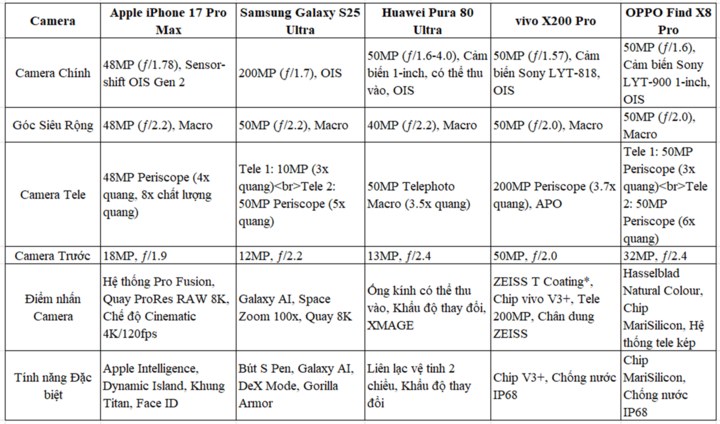
Camera configurations of current flagship smartphones on the market.
Meanwhile, the Samsung Galaxy S25 Ultra maintains a minimalist yet sophisticated design, with the camera module featuring separate lenses neatly placed in the upper left corner. The flat back, without the need for a horizontal "hinge," gives it a light feel and makes it easy to match with phone cases.
The Xiaomi 15 Ultra once again opts for a large, circular module design reminiscent of Leica cameras. The circular cluster is both well-balanced and strongly branded, giving the impression that the phone is a work of art rather than just a piece of technology.
Overall, the iPhone 17 Pro Max is a significant hardware upgrade, especially in terms of image processing power and sensor quality. However, the camera module design is currently a point of contention.
To maintain its position as the industry's "design benchmark," Apple needs to find a way to slim down or beautify the plateau, turning it into an aesthetic detail rather than just a protruding component.
Apple may have to answer the mixed reactions to the camera setup on the upcoming iPhone 18 series: Will the company return to a minimalist philosophy or continue pursuing a "massive" camera array? Users will probably have to wait another year to find out which direction Apple chooses.
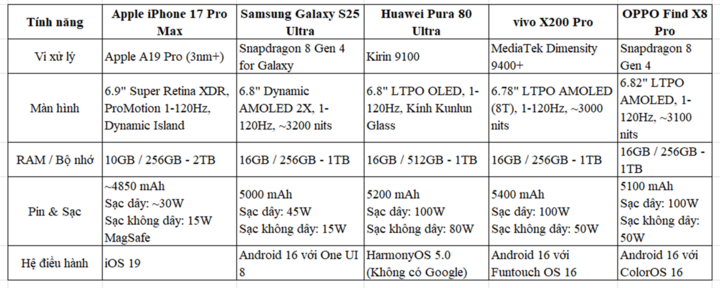
Specifications of the most popular phone models currently on the market.
Source: https://vtcnews.vn/camera-iphone-17-pro-max-cau-hinh-chua-du-manh-thiet-design-chua-du-dep-ar965413.html
![[Photo] General Secretary and President To Lam presides over a meeting on the implementation of Directive No. 34-CT/TW of the Party Central Committee.](https://vphoto.vietnam.vn/thumb/1200x675/vietnam/resource/IMAGE/2026/05/19/1779187768672_a1-bnd-2350-631-jpg.webp)


![[Photo] Capturing the moment the tide recedes at Yen Binh Son rapids - a million-year-old scenic spot in Quang Ngai.](https://vphoto.vietnam.vn/thumb/1200x675/vietnam/resource/IMAGE/2026/05/19/1779175463885_yen9-1199-jpg.webp)
![[Photo] National Assembly Chairman Tran Thanh Man attends the groundbreaking ceremony for the National Highway 1A spatial axis project.](https://vphoto.vietnam.vn/thumb/1200x675/vietnam/resource/IMAGE/2026/05/19/1779161360398_ndo_br_bnd-1412-jpg.webp)















![[Photo] General Secretary and President To Lam presides over a meeting on the implementation of Directive No. 34-CT/TW of the Party Central Committee.](https://vphoto.vietnam.vn/thumb/1200x675/vietnam/resource/IMAGE/2026/05/19/1779192417177_anh-man-hinh-2026-05-19-luc-19-06-45.png)



































![[Photo] General Secretary and President To Lam receives Indian Defense Minister Rajnath Singh](https://vphoto.vietnam.vn/thumb/402x226/vietnam/resource/IMAGE/2026/05/19/1779184046302_anh-man-hinh-2026-05-19-luc-16-46-58.png)





























Comment (0)