

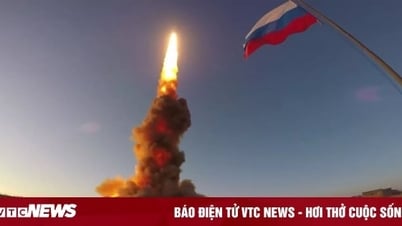
Close-up view of Russian missiles destroying 32 Ukrainian 152mm heavy artillery pieces.
Friday, April 12, 2024, 7:00 PM (GMT+7)
Video from a UAV shows Russian missiles striking a staging area of 32 Ukrainian D-20 152 mm howitzers in Sumy province.
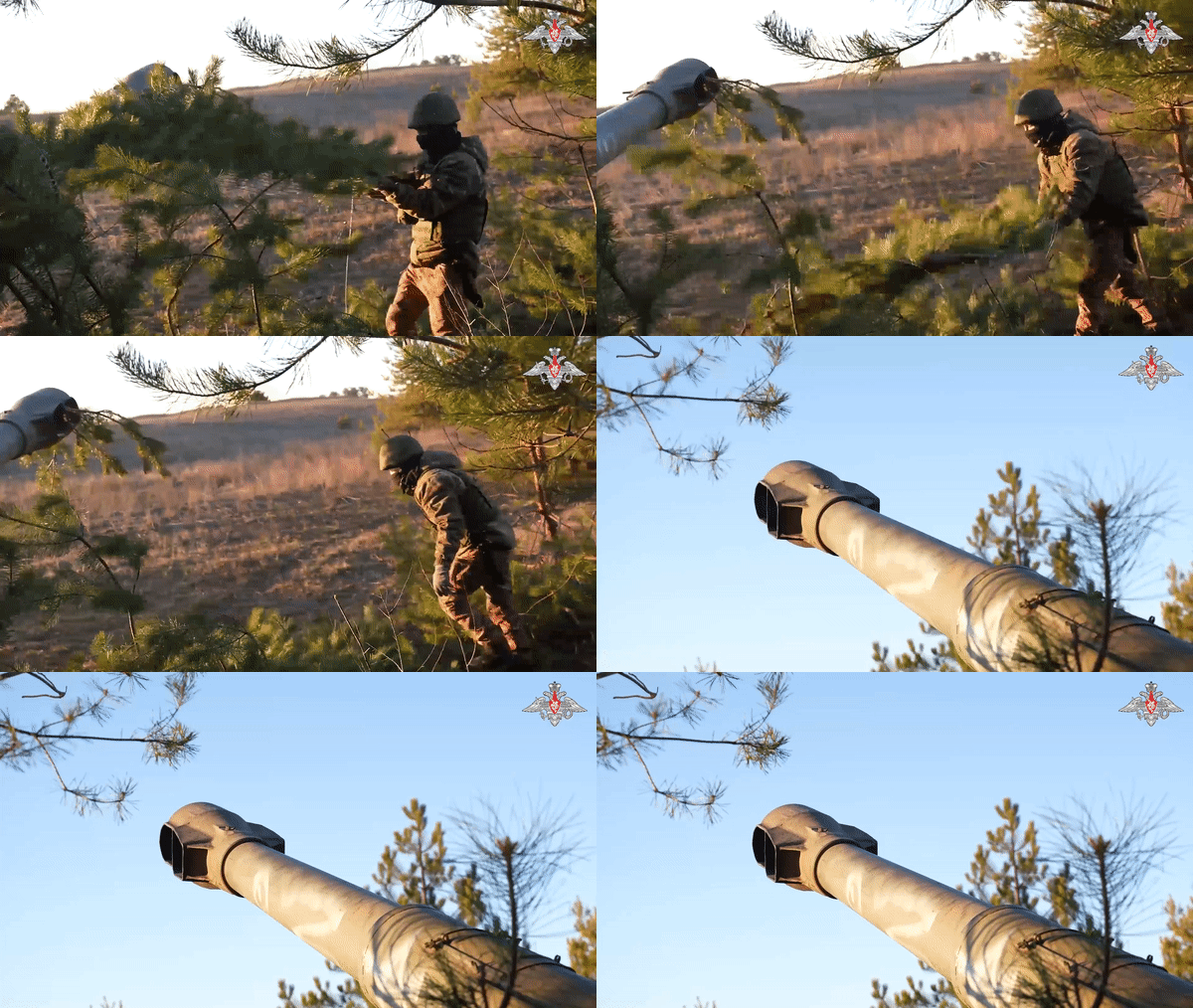
The legendary Soviet D-20 152mm howitzer is being used in large numbers by the Ukrainian army in artillery exchanges with Russian forces in the Eastern European conflict. (According to RT and Reuters.)
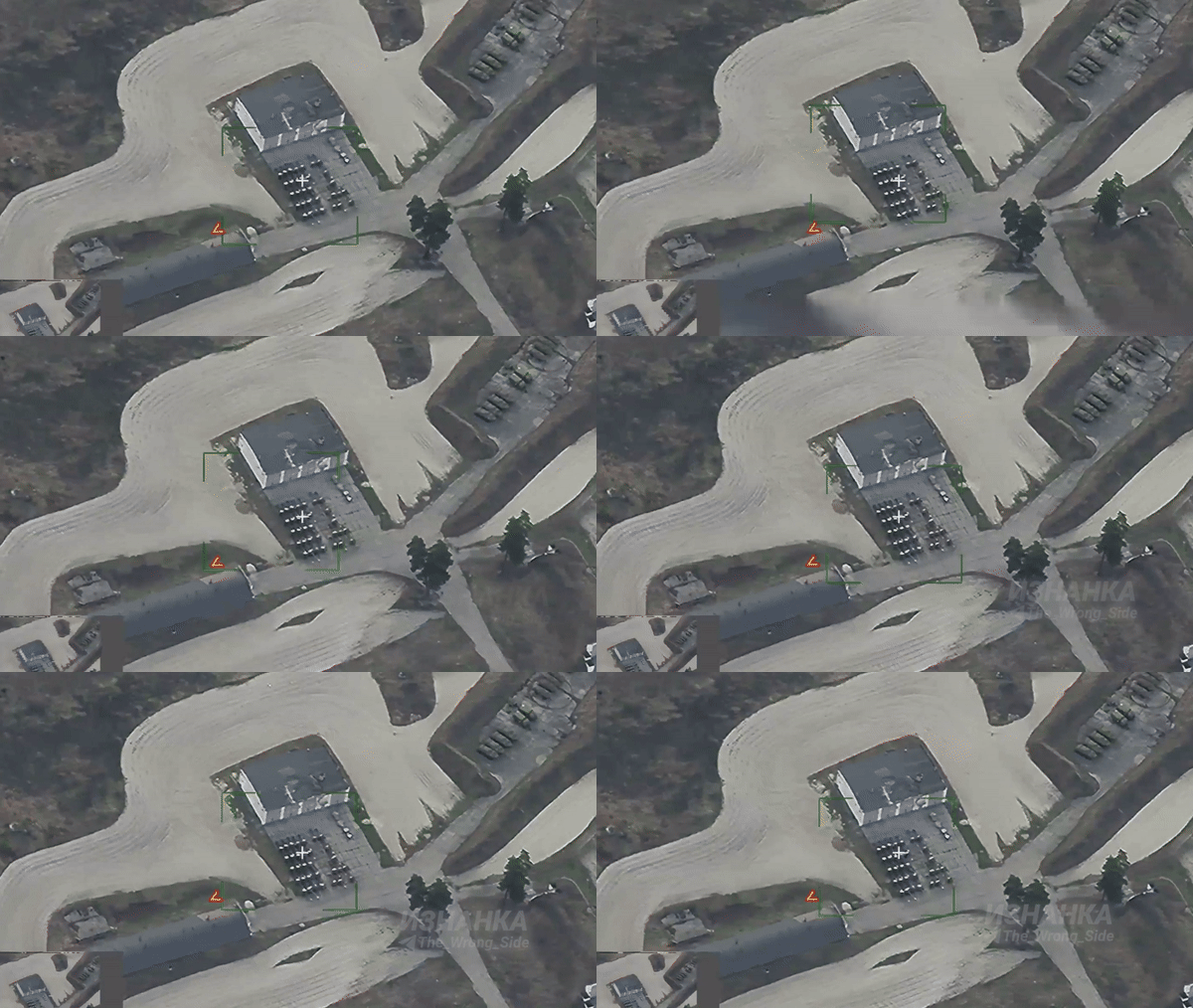
Russian media on April 10th released a video from an unmanned aerial vehicle (UAV) showing the tracking and missile strike of targets in the Sumy province of northern Ukraine. In the video, the Russian UAV detected 32 D-20 152 mm howitzers assembled at a military facility in the city of Akhtyrka. (According to RT and Reuters)
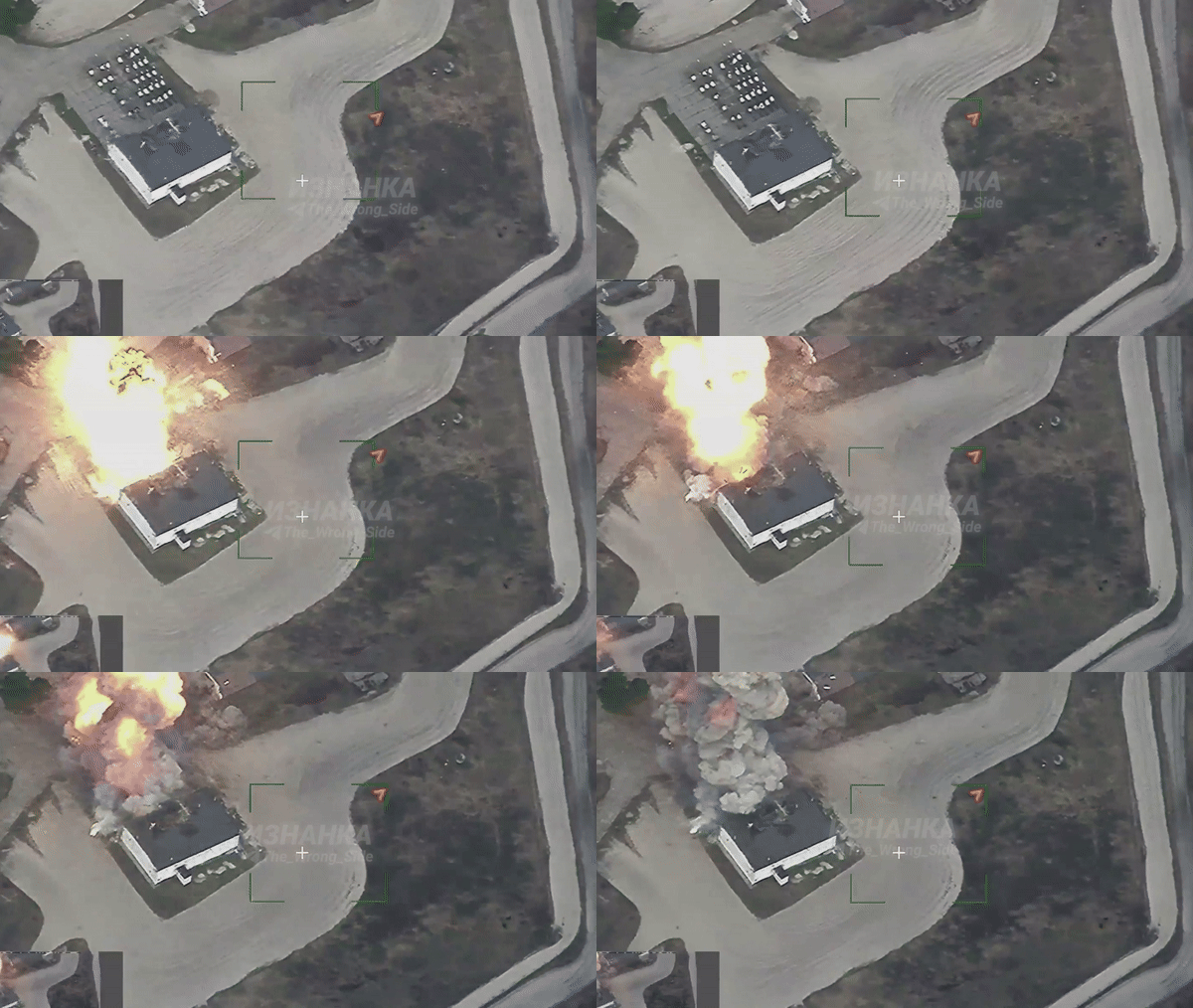
The artillery pieces were neatly stacked outside a warehouse, near several trucks. It is unclear whether these artillery pieces were being assembled for deployment to combat units, or if they were damaged and being sent for repair or awaiting decommissioning. Russian missiles struck the assembly point, obliterating most of the howitzers; only a few remained intact, but they were likely severely damaged. The warehouse was also damaged in the attack, the extent of which is unclear. (According to RT, Reuters)
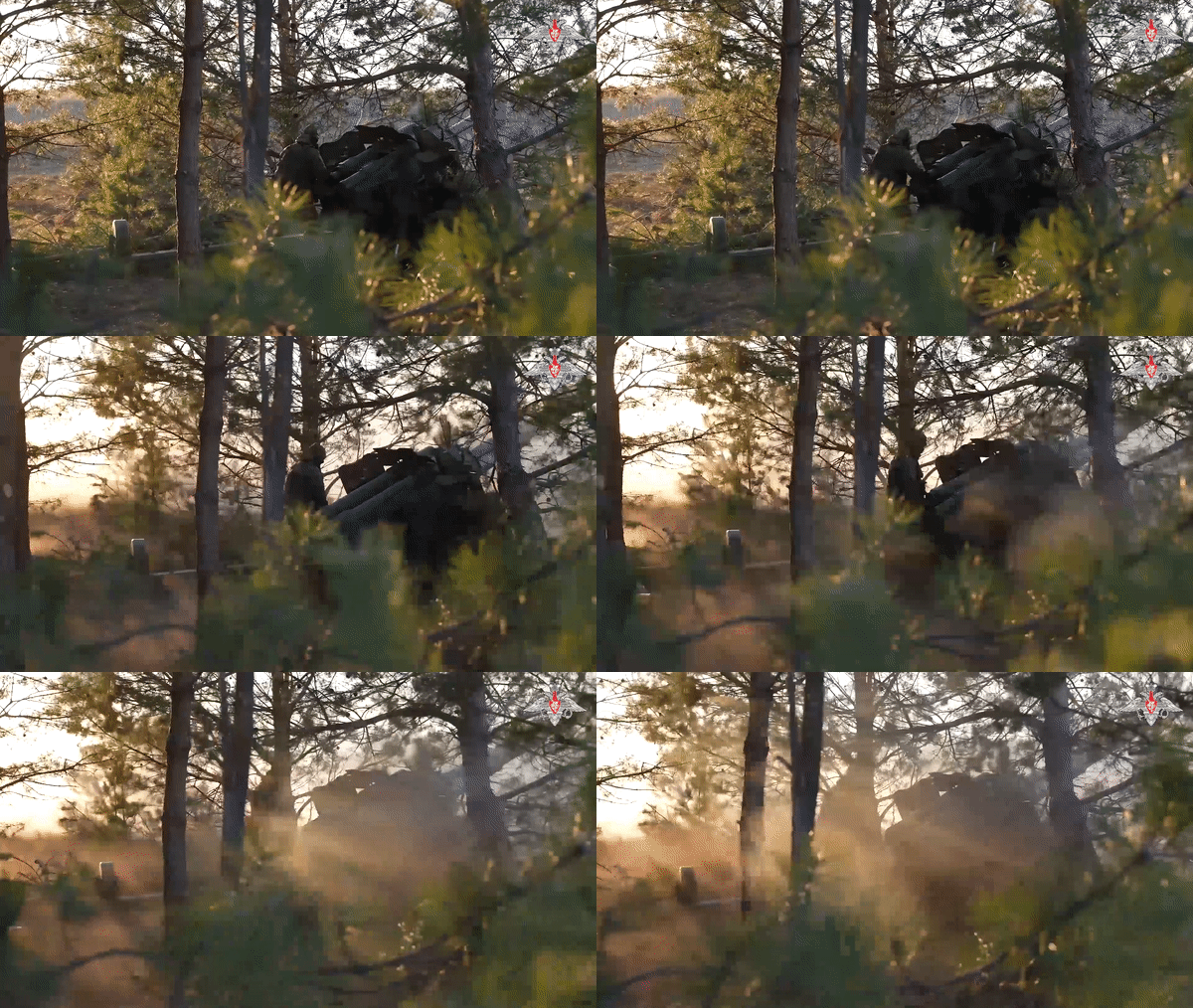
After the collapse of the Soviet Union, both Ukraine and Russia inherited a considerable number of these 152mm howitzers. (According to RT and Reuters.)
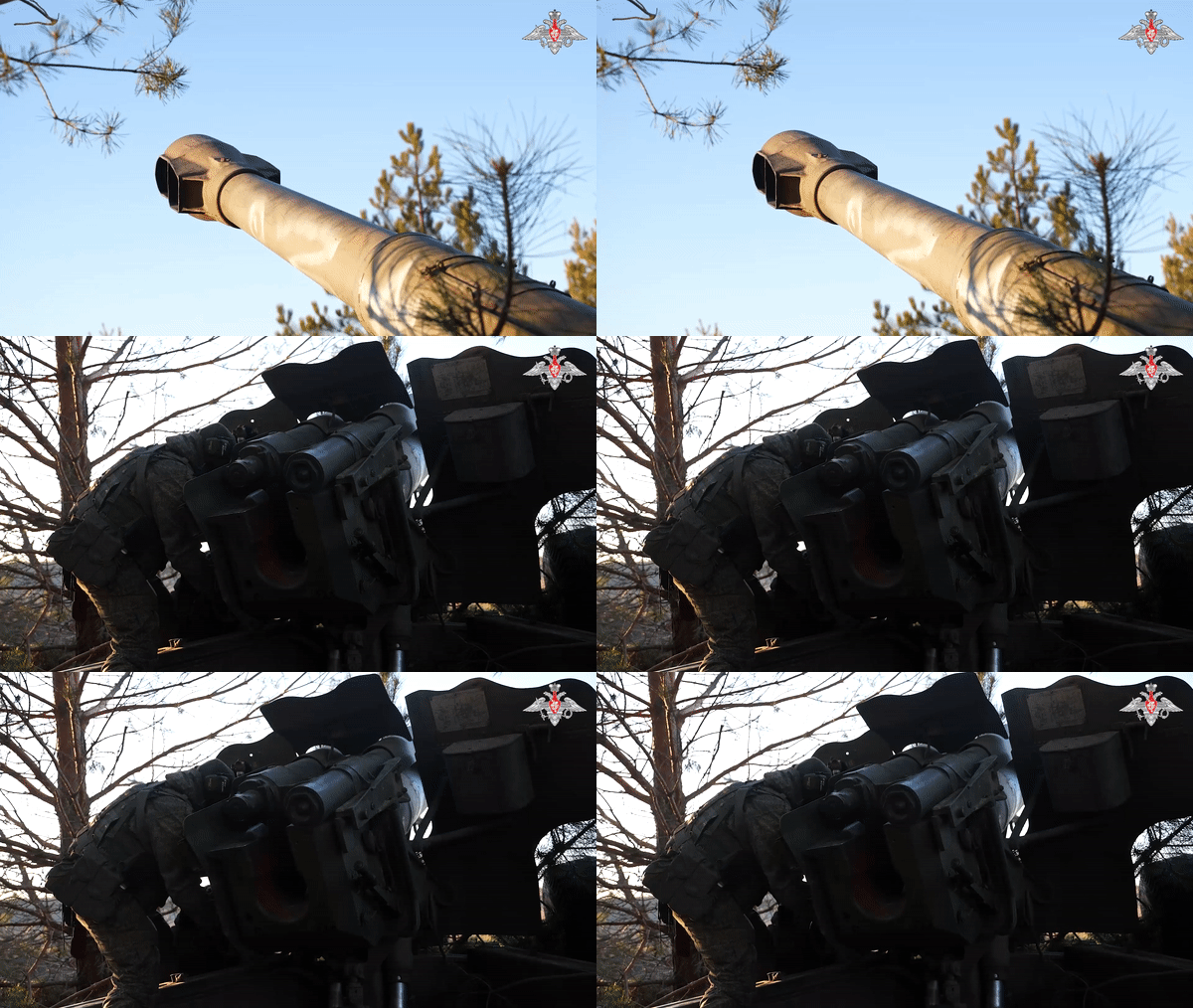
The D-20 was one of the most successful Soviet howitzer designs during the Cold War. (According to RT and Reuters.)

It was developed in the late 1940s and first entered service in 1955. (According to RT, Reuters.)
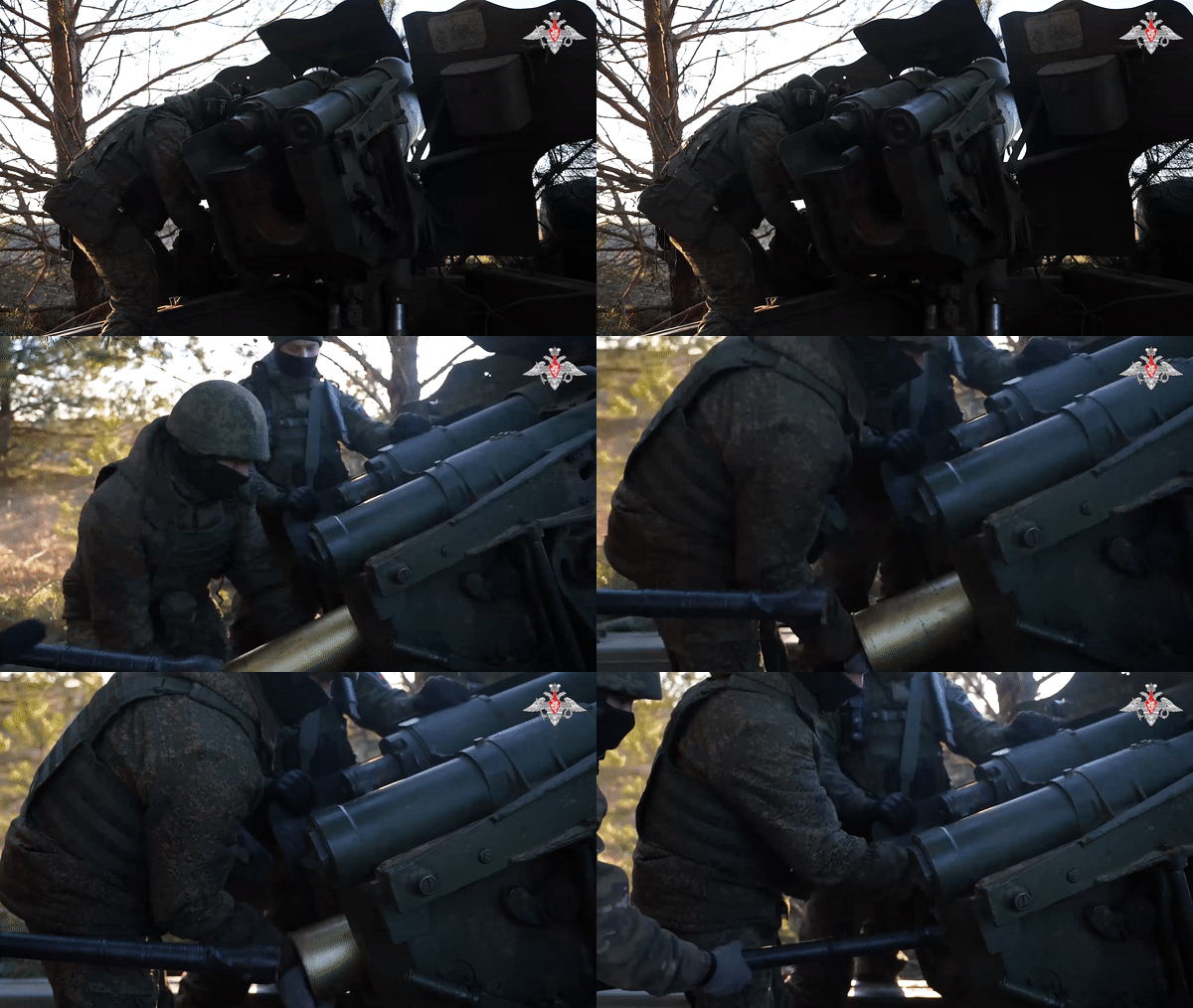
The D-20 towed howitzer is a familiar sight, having appeared in numerous conflicts around the world from the 1960s to the present day. (According to RT and Reuters.)

The development plan for the D-20 howitzer was undertaken by the Soviet Army after World War II, when its existing 122mm heavy artillery models were deemed outdated and ineffective. (According to RT and Reuters.)
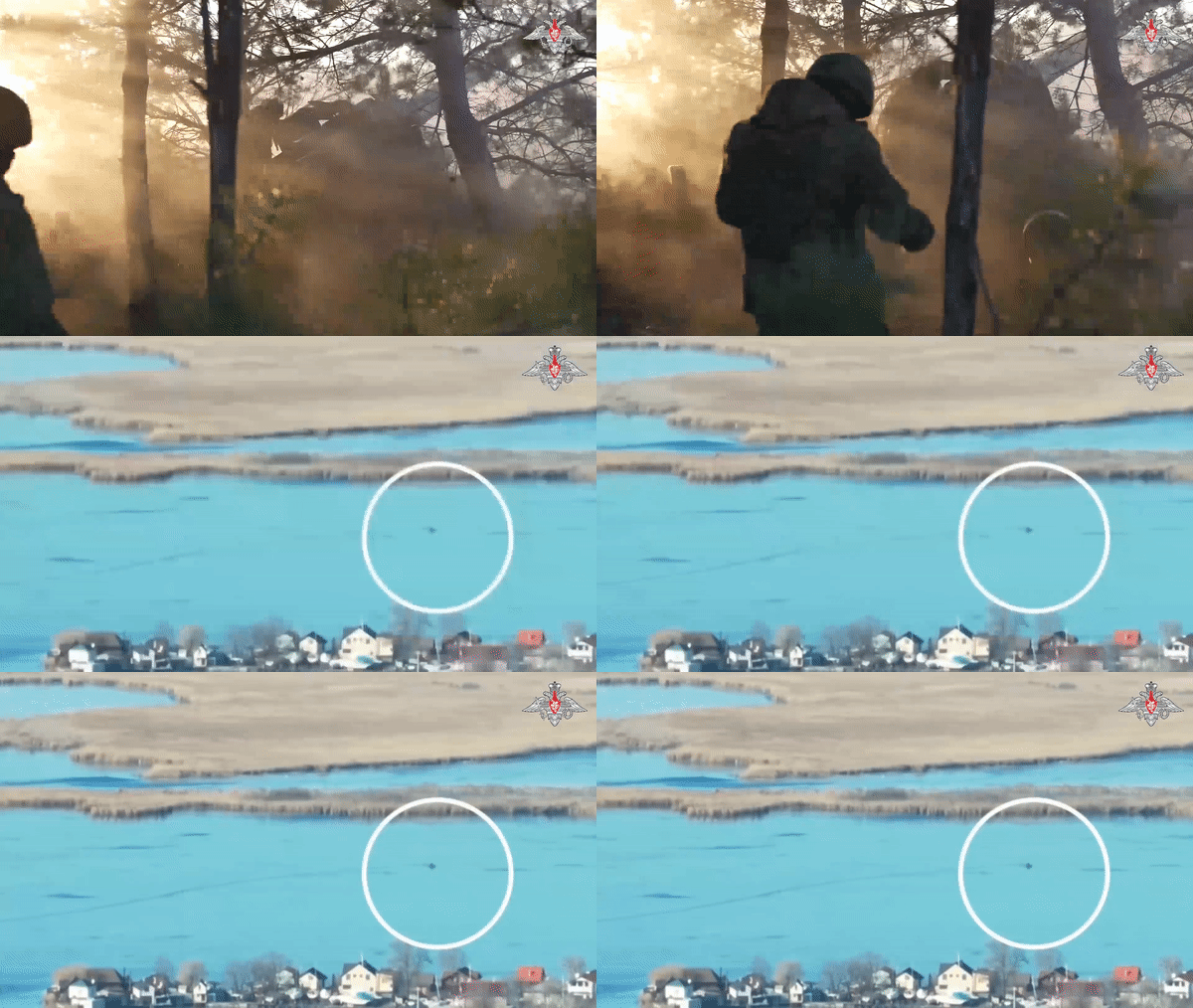
To shorten the development process, the D-20 inherited the gun carriage design of the D-74 122mm howitzer, one of the towed artillery pieces developed by the Soviet Union in parallel with the D-20. (According to RT, Reuters)
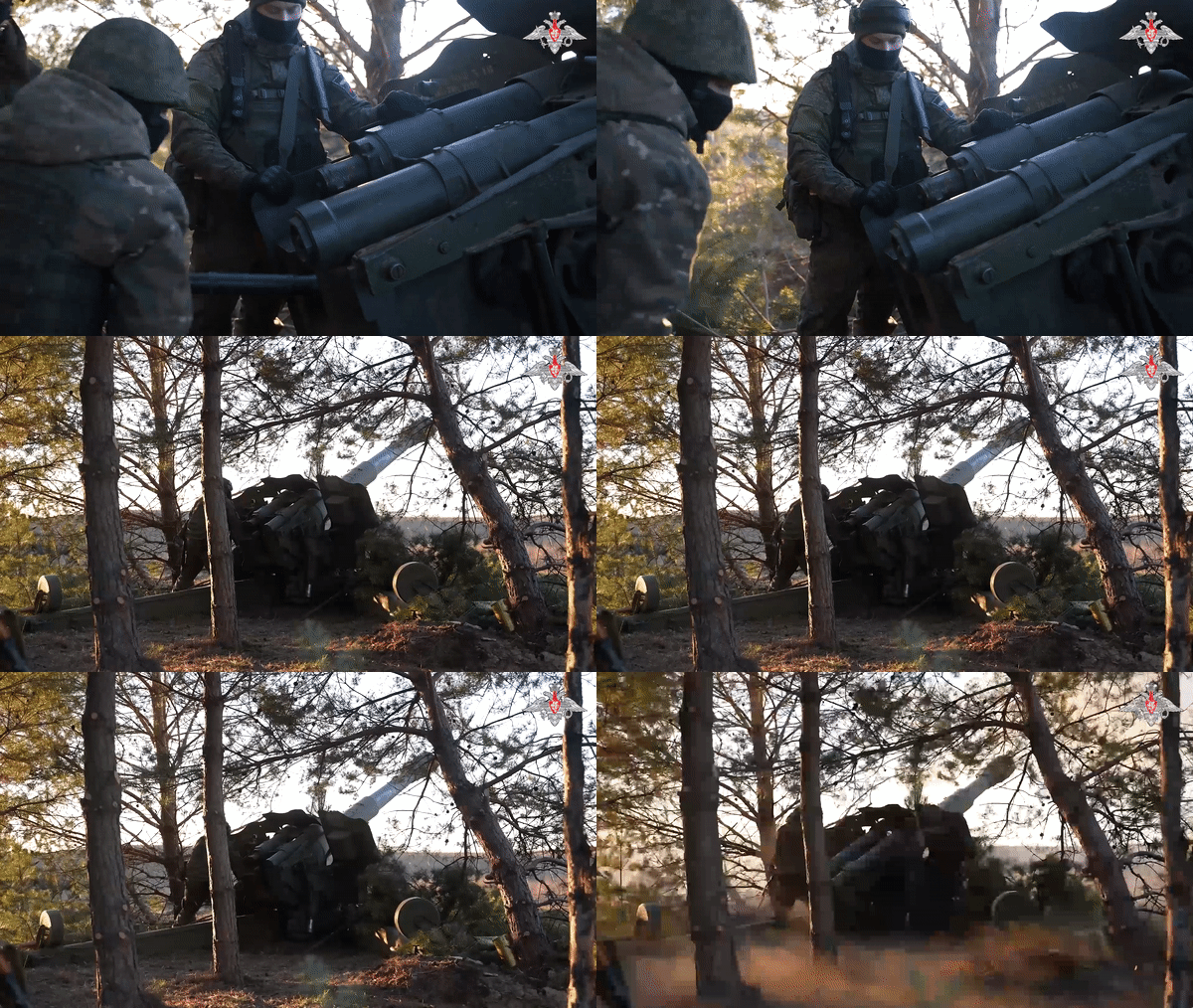
The D-20 has two fixed legs with two main rubber wheels and two auxiliary wheels at the ends of the gun legs, allowing the gunner to move the gun legs more easily, in addition to a protective shield for the gunner. According to RT and Reuters.
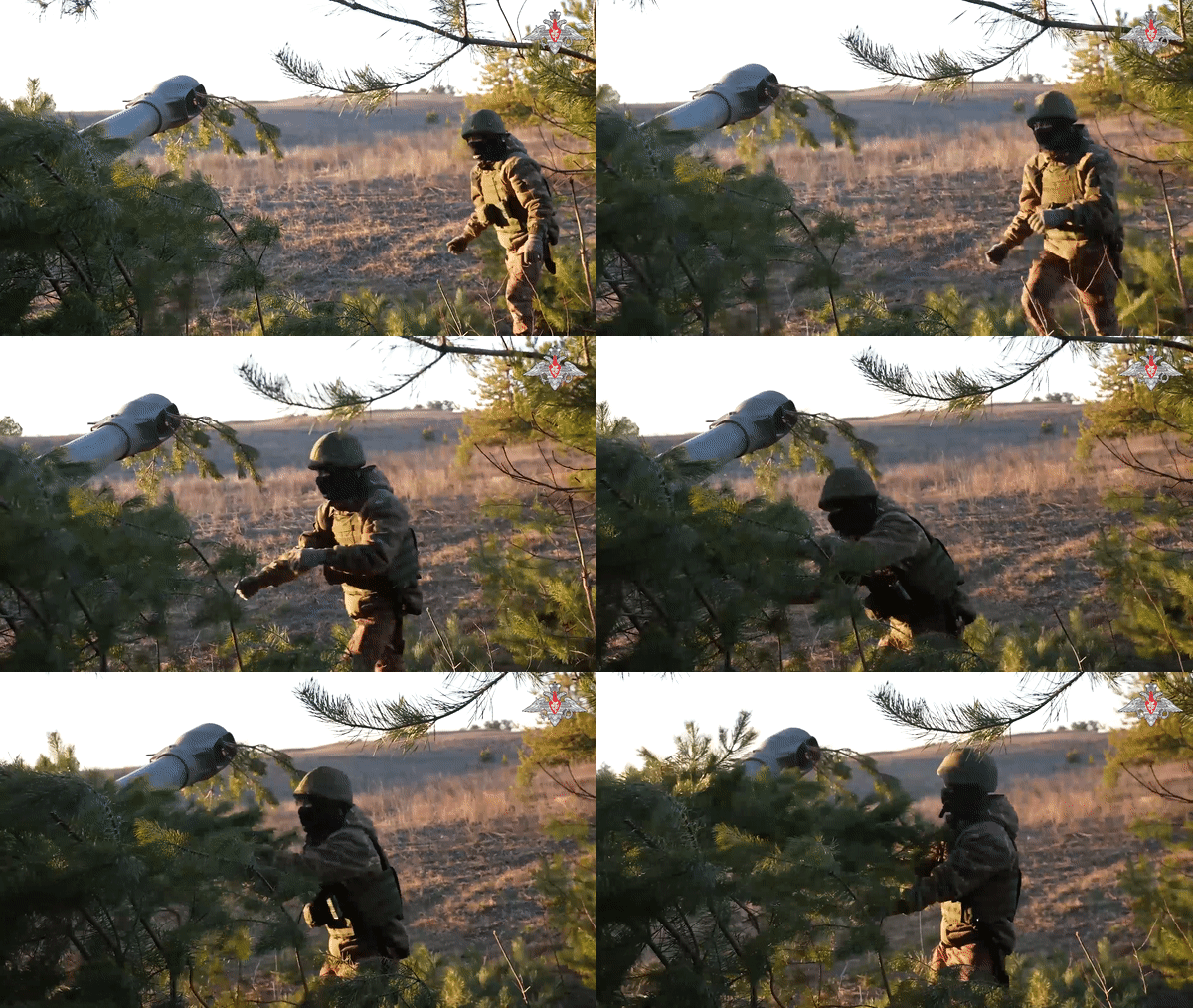
The D-20 is equipped with a dual-cylinder hydraulic recoil damper located at the end of the gun barrel; its barrel can also be lowered or raised from -5° to 45°. (According to RT, Reuters)
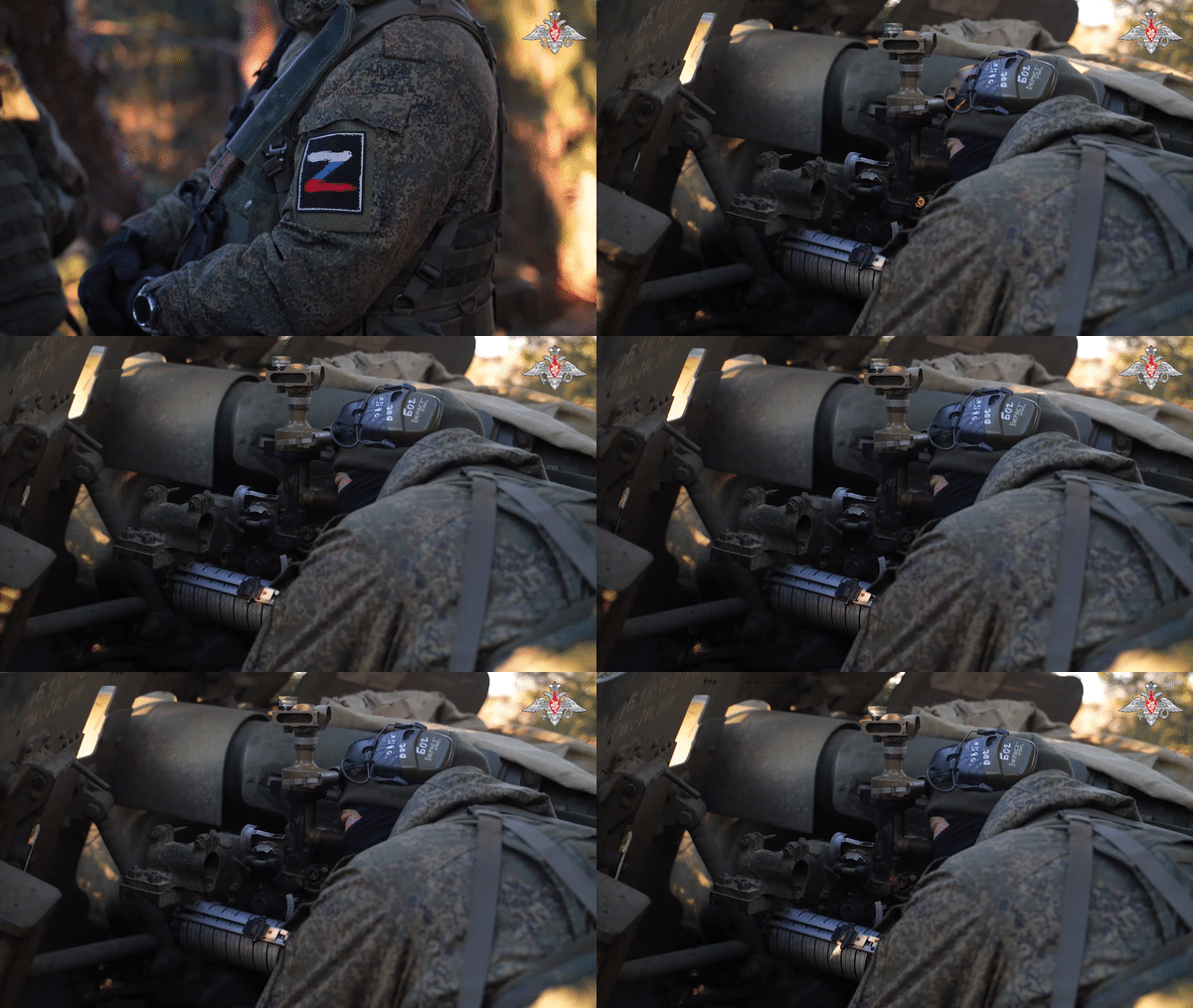
The D-20 can fire various types of 152mm artillery rounds developed by the Soviet Union, from fragmentation rounds and high-explosive rounds to armor-piercing rounds. (According to RT, Reuters)
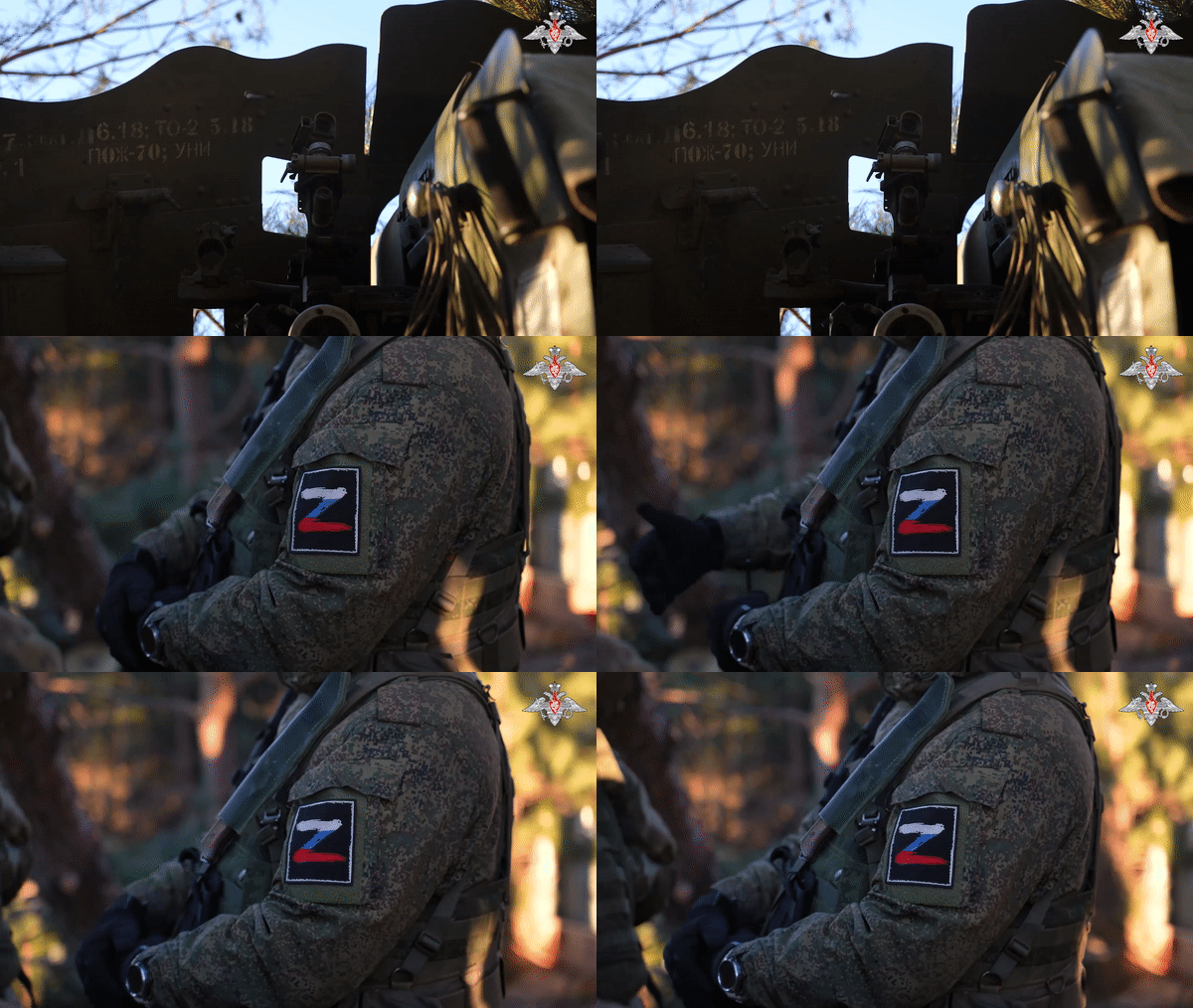
This artillery piece is also equipped with laser-guided shells to increase accuracy, and its maximum range can reach 24km. (According to RT and Reuters.)
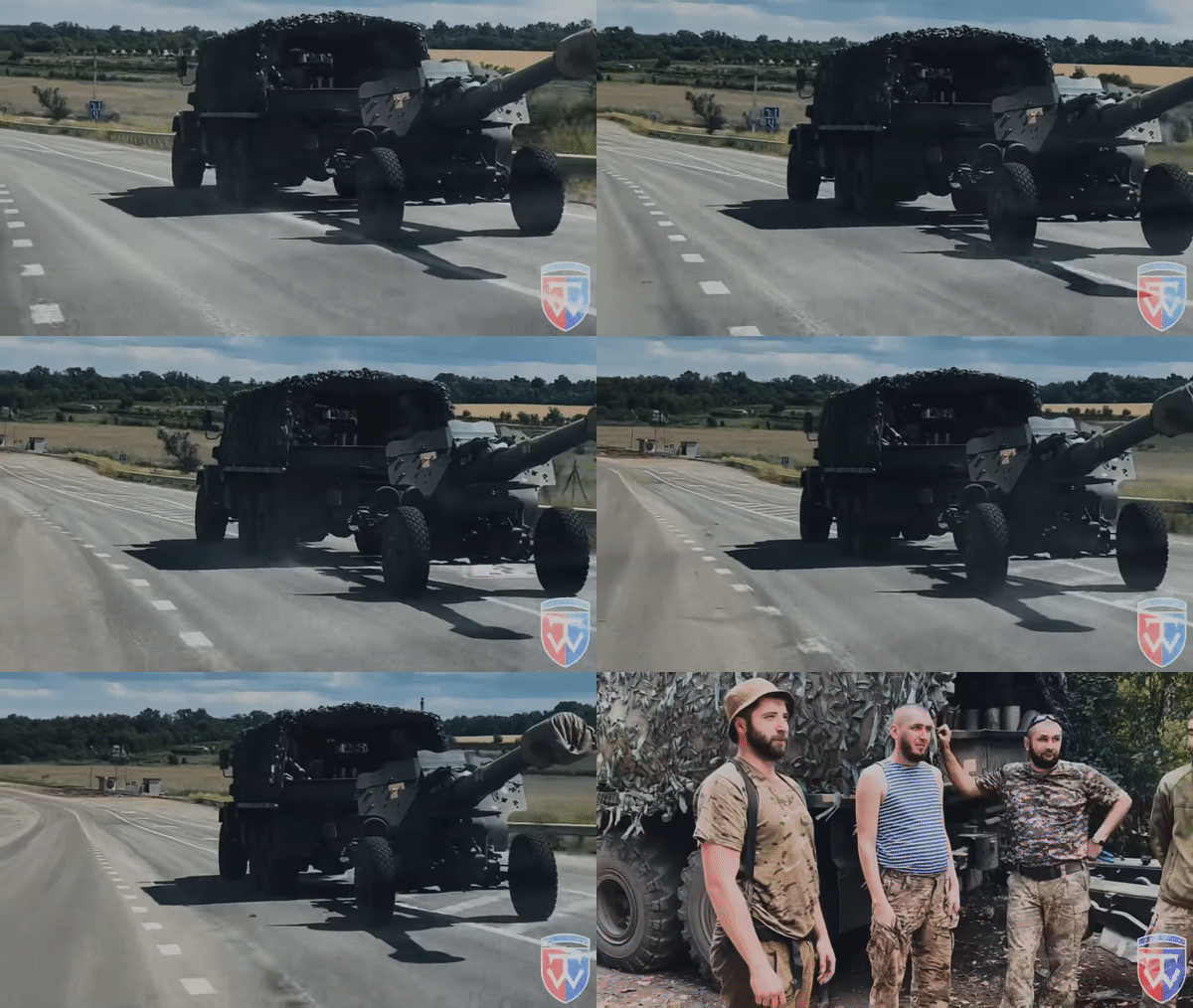
The D-20's gun crew consists of 8-10 soldiers, accompanied by a specialized towing vehicle, typically a Ural-375 6x6 special-purpose truck or some other motorized vehicle. (According to RT, Reuters)
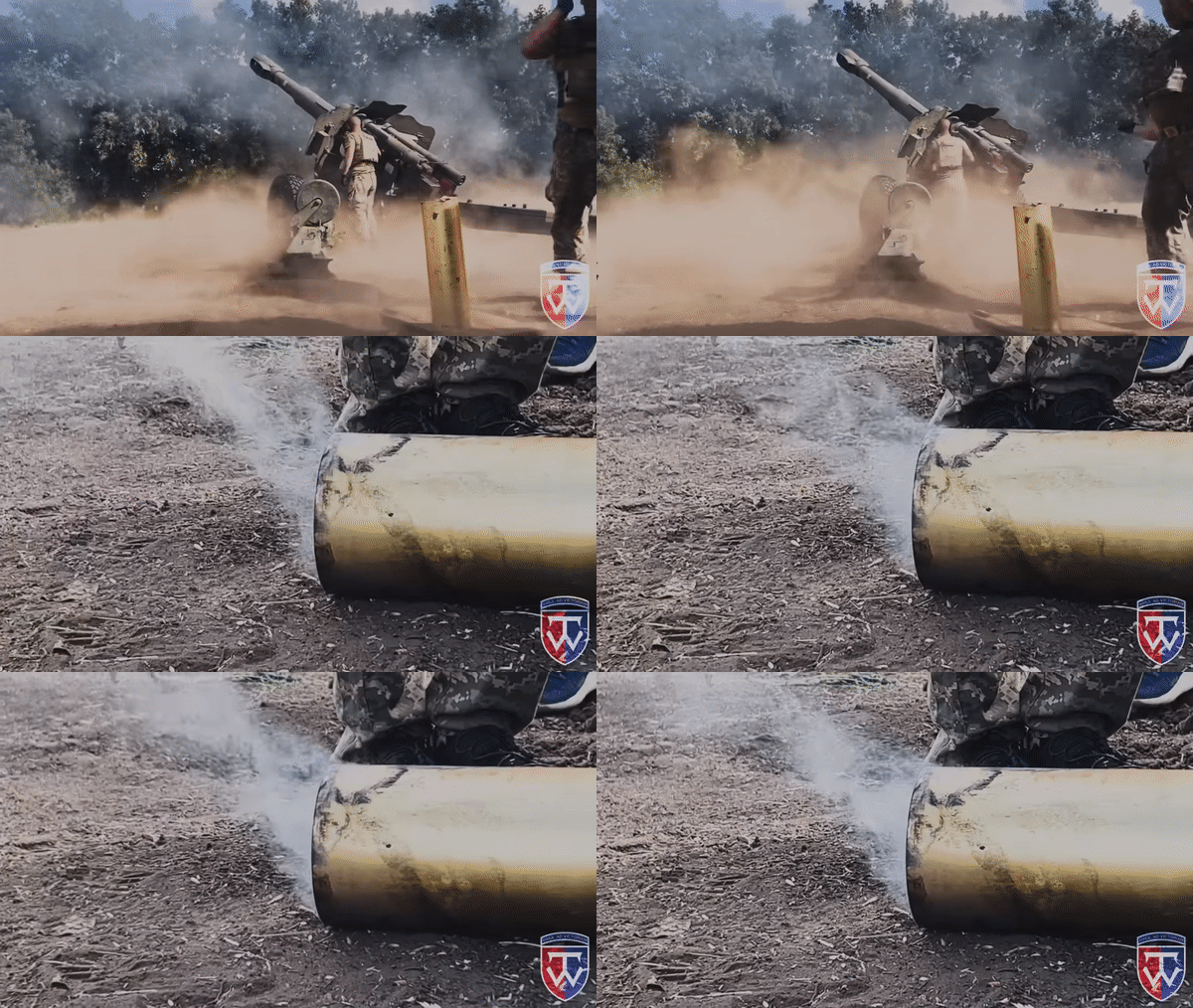
The transition from marching to combat took only 3 minutes. According to RT and Reuters.
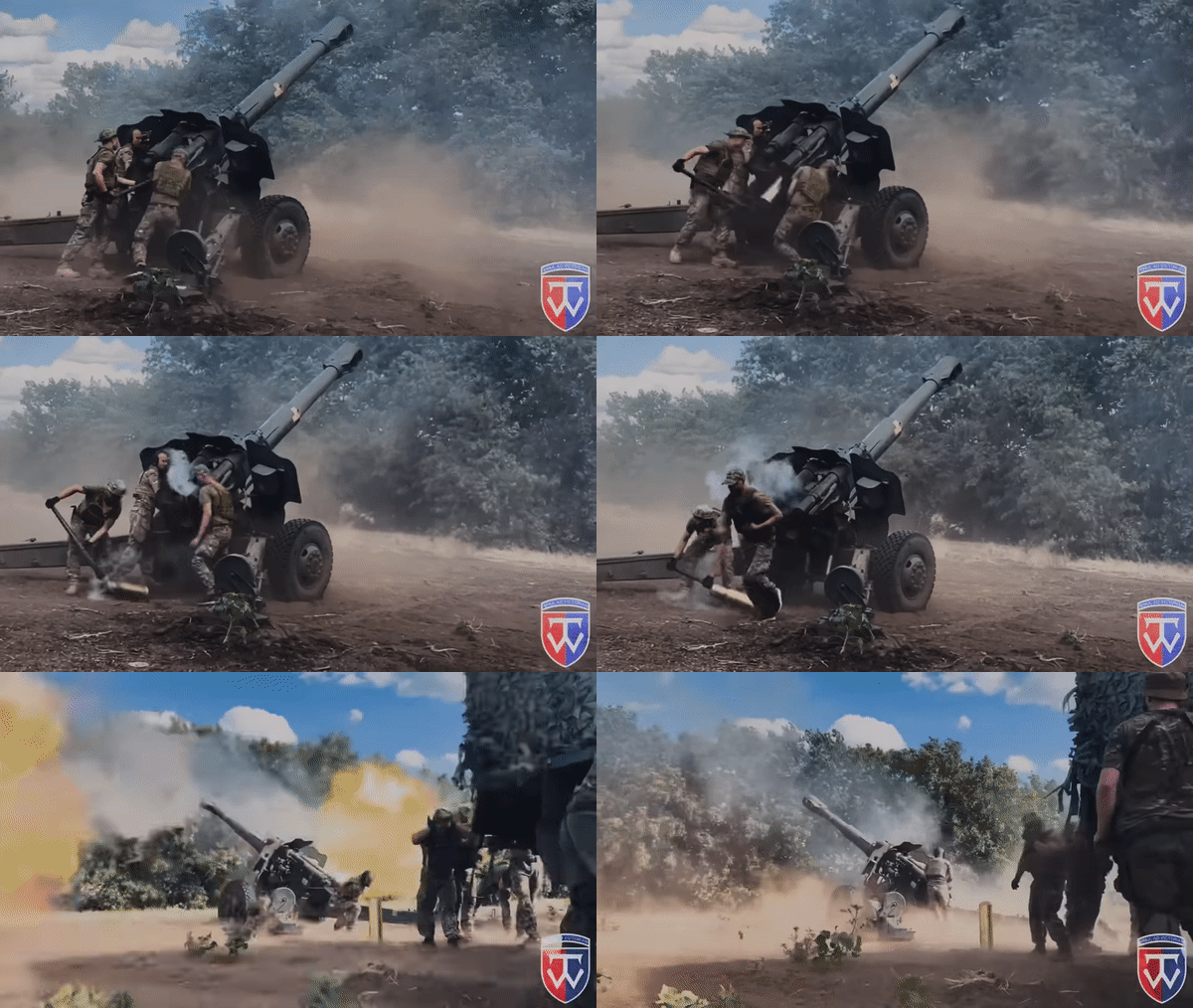
Currently, the D-20 continues to serve in 27 countries worldwide. This type of artillery is also being used by both sides in the ongoing conflict in Ukraine. (According to RT and Reuters.)
PV (According to ANTĐ)
Source

![[Photo] General Secretary and President To Lam presides over a meeting on preparations for the review of one year of operation of the three-tiered government system.](https://vphoto.vietnam.vn/thumb/1200x675/vietnam/resource/IMAGE/2026/06/02/1780391821195_a1-bnd-4595-9717-jpg.webp)


























![[Image] Affirming the aspirations and new standards of the Vietnamese real estate market in the new era.](https://vphoto.vietnam.vn/thumb/1200x675/vietnam/resource/IMAGE/2026/06/03/1780441948766_giai-thuong-bat-dong-san-2026-minh-duy-6-7364-jpg.webp)





























































Comment (0)