

It can be adjusted 4 times a year.
A new draft decision replacing Prime Minister's Decision 24/2027 on the mechanism for adjusting the average retail electricity price, recently submitted by the Ministry of Industry and Trade , contains several new points. In particular, the draft expands the authority of Vietnam Electricity Group (EVN) to adjust electricity prices by up to 5%, with a cycle of every 3 months (the current regulation is every 6 months). This means there will be 4 price changes per year, and prices will be updated quarterly based on electricity generation costs.
Specifically, EVN will also be allowed to increase electricity prices by more than 5% and 10% after obtaining the approval of the Ministry of Industry and Trade and the Prime Minister. According to Decision 24, EVN only had the right to increase prices by 3-5%. If the average electricity price needs to be adjusted upwards by 10% or more compared to the current level, which would affect the macroeconomic situation , the Ministry of Industry and Trade will take the lead in reviewing and consulting with relevant ministries and agencies…
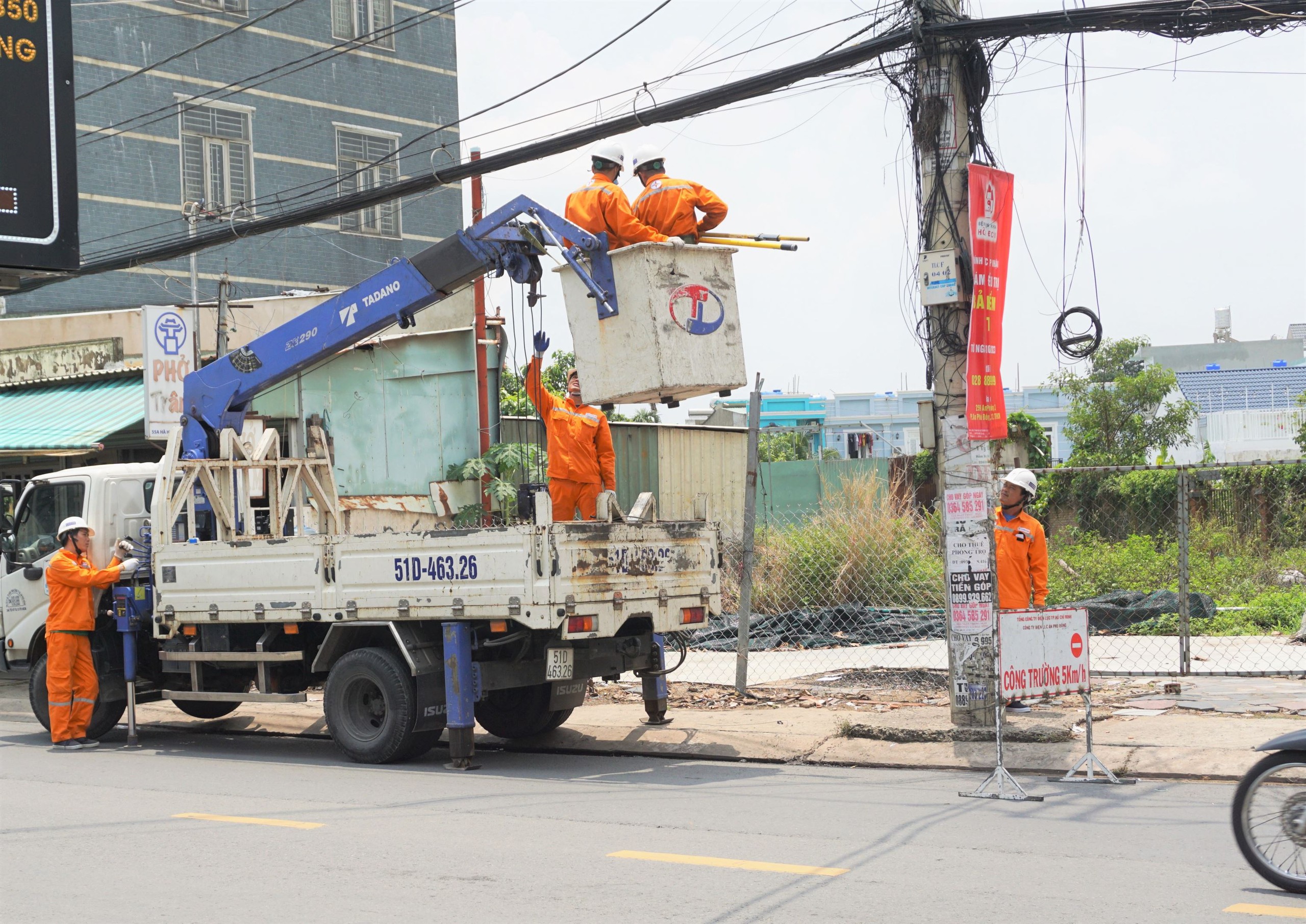
According to the new regulations in the draft, the average electricity price may be adjusted quarterly.
Economist Associate Professor Ngo Tri Long, former Director of the Institute of Price Research ( Ministry of Finance ), believes that the draft significantly expands EVN's authority by allowing it to both increase prices at a higher rate and reduce the price adjustment period from six months to three months. This needs careful consideration, given that it's a monopolistic industry like electricity, to avoid continuous price adjustments.
"Electricity prices need to be monitored by an independent agency, and adjustments must meet all the required criteria. It's not sustainable to simply allow businesses to report a 3% or 5% increase in input costs. Furthermore, EVN is the entity producing and distributing electricity; giving businesses the power to independently determine electricity prices would create a situation of 'playing both sides.' Therefore, in this context, the State must still set or regulate price ceilings, but according to market mechanisms," Associate Professor Dr. Ngo Tri Long emphasized.
According to pricing expert Nguyen Tien Thoa, Chairman of the Vietnam Valuation Association, it is time to use "market principles" to calculate electricity prices. The regulation of adjusting prices every three months is not new, having been proposed since 2011. However, time is not the deciding factor in whether prices increase or decrease; rather, it is the input factors that matter.
"In reality, the regulation to review and adjust prices every six months has not been implemented, and now they're suggesting every three months. I fear this will be difficult to achieve. It can be understood as a move to review electricity production costs every three months," Mr. Thoa expressed his concern and commented: "It's not by chance that the draft proposes to involve other ministries and agencies in checking and reviewing prices. Because a quarterly review would allow for adjustments to be made in the context of a difficult economy. Increasing electricity prices four times a year would certainly be unsustainable for the economy. Furthermore, the exchange rate difference needs to be reassessed and included annually, but without causing shocks to commodity prices and impacting inflation," Mr. Thoa recommended.
TOWARDS A COMPETITIVE ELECTRICITY MARKET
Therefore, expert Nguyen Tien Thoa emphasized that a competitive retail market is necessary for electricity prices to fluctuate flexibly according to market signals. He argued that current electricity prices are not lacking in regulatory mechanisms; if regulations were followed correctly, the electricity sector wouldn't be struggling with mounting losses and deadlock.
"Why do I emphasize the importance of early review, accuracy, and completeness in electricity pricing? Because historically, when hydropower resources are depleted, we have to use oil to generate electricity. However, if calculated correctly, using oil to produce electricity could exceed 5,000 VND/kWh; coal-fired electricity could be around 2,500 VND/kWh… We cannot maintain a subsidized electricity price. In reality, unreasonable electricity prices have prevented the electricity sector from investing and developing, and from attracting domestic and foreign investors," Mr. Thoa said.
Meanwhile, the Ministry of Industry and Trade's stance in submitting this draft was to adjust electricity prices in a way that avoided abrupt changes, minimizing the impact on the macroeconomy and electricity consumers by shortening the price adjustment cycle. However, according to experts, proposing four price adjustments per year is more likely to cause abrupt changes, negatively impacting businesses.
Associate Professor Dr. Dinh Trong Thinh, an expert in economics and finance, analyzed: "Businesses' production and sales plans are established at the end of the previous year and can only be renegotiated once or twice a year at most. If electricity prices keep changing constantly, it will be very difficult for businesses to plan their production."
"For a long time, we've talked about a competitive electricity market, instead of the state regulating retail prices as is currently the case. In this model, retailers and customers can negotiate through contracts. For example, with rooftop solar power, many proposals have been made to allow electricity trading between producers and consumers, but this has not yet been implemented; while this is the best solution to reduce the load on the transmission lines and alleviate electricity shortages. Therefore, the issue is not about how much the price increase will be, but rather about building a competitive electricity market, which cannot be delayed any longer," Mr. Thinh said, emphasizing: "When there is a competitive retail electricity market, EVN will no longer have a monopoly in retail electricity sales, and people will be able to buy electricity from multiple suppliers at negotiated prices. Electricity retailers will also have to balance and compete on price and service quality to attract customers in the most advantageous way."
Proposal to import 250 MW of wind power from Laos.
Facing the risk of electricity shortages in the North by 2025 and beyond, the Ministry of Industry and Trade has also submitted to the Prime Minister an assessment of importing electricity from the Truong Son wind power project (Laos) with a capacity of 250 MW.
According to EVN, the total power generation capacity in Laos approved for import by 2025 is approximately 1,977 MW, lower than the 3,000 MW stipulated in the signed agreement. The Ministry of Industry and Trade also considers the import and connection of the 220 kV transmission line to be consistent with the Power Development Plan 8.
According to the plan, the total capacity of electricity imported from Laos could reach 5,000 - 8,000 MW by 2030, increasing to 11,000 MW by 2050.
Besides the Truong Son project, EVN recently announced that it has received proposals from 7 wind power projects in Laos, with a total capacity of nearly 4,150 MW, wanting to sell electricity to Vietnam. Of these, the Lao investors proposed selling over 682 MW of capacity before 2025, with the remainder to be sold after that time.
Source link

![[Photo] General Secretary and President To Lam presides over a meeting with the Central Organizing Committee.](https://vphoto.vietnam.vn/thumb/1200x675/vietnam/resource/IMAGE/2026/06/03/1780482764658_a1-bnd-4741-3342-jpg.webp)
![[Photo] Secretary of the National Assembly Party Committee, Chairman of the National Assembly presides over the meeting of the Standing Committee and Executive Committee of the National Assembly Party Committee.](https://vphoto.vietnam.vn/thumb/1200x675/vietnam/resource/IMAGE/2026/06/03/1780480353201_ndo_br_bnd-2585-jpg.webp)

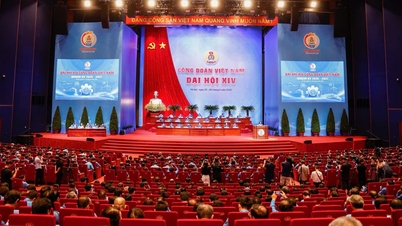
![[Photo] First session of the 14th Congress of the Vietnam Trade Union](https://vphoto.vietnam.vn/thumb/1200x675/vietnam/resource/IMAGE/2026/06/03/1780465947883_ndo_br_img-3852-jpg.webp)




















































![[Video] Sunset at Lap An Lagoon – Where the sun sets over the fishing nets](https://vphoto.vietnam.vn/thumb/1200x675/vietnam/resource/IMAGE/2026/05/31/1780192137701_beach-landscape-sea-water-nature-grass-745871-pxhere-com.jpeg)


































Comment (0)