

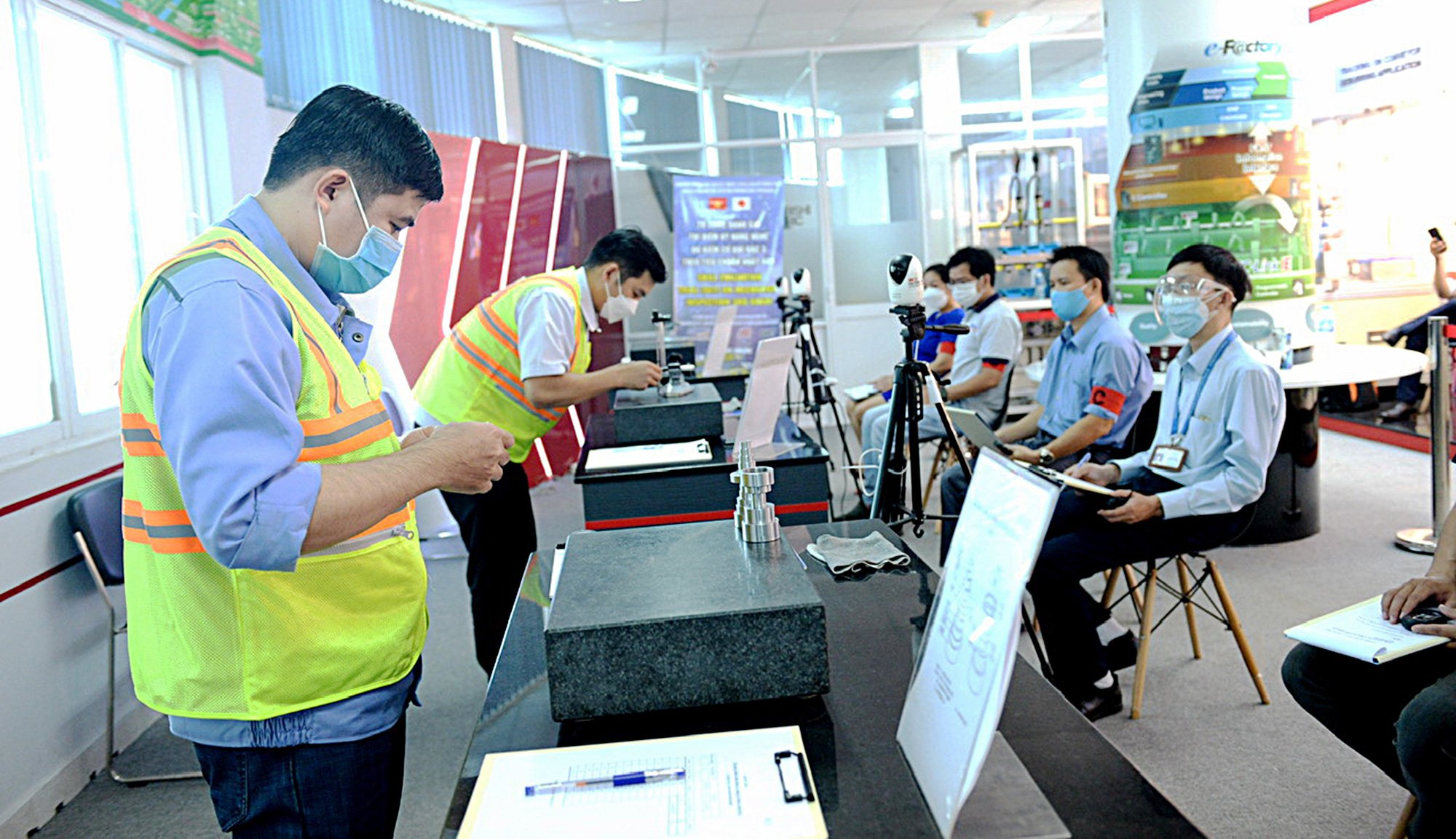
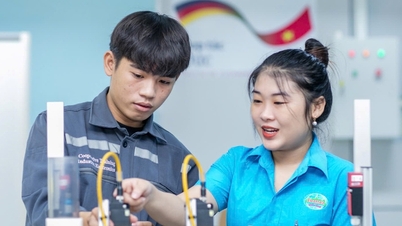
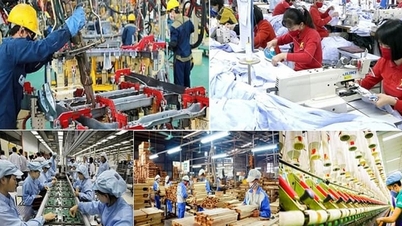
Skills test for upgrading workers' skills at the Vietnam-Japan Training and Technology Transfer Center, Ho Chi Minh City High-Tech Park - Photo: TU TRUNG
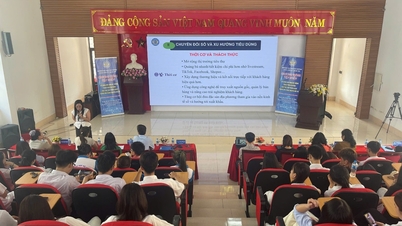
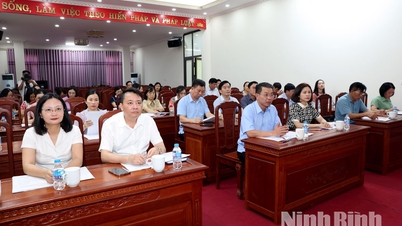
On the afternoon of October 14th, a scientific workshop on training highly skilled human resources to meet the requirements of industrialization and modernization was organized by the Central Propaganda Department at Dai Viet Saigon College.
According to a report by the Ministry of Labour, Invalids and Social Affairs at the conference, as of September 2024, the whole country had 1,886 vocational education institutions - including 399 colleges, 429 secondary schools, and 1,058 vocational training centers. Of these, 684 were non-public vocational education institutions, accounting for 36.2%.
Dr. Nguyen Khanh Cuong, principal of Lilama 2 International College of Technology, believes that one of the obstacles to training highly skilled human resources is the low student intake. Currently, the reality is that students participating in vocational training mainly come from rural areas, poor households, and families receiving preferential treatment. Universities are recruiting through too many methods.
Mr. Cuong suggested that the government needs to provide more support policies for students participating in vocational training. The government could commission training programs for high-quality education systems or implement policies to support vocational training, such as providing financial assistance or loans for students pursuing high-quality vocational training.
Furthermore, the State should focus on investing in equipment and facilities by investing in vocational education institutions or building connecting "hubs" such as national and regional vocational practice centers to support vocational education institutions in implementing training, professional development, and improving the capacity of instructors.
Associate Professor Dr. Nguyen Tien Dong - Principal of Ly Thai To College (Bac Ninh) - believes that to ensure the quality of vocational training is aligned with the actual needs of businesses, it is essential to have internal lecturers from businesses.
He stated that his school is implementing the "Train the Trainer" model – a model for training experienced professionals in businesses to become internal trainers. This will provide the school with a team of instructors who are not only knowledgeable in their field but also possess in-depth understanding of production processes, technology, and the skill requirements of each job position.
According to the Ministry of Labour, Invalids and Social Affairs, in the period 2019-2023, the employment rate for college graduates reached 79%. For vocational schools, this rate reached 82%. The Ministry assessed that in some reputable schools with high-quality training and close ties to businesses, the employment rate for college and vocational school graduates was even higher (reaching 100%).
Mr. Pham Vu Quoc Binh, Deputy Director General of the General Department of Vocational Education, shared that the industries and professions with good enrollment results are mainly concentrated in popular fields with high labor demand in society, such as engineering and technology, information technology, tourism, services, restaurants, and hotels.
Leveraging enterprise resources
According to Mr. Le Tan Dung, Deputy Minister of Labour, Invalids and Social Affairs, a noteworthy point in the current training of high-quality human resources is the participation of businesses. Many domestic and German businesses also have funds specifically for cooperation in training with enterprises.
Businesses are no longer just "waiting" for schools to provide training, but are actively participating alongside them. Therefore, in the future, schools will also need to develop strategies to leverage this resource from businesses.
Conduct a thorough assessment to formulate recommendations and solutions for vocational training.
Ms. Nguyen Thi Mai Hoa, Deputy Chair of the National Assembly's Committee on Culture and Education, stated that the committee will strengthen its oversight and also advise the National Assembly Standing Committee on oversight activities in the field of vocational education in 2025.
The monitoring activities will aim to fully assess the institutionalization of the Party's policies and viewpoints within the legal system, from laws and sub-laws to the actual implementation, thereby providing recommendations, proposals, and solutions for the future.
Source: https://tuoitre.vn/can-nhieu-chinh-sach-ho-tro-dao-tao-nghe-20241015090424649.htm




![[Image] Hanoi's urban life under the challenge of a "scorching hot" environment](https://vphoto.vietnam.vn/thumb/1200x675/vietnam/resource/IMAGE/2026/05/25/1779706979265_nang-nong-t5-2026-minh-duy-7-4636-jpg.webp)
![[Image] Close-up view of the interchange connecting the two expressways and Long Thanh Airport.](https://vphoto.vietnam.vn/thumb/1200x675/vietnam/resource/IMAGE/2026/05/25/1779703378210_ndo_br_z7863716673926-224453a31600126cce10622af6290afd-4549-jpg.webp)











































































Comment (0)