

Harnessing the potential of local resources.
The Western Nghe An Biosphere Reserve spans nine districts: Ky Son, Tuong Duong, Con Cuong, Anh Son, Thanh Chuong, Que Phong, Quy Chau, Quy Hop, and Tan Ky. It is considered a green corridor connecting three core areas (Pu Mat National Park, Pu Huong Nature Reserve, and Pu Hoat Nature Reserve), creating continuity in habitats and environments, and effectively maintaining biodiversity conservation.
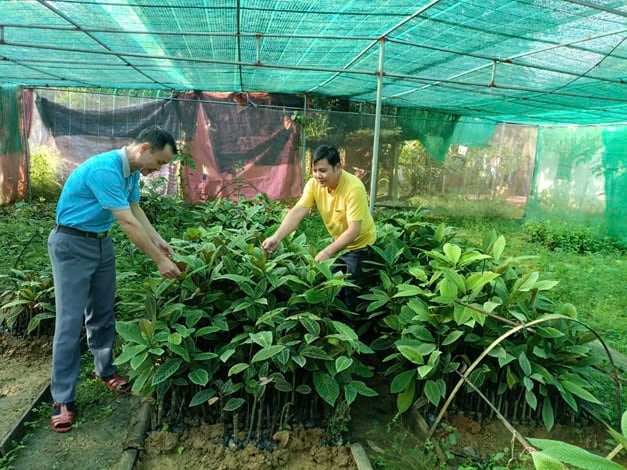
The Biosphere Reserve is home to six ethnic minority groups (Kinh, Thai, Tho, Kho Mu, Hmong, and O Du) with a long-standing and close relationship to the forest. However, pressure from overexploitation of natural resources has caused many negative consequences for the ecosystem. Recognizing this situation, the project "Integrating natural resource management and biodiversity conservation goals into socio -economic development planning and management of Vietnam's Biosphere Reserves" (BR project) has implemented a series of activities and livelihood models to encourage communities to exploit natural resources sustainably, ensuring both livelihoods and biodiversity conservation, and protecting the environment.
To date, the BR project has supported the construction of two medicinal plant nurseries in Xieng Lip village (Yen Hoa commune) and Dang village (Nga My commune), with 20 Thai ethnic households directly involved in nursery operations. Currently, they have successfully propagated 5,000 purple ginseng seedlings, 2,000 Chinese yam seedlings, 1,000 Giao Co Lam seedlings, and 3,000 Khoi Tia seedlings. Thanks to this model, local people not only reduce the cost of purchasing seedlings but also have the opportunity to generate income from selling seedlings to serve the needs of planting medicinal plants under the forest canopy both within and outside the province.
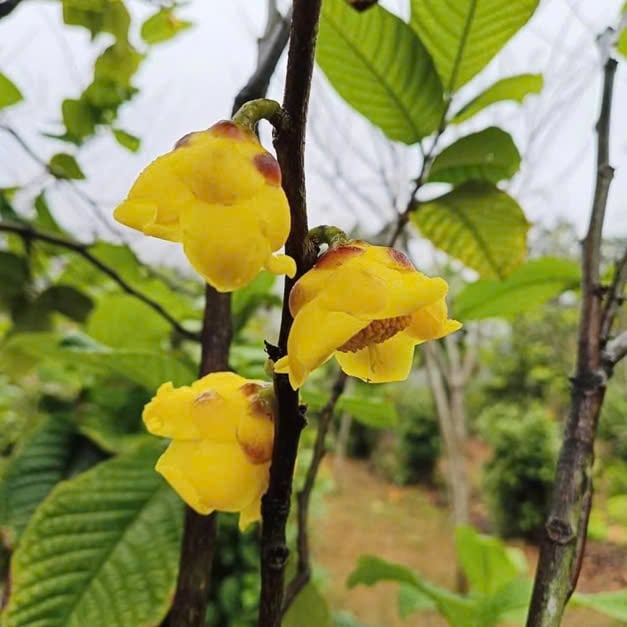
Tree nurseries also play a crucial role in reducing pressure on forest exploitation. Providing high-quality non-timber forest product (NTFP) seedlings enables people to plant and sustainably harvest them themselves, instead of relying on natural harvesting. This is a smart approach to both ensure long-term income and preserve valuable resources for future generations.
Developing the economy while preserving resources.
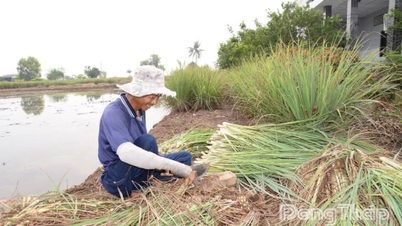
In addition to providing seedlings, the BR Project also implements models for cultivating medicinal plants under the forest canopy with high economic value, such as Golden Flower Tea, Bon Bo, Lung tree, Seven-leaf one-flower tree, Taro, Huong Bai tree, and Met tree in the buffer zone communes of Dong Van and Thong Thu (Que Phong district); Tam Quang, Tam Hop, and Luu Kien communes (Tuong Duong district); Chau Khe commune (Con Cuong district); and livelihood models in the Pu Hoat Nature Reserve in Que Phong district.
Typically, 421 households participated. They participated in the conservation, protection, replanting, and sustainable exploitation of 1,489.0 hectares of Lung forest. They also conserved, developed, and sustainably exploited the Que Phong Golden Flower Tea plant in conjunction with forest protection over an area of 135.3 hectares. Furthermore, they conserved and developed the Bon Bo tree in conjunction with forest protection and the enrichment of degraded natural forests over an area of 92.6 hectares…
The BR project's livelihood model still faces several challenges, such as its small-scale implementation, which has not yet met the large needs of the people; the commercialization of products from models like Golden Flower Tea or Met tree is still limited, and the market potential has not been fully exploited. To address these challenges, stronger support from government levels and relevant organizations is needed.
In the coming period, local authorities and stakeholders need to build brands for the distinctive products of Western Nghe An, and linking them with consumer markets are necessary steps to optimize the effectiveness of livelihood models. Continuing to raise community awareness about the role of conservation in economic development is also crucial. The livelihood models of the BR Project in the Biosphere Reserve have demonstrated that nature conservation is not only a responsibility but also an opportunity for socio-economic development in the area.
Source: https://kinhtedothi.vn/canh-cua-mo-ra-nguon-thu-nhap-ben-vung-cho-nguoi-dan-mien-tay-nghe-an.html

![[Photo] Prime Minister Pham Minh Chinh holds a phone call with the CEO of Russia's Rosatom Corporation.](/_next/image?url=https%3A%2F%2Fvphoto.vietnam.vn%2Fthumb%2F1200x675%2Fvietnam%2Fresource%2FIMAGE%2F2025%2F12%2F11%2F1765464552365_dsc-5295-jpg.webp&w=3840&q=75)
![[Photo] Closing Ceremony of the 10th Session of the 15th National Assembly](/_next/image?url=https%3A%2F%2Fvphoto.vietnam.vn%2Fthumb%2F1200x675%2Fvietnam%2Fresource%2FIMAGE%2F2025%2F12%2F11%2F1765448959967_image-1437-jpg.webp&w=3840&q=75)



![Looking back at the peak month of combating IUU: [Part 2] Difficulty in tracing the origin of seafood](https://vphoto.vietnam.vn/thumb/402x226/vietnam/resource/IMAGE/2025/12/12/1765506860686_0454-tsb23-125426_536.jpeg)
























































Comment (0)