

Early screening for polycystic kidney disease is necessary if there is a genetic predisposition.
A 15-year-old male student from Ho Chi Minh City, NHNA, visited Medlatec Go Vap Multi-Specialty Clinic in good health with no unusual symptoms. After examination, it was discovered that he is the third generation in his family with a hereditary kidney disease, requiring a management and monitoring program to prevent progression to end-stage chronic kidney disease.
The patient reported a very unusual family history: her maternal grandmother was diagnosed with polycystic kidney disease at the age of 60.
A.'s mother was diagnosed with polycystic kidney disease at age 35, when her kidney function was still good. Due to her complacency and feeling healthy with no unusual symptoms, she didn't seek medical attention. When she felt tired and went for a check-up, she had already developed end-stage chronic kidney disease (within just 5 years), requiring dialysis and awaiting a kidney transplant. Her maternal aunt (mother's sister) was diagnosed with polycystic kidney disease at age 33.
Based on the maternal family tree showing that two generations (grandmother, mother, and aunt) of the patient have polycystic kidney disease, Specialist Doctor Nguyen Thi My Le prescribed screening for hereditary polycystic kidney disease for the patient (third generation).
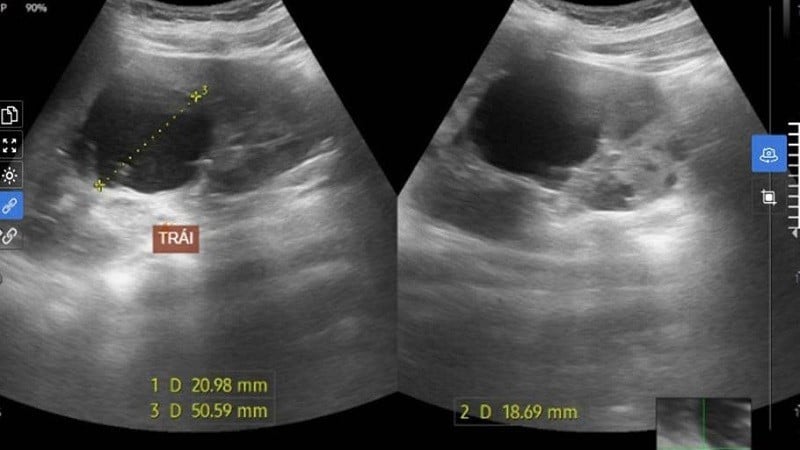
Notable findings from the examination include abdominal ultrasound revealing bilateral polycystic kidneys (more than 7 cysts in the left kidney, more than 10 cysts in the right kidney), and enlarged kidneys. Currently, there is no evidence of impaired kidney function.
With the abnormal polycystic kidney image on the ultrasound, Dr. Le advised A. to undergo further screening tests for extrarenal manifestations of polycystic kidney disease, such as: abdominal ultrasound (liver cysts, pancreatic cysts...), electrocardiogram, and echocardiogram (valvular heart disease, coronary artery disease...).
Based on clinical and paraclinical results, the doctor diagnosed A. with stage 1 chronic kidney disease - the earliest stage, with no renal function decline, only abnormalities on kidney imaging and polycystic kidney disease without renal or extrarenal manifestations.
Patient A. has received clear advice from Dr. Le regarding polycystic kidney disease and its potential for inheritance to future generations. Currently, patient A. does not require medication; they only need to protect their kidneys as much as possible by preventing acute kidney damage: avoiding dehydration (drinking enough water), avoiding nephrotoxic drugs (using medication only under a doctor's prescription), and preventing urinary tract obstruction (kidney stones, etc.).
Patients need to restrict salt intake; monitor the progression of polycystic kidney disease regularly through renal volume indices (ultrasound, MRI...), eGFR, proteinuria, albuminuria; monitor for hypertension and extrarenal manifestations (liver cysts, cardiovascular disease, intracranial aneurysms).
At the same time, patients need to be screened for and treated for any factors that affect the rate of kidney failure progression (hypertension, proteinuria, hyperglycemia, glomerular disease, etc.).
Dr. Le advised that all members of patient A's maternal family should undergo abdominal ultrasound screening for polycystic kidney disease (especially the two children of her aunt). Patient A's sister currently has not been diagnosed with polycystic kidney disease on ultrasound, but late-onset polycystic kidney disease cannot be completely ruled out, so regular abdominal ultrasounds are still necessary.
How dangerous is polycystic kidney disease?
According to Specialist Doctor Nguyen Thi My Le, polycystic kidney disease is a genetic disorder characterized by enlarged kidneys and the formation of multiple cysts. Approximately 25% of cases remain undiagnosed due to the lack of clinical symptoms. The number of cysts gradually increases over time, accompanied by a decline in kidney function with age. If not detected and monitored early, polycystic kidney disease can progress to end-stage chronic kidney disease, requiring kidney replacement (hemodialysis, peritoneal dialysis, kidney transplant).
In addition, the disease can cause hypertension, kidney stones, urinary tract infections, back pain, hematuria, or extrarenal complications such as liver cysts, cerebral aneurysms (risk of cerebral hemorrhage), and cardiovascular disease. Therefore, early screening provides an opportunity for early treatment, helping to slow disease progression and improve quality of life.
According to Dr. Le, once diagnosed with polycystic kidney disease, a regular management and monitoring program is necessary to control blood pressure, protect the kidneys as much as possible, slow progression to end-stage chronic kidney disease, assess the risk of rapid progression of kidney failure, evaluate treatment of renal complications (chronic kidney disease, kidney stones, hematuria, urinary tract infections, cyst infections, symptoms caused by large kidney cysts), and assess extrarenal manifestations (liver cysts, intracranial aneurysms, cardiovascular disease).
In this case, since polycystic kidney disease is a genetic condition, Dr. Le stated that a chronic kidney disease management program is necessary for patient A. Furthermore, the patient's maternal family should also be screened for polycystic kidney disease to avoid unfortunate situations like that of patient A's mother (who, at 40 years old, had to undergo dialysis).
Polycystic kidney disease, and kidney diseases in general, often develop silently because the kidneys have a very high compensatory capacity. Therefore, by the time symptoms appear, the kidneys have usually already suffered serious damage.
To diagnose polycystic kidney disease early, during a medical examination, people will be prescribed tests such as abdominal ultrasound to assess the number of kidney cysts and the size of enlarged kidneys on ultrasound.
Diagnostic criteria for hereditary polycystic kidney disease on ultrasound for individuals 15 years of age and older, according to the International Society of Nephrology (KDIGO): Individuals with a family history of polycystic kidney disease: Ages 15-39 years: ultrasound shows ≥ 3 cysts; ages 40-59 years: ultrasound shows ≥ 2 cysts per kidney on both the left and right sides.
In addition, blood tests such as complete blood count, electrolyte panel, BUN, creatinine, urinalysis, and microalbuminuria/creatinineuria should be performed; screening for extrarenal manifestations of polycystic kidney disease should be done: electrocardiogram, echocardiogram (for cardiovascular disease), and abdominal ultrasound (for liver cysts and pancreatic cysts).
Source: https://nhandan.vn/canh-giac-mac-benh-than-da-nang-ngay-khi-con-tre-post906629.html




![[Photo] General Secretary and President To Lam presides over the meeting to approve the draft report on the results of the second inspection by the Politburo of the Standing Committee of the Hanoi City Party Committee.](https://vphoto.vietnam.vn/thumb/1200x675/vietnam/resource/IMAGE/2026/05/26/1779789811432_a2-bnd-4430-9620-jpg.webp)


































































































Comment (0)