A shift in farming mindset.
Located at an altitude of 1,300 meters above sea level, Cao Son commune in Lao Cai province boasts a cool climate and soil particularly suitable for tea and temperate fruit trees. However, in the past, small-scale farming practices made life difficult for the local people.
In recent years, the people of Cao Son have begun to change their farming practices, most notably by preserving and developing the area of ancient tea trees in Ta Thang village. According to statistics, the entire commune currently has more than 1,252 hectares of tea, of which over 676 hectares are in commercial production. The area of ancient tea trees alone is approximately 40 hectares, yielding 2 tons/ha with very good quality.
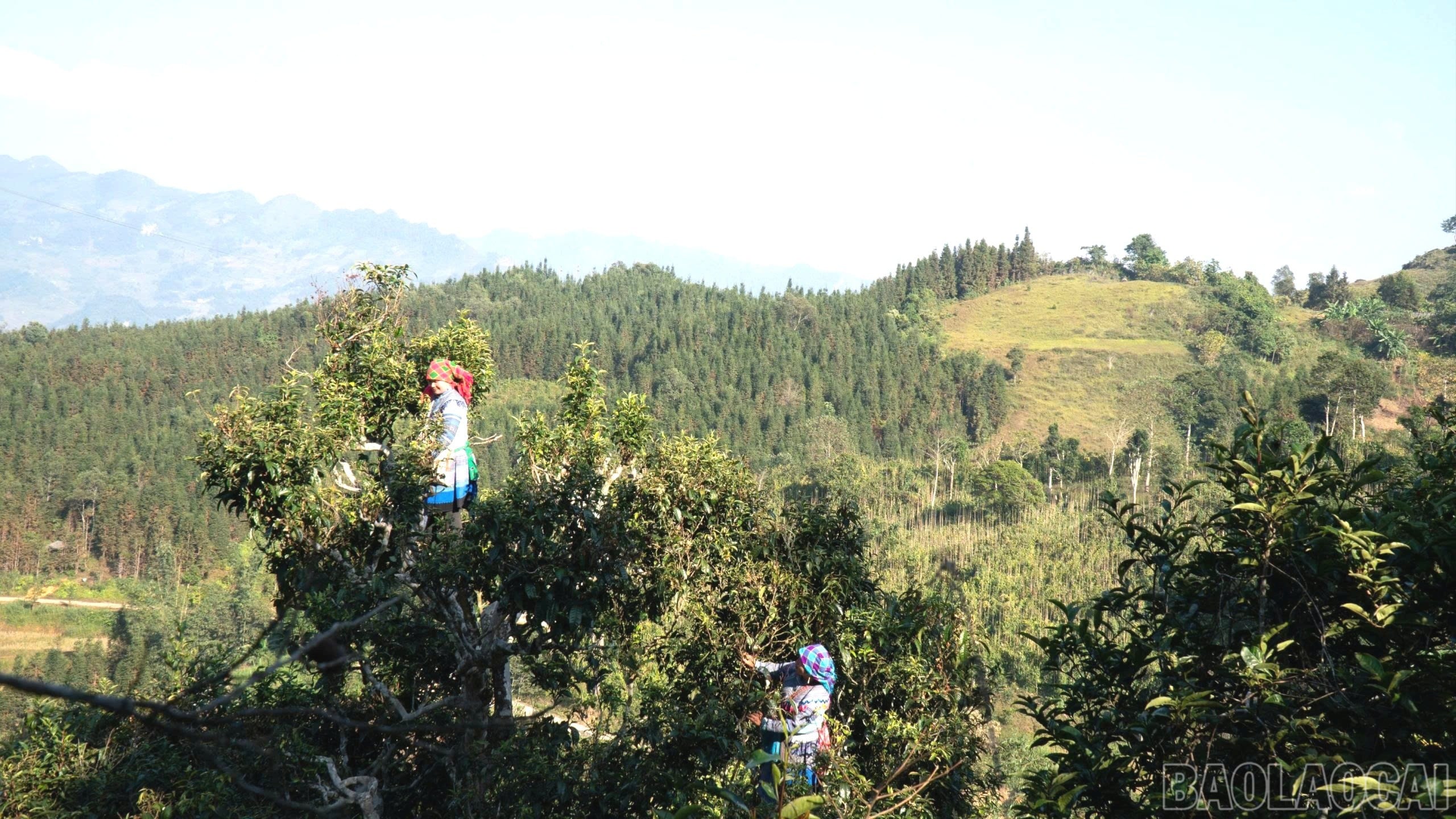
People in Cao Son commune harvest tea leaves from ancient Shan Tuyet trees.
Mr. Sung Pao, a resident of Ta Thang village, said that the ancient tea trees passed down from his ancestors are now carefully preserved and cared for by their descendants for harvesting. With the price of fresh tea buds sometimes reaching 60-70 thousand VND/kg for high-quality tea, tea cultivation is becoming the main source of income for many households.
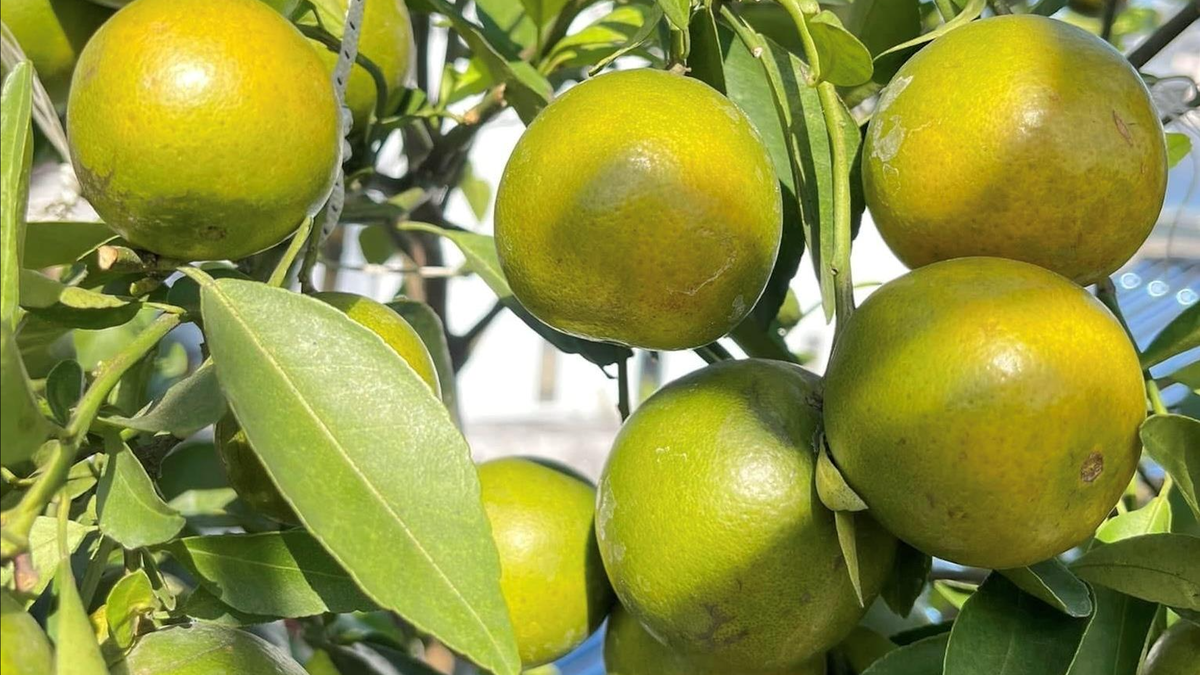
Besides tea plants, the people of Cao Son have also boldly converted less productive land to cultivate high-value fruit trees, most notably mandarins. By the end of 2025, the commune had developed 14 hectares of mandarins, with a production of 168 tons. With an estimated production value of over 2.5 billion VND, mandarin trees are proving to be exceptionally effective economically , bringing in hundreds of millions of VND in revenue for households that diligently invest in and care for them.
Untangling market bottlenecks
Despite having vast raw material areas and high-quality products, the issue of market access remains a concern, particularly with situations like "bumper harvests leading to price drops" or processing plants operating at reduced capacity. At times, the price of raw tea leaves has plummeted, directly impacting farmers' incomes.
Recognizing this challenge, the Cao Son commune government has identified production linkages and market research as key tasks for 2026.
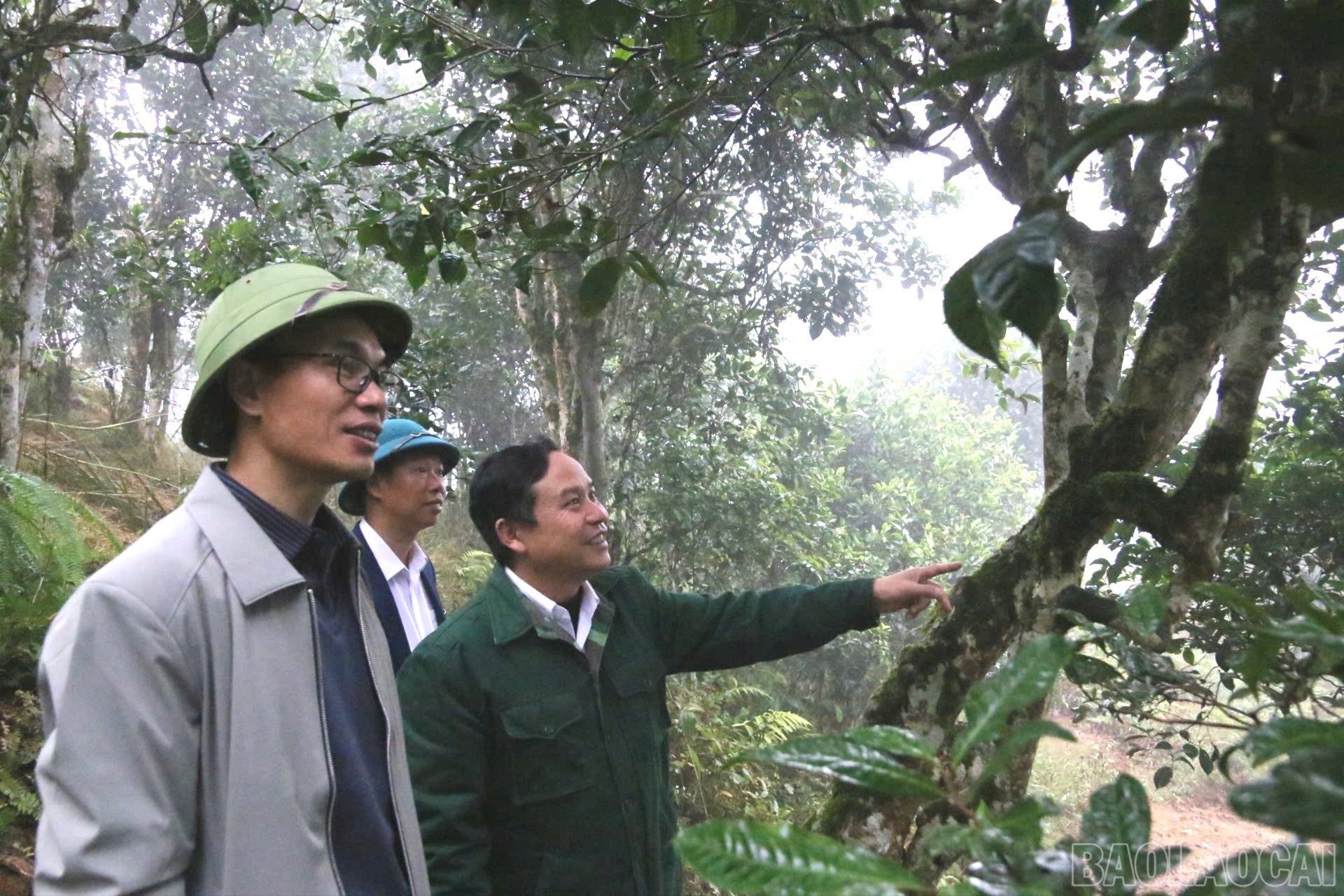
Leaders of Cao Son commune inspect and seek solutions for developing the ancient Shan Tuyet tea growing area in Ta Thang village.
Discussing the local economic development orientation, Mr. Tran Hoang Anh - Chairman of the People's Committee of Cao Son commune, said: "We have identified commercial agriculture as the focus of economic development. In the coming time, the commune will focus on inviting businesses to invest in deep processing right in the area to ensure stable output and avoid price manipulation. At the same time, the commune will guide people to comply with clean production processes to enhance product value and build a Cao Son tea and tangerine brand that is competitive in the market."
Currently, the commune has two OCOP products that have achieved 3 stars or higher: Viet Oolong Tea and Viet Hong Tea. This is an important foundation for Cao Son's agricultural products to reach further markets.
Thanks to the efforts of the entire political system, poverty reduction in Cao Son has achieved impressive results. In 2025, the commune's poverty rate decreased to 29.03%, a reduction of more than 10% compared to the previous year. The goal for 2026 is to further reduce the poverty rate by approximately 7.58%.
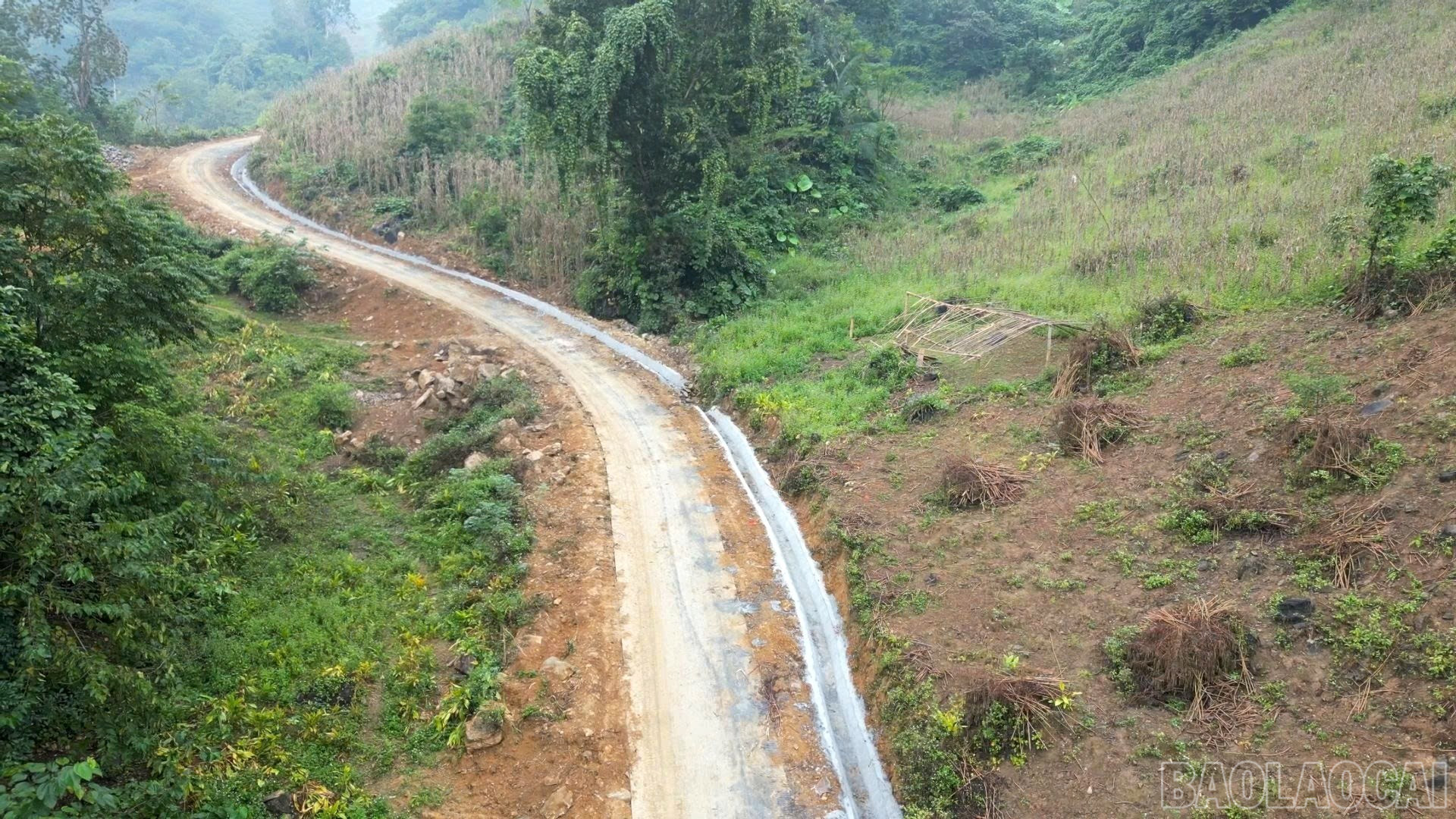
The improved road infrastructure has created favorable conditions for the people of Cao Son commune to develop their economy and achieve sustainable poverty reduction.
The proactive efforts of the people in transforming the crop structure, along with the right direction from the government, are helping Cao Son gradually change the face of a mountainous border commune.
Source: https://baolaocai.vn/cao-son-phat-huy-noi-luc-giam-ngheo-ben-vung-post890542.html


![[Photo] General Secretary and President To Lam presides over a meeting on the implementation of Directive No. 34-CT/TW of the Party Central Committee.](https://vphoto.vietnam.vn/thumb/1200x675/vietnam/resource/IMAGE/2026/05/19/1779187768672_a1-bnd-2350-631-jpg.webp)
![[Photo] National Assembly Chairman Tran Thanh Man attends the groundbreaking ceremony for the National Highway 1A spatial axis project.](https://vphoto.vietnam.vn/thumb/1200x675/vietnam/resource/IMAGE/2026/05/19/1779161360398_ndo_br_bnd-1412-jpg.webp)
![[Photo] Capturing the moment the tide recedes at Yen Binh Son rapids - a million-year-old scenic spot in Quang Ngai.](https://vphoto.vietnam.vn/thumb/1200x675/vietnam/resource/IMAGE/2026/05/19/1779175463885_yen9-1199-jpg.webp)










































![[Photo] General Secretary and President To Lam receives Indian Defense Minister Rajnath Singh](https://vphoto.vietnam.vn/thumb/402x226/vietnam/resource/IMAGE/2026/05/19/1779184046302_anh-man-hinh-2026-05-19-luc-16-46-58.png)

















Comment (0)