

 |
| Huong Tra district is aiming to mobilize maximum resources and promote social participation in poverty reduction efforts. |
A Silent Journey
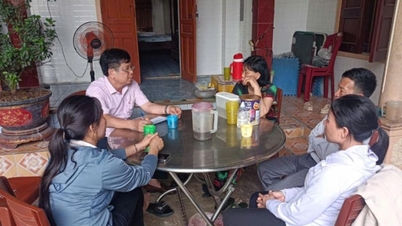
Having worked as a poverty reduction volunteer for six years, Mr. Truong Van Huy, Head of the Giap Tu Neighborhood Group in Huong Tra Ward, expressed: “The most difficult thing is explaining to the residents why some households, even those classified as poor, receive support earlier than others; or why some receive higher-value support than others… When faced with such situations, if you don't explain things gently and persuasively, even if you're following the regulations correctly, you'll inevitably cause resentment and awkwardness, especially when you see each other every day because you live in the same neighborhood group.”
Meanwhile, a poverty reduction officer in Huong Tra ward shared that during the review of poor households, some households were uncooperative due to fear of not meeting the multidimensional poverty criteria, which would lead to the loss of benefits and subsidies. When explaining, some understood and cooperated, while others reacted strongly. In such situations, it is necessary to be extremely patient and calm, to explain with evidence and to incorporate practical examples to gradually inspire people's self-improvement.
The examples above show that the work of the poverty reduction team is not simple, both for the dedicated staff and the volunteers, and it is very difficult to quantify the process.
Currently, Huong Tra has 23 collaborators in 23 residential areas. Along with the ward's specialized force, this is the core force in implementing the review of poor households according to the multidimensional poverty standard for the 2021-2025 period, directly bringing policies to each household and mobilizing people to shift the economic structure from agriculture to non-agricultural labor (achieving a rate of 74.17%, meeting the standards of a type IV urban area). Thanks to this, the percentage of poor and near-poor households has gradually decreased year by year.
Specifically, in the Tu Ha area, the poverty rate was 2.29% in 2021, and has now decreased to 1.51%; the near-poverty rate has dropped from 1.53% to 0.46%. The number of households escaping poverty and near-poverty has steadily increased over the years. In Huong Van, despite being a low-lying area often heavily affected by natural disasters, and with a significant portion of poor households consisting of elderly, single individuals unable to work, the implementation of livelihood models tailored to individual circumstances has contributed to limiting re-poverty and creating a foundation for sustainable poverty reduction in the coming years. In Huong Van, the poverty rate is now only 0.97%, and the near-poverty rate is 0.4%; most households lack sufficient income.
 |
| Huong Tra always implements social welfare policies promptly. |
To achieve these results, in Tu Ha, Huong Van, and Huong Van communes, poverty reduction has always been identified by the Party committees and authorities as a crucial political task. Numerous plans and programs have been issued, closely following directives from higher levels, creating a legal framework and clear direction for grassroots officials to implement.
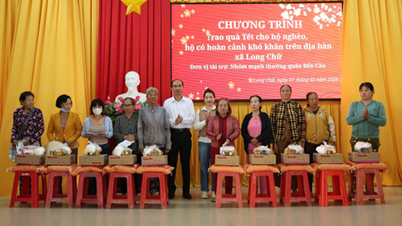
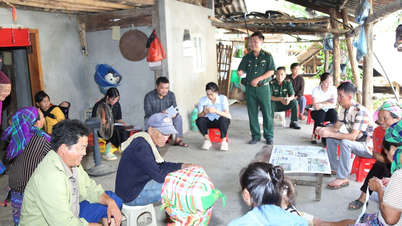
During the implementation process, the propaganda and mobilization efforts stood out as a highlight, as the poverty reduction team utilized various channels, such as the radio system, electronic information websites, neighborhood meetings, and visited individual poor and near-poor households to understand and share with each specific case. As a result, social welfare and employment policies were implemented promptly and effectively.
 |
| The contributions of task forces and collaborators in achieving sustainable poverty reduction goals are crucial. |
Enhancing the capacity of poverty reduction workers.
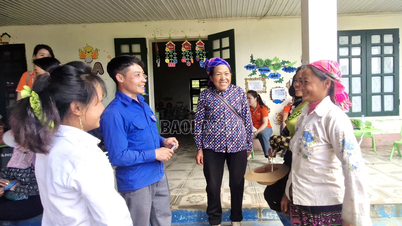
The implementation of poverty reduction efforts has shown that the contributions of specialized forces and collaborators not only help people understand policies but also contribute to changing perceptions, inspiring self-reliance, and gradually reducing the mentality of dependence and reliance.
However, according to Mr. Tran Van Tu, Vice Chairman of the People's Committee of Huong Tra Ward, although the capacity of the poverty reduction workforce has improved, there is still a gap compared to practical requirements. The main reason for this is the lack of training that is synchronized with the pace of urban development and new management requirements.
Furthermore, coordination between departments, organizations, and residential groups in implementing livelihood support programs is still not tight; there is still confusion in applying the multidimensional poverty standard; skills in analyzing the causes of poverty, accurately identifying the support needs of each household, and skills in monitoring and supervising after support are still limited; social resources for poverty reduction have not been effectively mobilized; and some specialized officials lack decisiveness in changing people's perceptions of civilized lifestyles and the awareness of self-reliance to escape poverty… “This leads to certain difficulties in implementing the targets of a type IV urban area associated with sustainable poverty reduction,” Mr. Tran Van Tu observed.
 |
| Job placement and creation are among the ways to achieve sustainable poverty reduction. |
Faced with this situation, Huong Tra district has focused on reviewing and reorganizing the system of residential groups to ensure uniformity in management. The operational procedures for urban planning and management have been initially standardized to make them more accessible and implementable for those responsible for poverty reduction; strengthening the connection between departments, organizations, and residential group officials in implementing poverty reduction projects; and promoting the application of information technology in managing poor and near-poor households.
According to Mr. Tran Van Tu, in order to enhance the capacity of the poverty reduction workforce, from now until 2030, Huong Tra will strengthen the organization of regular training courses on urban planning and management knowledge, skills in implementing multidimensional poverty reduction policies, and skills in analyzing and forecasting socio-economic development indicators in the area.
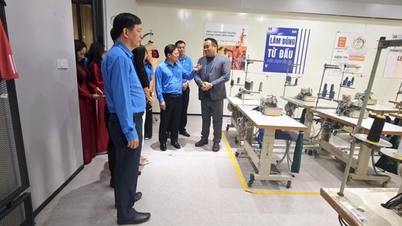
“Innovating management methods and attracting resources are also areas that Huong Tra has been and is currently focusing on. In the spirit of being practical and relevant to specific situations at the grassroots level, in addition to focusing on training methods to maximize resource mobilization and promote social participation, Huong Tra will enhance the role of poverty reduction workers by becoming a ‘bridge,’ proactively coordinating with businesses in the Tu Ha Industrial Park and other industrial clusters to create sustainable jobs for poor and near-poor households,” Mr. Tu said.
Source: https://huengaynay.vn/chinh-polit-xa-hoi/an-sinh-xa-hoi/cau-noi-cua-cac-chinh-sach-giam-ngheo-161331.html

![[Photo] Solemn bathing ceremony and Buddha procession in Hue](https://vphoto.vietnam.vn/thumb/1200x675/vietnam/resource/IMAGE/2026/05/31/1780228263543_1-jpg.webp)

![[Photo] Admire the coral "masterpiece" amidst the million-year-old heritage of Dak Lak province.](https://vphoto.vietnam.vn/thumb/1200x675/vietnam/resource/IMAGE/2026/05/31/1780221235105_anh-man-hinh-2026-05-31-luc-16-53-27.png)
![[Photo] The General Secretary, President and his wife begin their state visit to the Philippines.](https://vphoto.vietnam.vn/thumb/1200x675/vietnam/resource/IMAGE/2026/05/31/1780230559452_anh-man-hinh-2026-05-31-luc-19-28-11.png)
![[Image] Hanoi Police officially crowned champions of V-League 2025/2026](https://vphoto.vietnam.vn/thumb/1200x675/vietnam/resource/IMAGE/2026/05/31/1780244769054_ndo_br_039d561b692be875b13a-jpg.webp)




















![[Video] Sunset at Lap An Lagoon – Where the sun sets over the fishing nets](https://vphoto.vietnam.vn/thumb/340x192/vietnam/resource/IMAGE/2026/05/31/1780192137701_beach-landscape-sea-water-nature-grass-745871-pxhere-com.jpeg)


































![[Photo] Admire the coral "masterpiece" amidst the million-year-old heritage of Dak Lak province.](https://vphoto.vietnam.vn/thumb/402x226/vietnam/resource/IMAGE/2026/05/31/1780221235105_anh-man-hinh-2026-05-31-luc-16-53-27.png)


























Comment (0)