


In the context of the 2018 General Education Program, the requirements for the Literature subject are no longer focused on testing the ability to memorize knowledge, but rather on assessing students' reading comprehension and writing skills. This means that exam questions are more open-ended, encouraging independent thinking and diverse approaches. However, this very diversity also makes the issue of fair grading more challenging.
When it comes to competency-based exams, the grading process must be even fairer.
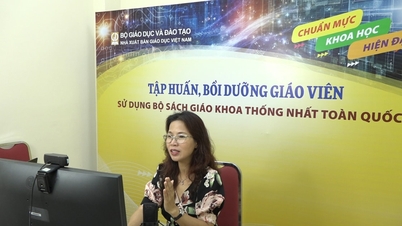
Associate Professor Dr. Do Ngoc Thong, the chief editor of the 2018 Literature curriculum, believes that using new materials not previously studied in textbooks is an essential requirement for assessing competence. According to Dr. Thong, only when students encounter a text they haven't studied before can their reading comprehension and writing skills be accurately assessed.
He emphasized that this method of setting questions aims to ensure fairness and equality for all students, while limiting rote memorization of model essays, cramming, or copying from available materials. Students are forced to think for themselves, present their ideas, and express themselves in their own words.
However, the expert also noted that the right approach does not necessarily mean every step is perfect. The quality of assessment also depends on how the questions are formulated and, especially, how the exams are graded. According to Associate Professor Dr. Do Ngoc Thong, one of the biggest concerns of teachers nationwide today is how to ensure fairness and objectivity in grading Literature exams.
Mr. Thong noted that, due to the nature of essay-based exams, even with detailed answer keys and marking guidelines, it is difficult to completely eliminate the subjective element of the examiner. Therefore, appropriate solutions are needed to ensure that the marking process is consistent across different examination boards and localities, accurately reflecting the students' true abilities.
Recent debates surrounding the Literature exam at some specialized high schools also highlight the growing pressure to ensure fairness in assessment. The Literature exam for the 2026-2027 10th grade entrance exam at the High School for Social Sciences and Humanities (Vietnam National University, Hanoi) has attracted much controversy.
Teacher Hoang Thi Tu Anh (Vietnam-Poland High School, Hanoi) believes that while the exam aims to assess reading comprehension and critical thinking skills, some questions use theoretical terminology that is not entirely appropriate for junior high school students.
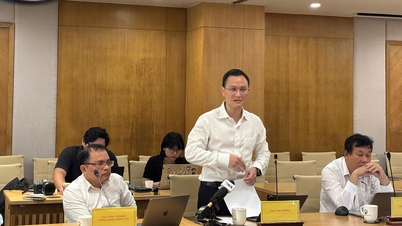
Meanwhile, some commentators noted that the exam had an innovative spirit, but some concepts and question-setting could lead to different interpretations. Conversely, Associate Professor Dr. Nguyen Thi Phuong Thuy - senior lecturer in the Department of Linguistics and Vietnamese Studies, Faculty of Social Sciences and Humanities (Vietnam National University, Hanoi) - argued that different approaches are acceptable for an open-ended specialized exam. Such cases further highlight the need for flexible and scientific grading guidelines to ensure the rights of candidates.
The answer is open-ended to ensure that creative work is not overlooked.
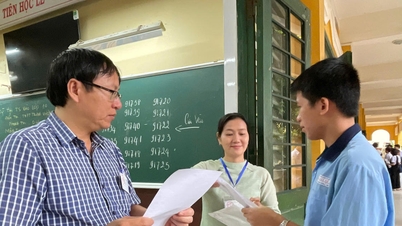
Ms. Tu Anh stated that, with many years of experience participating in grading exams for admission to 10th grade and high school graduation exams, the grading committee always takes time to jointly grade 10 exam papers before the official grading to ensure a unified understanding and application of the grading guidelines.
In reality, the current exam questions and marking guidelines for Literature are designed in an open-ended manner, so during the joint marking process, many unforeseen situations have been thoroughly discussed by the examiners to avoid disadvantaging students.
In Literature class, students can choose different approaches to the same argumentative topic. Without a consensus from the outset, the evaluation can easily be influenced by the individual perspectives of each grader.
In particular, for Literature, students may even write better essays than the answer key, so such work needs to be acknowledged and evaluated appropriately by teachers. Instead of looking for essays that are identical to the answer key, grading Literature exams should focus on assessing students' argumentative abilities and the extent to which they meet the requirements of the question.
Furthermore, the two-round independent grading process is considered a crucial mechanism for ensuring fairness. All teachers involved in grading receive thorough training on professional skills and regulations. In practice, the difference in scores between the two examiners is usually not significant; any cases with large discrepancies are investigated and handled according to regulations.
According to Associate Professor Dr. Do Ngoc Thong, the most important thing is that the exam results accurately reflect the students' true abilities. Dr. Thong believes that no pressure should be allowed to skew the assessment towards chasing achievements or being overly strict in grading.
This is also the common wish of many teachers who are directly involved in teaching and grading exams. When exam questions are geared towards assessing competence, grading also needs to shift from a "counting ideas" mindset to evaluating the quality of thinking, reasoning ability, and the persuasiveness of the writing.
Source: https://daidoanket.vn/cham-thi-mon-ngu-van-lam-the-nao-de-cong-bang.html


























![[Photo] Reception to welcome General Secretary and President To Lam and his wife on their State visit to the Philippines](https://vphoto.vietnam.vn/thumb/1200x675/vietnam/resource/IMAGE/2026/06/01/1780295488620_vna-potal-chieu-dai-chao-mung-tong-bi-thu-chu-tich-nuoc-to-lam-va-phu-nhan-tham-cap-nha-nuoc-toi-philippines-8798060-7855-jpg.webp)

































































Comment (0)