

For social housing projects funded by non-budgetary sources and not using trade union funds, the Ministry of Construction stipulates that people in need will submit applications directly to the investor. Each household or individual may only register for one project at a time. After the application period ends, within 10 days, the investor must compile a list and send it to the Department of Construction for verification. The local management agency will then respond within a maximum of 10 days.
Based on the review results and current legal regulations, the investor will determine the eligible cases for purchasing or lease-purchasing social housing. This list must be made public within 30 days of the application deadline. For cases that do not meet the requirements, the investor is responsible for clearly stating the reasons within 15 days.
Once the project meets all the required business conditions, the investor will sign a contract with the customer and update the transaction information on the housing and real estate market management data system.
In contrast, for housing for the armed forces, officers and soldiers who wish to buy or rent-to-own a house will register through their unit. The applications are then compiled and forwarded to the specialized housing agency under the Ministry of National Defense or the Ministry of Public Security .
Based on the available housing units in each project, the Ministry of National Defense and the Ministry of Public Security will allocate the number of houses to their subordinate units in the localities where the projects are located. These units will then review and compile lists of eligible beneficiaries before submitting them to the relevant agencies for verification and review.
After verification with the local Department of Construction, the authorities will confirm the cases that meet the requirements and submit them to the Ministry's leadership for approval. This list is then sent to the investor and buyers to proceed with contract signing when the project is ready for sale. For applications that do not meet the requirements, the authorities must provide written feedback, clearly stating the reasons, within 15 days.
With such strict regulations, there are high expectations that social housing will reach the right beneficiaries and not fall into the hands of the wealthy.
Build houses to rent out, instead of to sell.
According to real estate expert Tran Khanh Quang, instead of focusing on social housing for sale, priority should be given to social housing for rent-to-own or rent-to-own purposes. This segment perfectly meets the needs of urban poor workers and low-income workers who cannot afford to buy a house and can only afford to rent. After a period of renting, when they have saved enough money, they can switch to rent-to-own or buy a house.
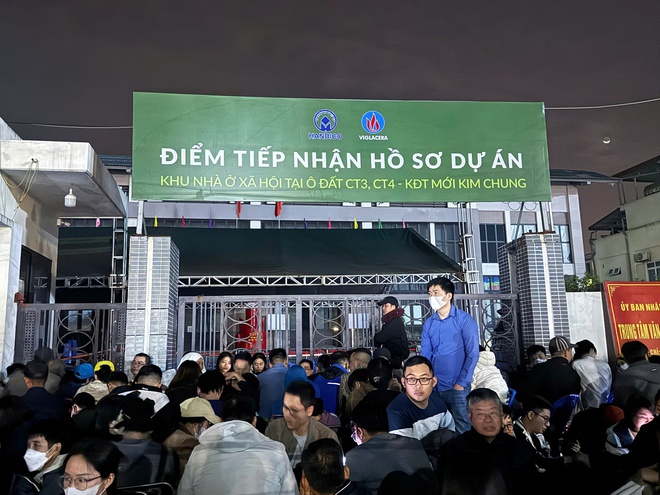
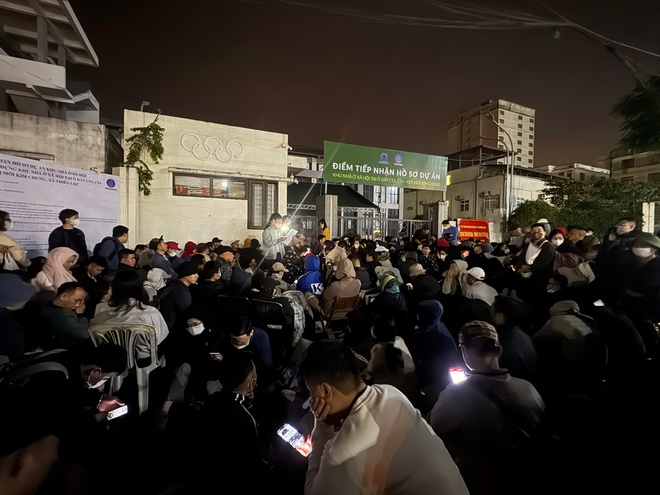
People stayed up all night queuing to submit applications for social housing in Hanoi.
PHOTO: NGUYEN TRUONG
Furthermore, given the country's limited resources, it is necessary to stipulate that social housing can only be bought and sold at social housing prices, prohibiting any form of commercial sale. Specifically, if the owner of social housing no longer needs it, they can only resell it to the management agency at the original purchase price plus bank interest at the time of sale. If resold to a subsequent buyer, it must be at the original price plus inflation adjustments. In this way, social housing will always exist to serve those with genuine needs.
Lawyer Truong Anh Tu, Chairman of TAT Law Firm, analyzed that the huge price difference between social housing and commercial housing has created an incentive for clandestine speculation. With just a full power of attorney or an unofficial deposit agreement, or a transaction conducted through notarized documents, the transaction is "transformed" into a legally valid civil contract on paper, but completely violates the law on social housing. This facilitates the proliferation of profiteering in the social housing sector.
Furthermore, a worrying reality is that the application process relies primarily on declarations. The lack of interconnected tax, population, and land data makes verification nearly impossible, creating loopholes that allow for the proliferation of "guaranteed approval" services. The final buyer, believing they have secured a spot, bears the greatest risk, as all such transactions are invalid if audited.
To ensure social housing truly reflects its purpose, lawyer Truong Anh Tu proposed that all selection criteria and the list of successful candidates be made public; that population, tax, land, and social insurance data be interconnected; and that all disguised transactions be strictly controlled, and that policies be redesigned to target specific groups instead of using a single model.
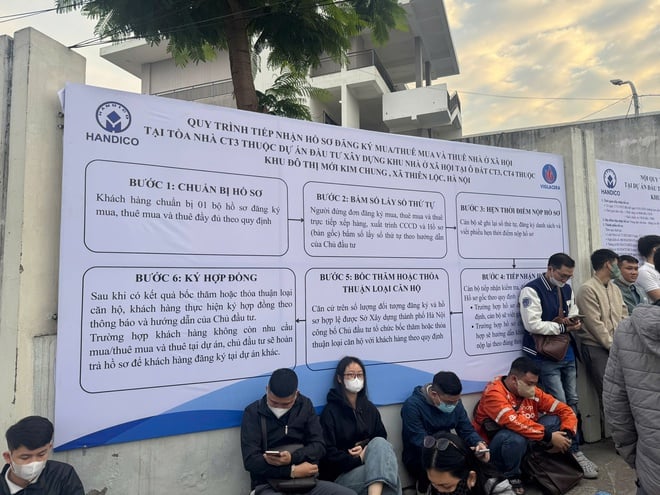
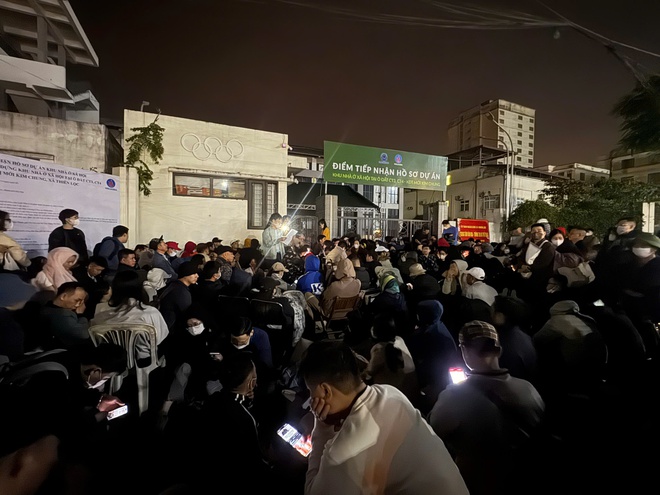
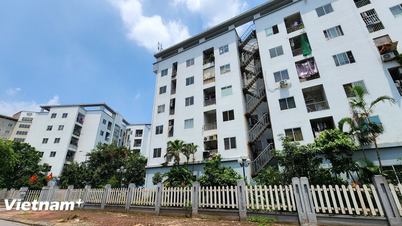
Low supply, high demand, and a huge price difference between social housing and commercial housing lead to continued exploitation of the social housing market.
PHOTO: NGUYEN TRUONG
Source: https://thanhnien.vn/chan-dung-hanh-vi-truc-loi-nha-o-xa-hoi-185260511112148807.htm
![[Photo] Admire the coral "masterpiece" amidst the million-year-old heritage of Dak Lak province.](https://vphoto.vietnam.vn/thumb/1200x675/vietnam/resource/IMAGE/2026/05/31/1780221235105_anh-man-hinh-2026-05-31-luc-16-53-27.png)

![[Photo] Solemn bathing ceremony and Buddha procession in Hue](https://vphoto.vietnam.vn/thumb/1200x675/vietnam/resource/IMAGE/2026/05/31/1780228263543_1-jpg.webp)
![[Image] Hanoi Police officially crowned champions of V-League 2025/2026](https://vphoto.vietnam.vn/thumb/1200x675/vietnam/resource/IMAGE/2026/05/31/1780244769054_ndo_br_039d561b692be875b13a-jpg.webp)
![[Photo] The General Secretary, President and his wife begin their state visit to the Philippines.](https://vphoto.vietnam.vn/thumb/1200x675/vietnam/resource/IMAGE/2026/05/31/1780230559452_anh-man-hinh-2026-05-31-luc-19-28-11.png)
















![[Video] Sunset at Lap An Lagoon – Where the sun sets over the fishing nets](https://vphoto.vietnam.vn/thumb/340x192/vietnam/resource/IMAGE/2026/05/31/1780192137701_beach-landscape-sea-water-nature-grass-745871-pxhere-com.jpeg)












































































Comment (0)