

 |
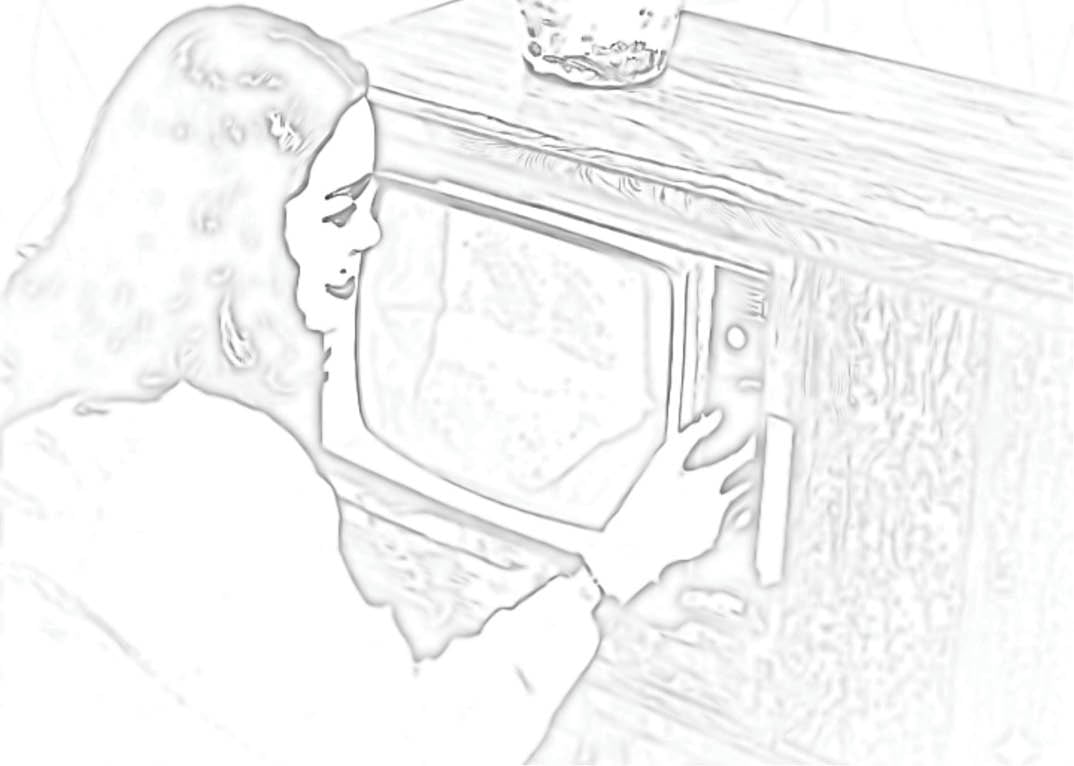
I remember vividly the day my father carried the television home. It was a summer afternoon, the sun pouring down like honey on the dusty red village road. He came home, his shirt soaked with sweat, carefully cradling the television – the first and only gift he had ever bought for the family after years of saving money from his days working as a construction laborer in the city.
Back then, my family was poor. Even a small, black-and-white television was a luxury. Yet, my father was determined to buy one, not because he liked watching it, but because he was afraid his children would fall behind, afraid I wouldn't keep up with my friends. He said, "We have to let the kids watch the news and learn about school, otherwise, if they stay in this corner all the time, they won't know anything about the fields and farms." The television was placed on an old wooden table covered with a white cloth, next to a small, rattling fan that whirred with each turn. Every evening, the whole family would gather to watch the news, then movies. Life went on peacefully like that.
I grew up with television. Through it, I learned what the country was like beyond the bamboo fence of my village. I learned about places where winters were covered in snow, about people who didn't speak Vietnamese, and that " Hanoi " wasn't just a name in textbooks. Thanks to that television, I also became fascinated with evening English learning programs.
The old television was not only a bridge between me and the world , but also an invisible thread that bound us together. On rainy nights, when the electricity flickered and the screen was blurry and striped, the whole family would huddle together to watch. Sometimes, when the signal was lost, Dad would carry the antenna around the yard, tilting his head strangely, as if dancing with the wind.
Time passed, I went to the city to study, and the television started to malfunction. Once, when I returned home, I saw it lying there unused, replaced by a new one. But my father kept it, carefully cleaning it every week. I asked why he didn't throw it away, and he said, "This one can't be watched anymore, but it's a memento. And you can't throw away a memento."
My father passed away on an autumn day, when the betel nut trees in front of the house were beginning to shed their leaves. On the day we cleaned up the house after the funeral, I found the television still there, alone in the corner. Silent, as if still waiting for a hand to turn it on, waiting for the sound of children's laughter, waiting for the image of a man sitting thoughtfully in front of the screen. I didn't throw it away either. I carefully wrapped the television in a soft cloth, brought it back to the city, and placed it in my study.
Someone asked why I kept old things, and I just smiled: "They're my father's memories." Whenever I feel homesick, I sit and look at them, as if my father is somewhere in the room, quiet, pensive, but incredibly warm. Once, my son curiously asked, "Dad, what's that old box?" I told him about the television without a remote, without vibrant colors, but it held the entire sky of my father's childhood. I told him about his grandfather – a man who throughout his life only wished for his children to receive an education and to see the world beyond the rice fields.
The old television is no longer just an object. It's a symbol of a silent love, a message that seemingly insignificant things can hold the essence of a lifetime.
Source: https://huengaynay.vn/doi-song/chiec-tivi-cu-cua-ba-166125.html
![[Image] Nearly 125,000 Hanoi students completed the Literature exam for the 10th grade entrance exam.](https://vphoto.vietnam.vn/thumb/1200x675/vietnam/resource/IMAGE/2026/05/30/1780117233041_ndo_br_thiet-ke-chua-co-ten-2-png.webp)















































































Comment (0)