

On April 20th, at the seminar "Consumer Credit: Lending and Debt Collection in the Right Way" organized by the Nguoi Lao Dong Newspaper, many opinions suggested that to promote the development of consumer finance, transparency and clarity are needed from both sides: borrowers and lenders. Financial companies, when lending, must have loan contracts, publicly and transparently disclose interest rates and methods of debt collection, and handle collateral assets if any...
Debt collection is a hot topic.
At the seminar, economist Dr. Nguyen Tri Hieu stated that consumer credit accounts for a very large proportion of Vietnam's GDP, approximately 7%, and about 20% of total outstanding credit. In Ho Chi Minh City alone, data from the State Bank of Vietnam's branch shows that the total outstanding consumer credit in the city currently exceeds 933,000 billion VND, of which finance companies account for approximately 104,000 billion VND. Considering Ho Chi Minh City's population of approximately 9.2 million people (statistics from 2021), the average access per person is about 102 million VND. Considering the spending power of society, this figure is very significant.
"On average, consumer lending growth in the area reaches approximately 36% annually. By the end of 2022, the proportion of outstanding credit in the entire area accounted for 22%, and consumer credit demand accounted for about 30%. This is a large and practical need; if done correctly, it will have a positive ripple effect on the economy," commented Mr. Nguyen Van Dung, Deputy Director of the State Bank of Vietnam's Ho Chi Minh City branch.
Consumer credit in Vietnam has developed rapidly recently, with more and more young people seeking consumer loans. Consumer credit has become a target market for commercial banks and finance companies.
However, Ms. Van Thai Bao Nhi, Senior Director in charge of debt recovery at Vietnam Export Import Commercial Bank (Eximbank), noted that in the post-COVID-19 period, when individual and corporate customers face difficulties, the rate of overdue and bad debts tends to increase. For some customers who are unable to repay their debts, banks are forced to take strong measures such as filing lawsuits.
"However, the bank's stance is to recover debts in accordance with the law, doing it itself and not hiring third-party services to handle it. The bank hopes to stand by its customers through any difficulties," Ms. Bao Nhi said.
In reality, the consumer lending sector has recently seen many negative consequences, such as exorbitant interest rates; aggressive and offensive debt collection methods; and groups colluding to default on debts. Recently, many localities have been conducting a peak period of inspections of financial companies and debt collection companies operating illegally... This has led to a negative public perception of consumer lending, affecting legitimate lending institutions.

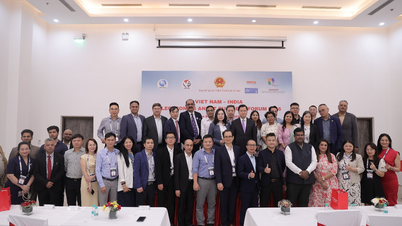
Many experts, representatives from regulatory agencies, and businesses participated in the seminar "Consumer Credit: Lending and Debt Collection in the Right Way" organized by the Nguoi Lao Dong Newspaper. Photo: HOANG TRIEU
A clearer legal framework is needed.
In light of this situation, Master of Law - Lawyer Pham Van Duc, from Duc & Pham Law Firm, raises the question of whether finance companies and consumer lending companies have acted in accordance with the law. When borrowers provide legally valid documents, the finance company has the right to assess and approve the loan or not. Once the loan is granted, the company is responsible for not being able to recover it. However, if borrowers use forged or fraudulent documents to obtain loans, it constitutes a violation of the law.
"Recently, there has been a situation where loans were granted too easily, making debt collection difficult. Financial institutions need to improve their borrower assessment skills. The first condition is the collateral and the borrower's cash flow to ensure repayment obligations," lawyer Pham Van Duc observed.
According to experts, the underdeveloped consumer loan trading market has somewhat undermined the sustainability of this sector. Mr. Ngo Xuan Duy, Director of Legal Affairs at Vietnam International Debt Trading Company, stated that businesses like his operate without a proper legal framework. Circular 43/2016 and Circular 18/2019 of the State Bank of Vietnam, which regulate consumer lending, only directly apply to finance and credit companies; debt trading companies, however, lack such regulations.
"We need a clearer legal framework that can regulate debt trading companies instead of just credit institutions. We are quite uncertain about what constitutes proper debt collection calls. The company also sues delinquent customers in court, but the process is difficult. The judicial authorities do not have a favorable view of this segment. Debt trading companies have to provide a lot of explanations even though they file lawsuits according to regulations," Mr. Duy stated, describing the current situation.
Lawyer Truong Thi Hoa, from the Ho Chi Minh City Bar Association, stated that regulations allowing debt trading have been in place since 2019. Accordingly, businesses have the right to sell debt, but the debt buyer must operate legally. Now, the State Bank of Vietnam needs to supplement regulations to make consumer credit more transparent and clear. Specifically, businesses wishing to operate must have a license, and loan contracts need to be accompanied by a license issued by the State Bank of Vietnam. Self-promotion by companies also helps consumers access formal consumer finance more effectively.
Mr. Nguyen Van Dung, Deputy Director of the State Bank of Vietnam's Ho Chi Minh City branch, suggested that the city's Department of Planning and Investment and Department of Justice should review the legality, operational content, and licensing of companies, law offices, and debt collection firms to mitigate shortcomings in lending and debt recovery.
Together for a better society
Speaking at the seminar, Dr. To Dinh Tuan, Editor-in-Chief of Nguoi Lao Dong Newspaper, said that in recent times, Nguoi Lao Dong Newspaper has always focused on informing and promoting consumer credit. The newspaper also organized a seminar titled "How to address illegal lending?" to create a community voice so that functional agencies, including the people, clearly understand the issue, and together build a healthy financial environment.
When fewer people are driven to desperation by predatory lending, society will become better. Then, the sweet fruits of life and the beauty of a humane existence will spread even further.
Source



























































































Comment (0)