

To ensure high yields and production for the 2024 crop season, the agricultural sector and localities in the province are focusing on implementing production plans and strategies to ensure the best possible timing.
The entire province is striving to complete planting before July 20th.
Difficulties and advantages are intertwined.
According to the Thai Binh Meteorological and Hydrological Station, due to the impact of global climate change, 2024 will see an increase in extreme weather phenomena such as heavy rain, localized heatwaves, thunderstorms, tornadoes, and strong winds. Strong storms, heavy rains, and tropical depressions will occur erratically, with complex and unpredictable developments. While heavy rainfall may occur, forecasts indicate a shortage of river water compared to the multi-year average, making it difficult to obtain water for agricultural production at certain times.
Furthermore, the situation regarding plant pests and diseases during the growing season is often complex. The short transition period from the spring to the autumn crop leads to an accumulation of pests and diseases; straw and stubble do not have enough time to decompose, easily causing organic poisoning in newly transplanted rice. Meanwhile, agricultural labor continues to shift to non-agricultural occupations, especially among young people, causing labor shortages in production.
Despite these difficulties, the prices of agricultural supplies (fertilizers, pesticides) are relatively stable, resulting in a bountiful spring rice crop with good prices, creating favorable conditions and motivation for farmers to confidently engage in production. The leadership, management, and organizational experience of all levels and sectors, as well as the awareness of farmers, have improved, especially in developing plans and strategies to prevent and mitigate adverse weather conditions.
Mr. Tran Quoc Duong, Deputy Head of the Department of Crop Production and Plant Protection, stated: In recent years, value-added production models have been implemented, creating professionalism in production and forming sustainable production chains that manage costs and generate profits. Many scientific and technological advancements, new technologies, and new methods of agricultural production organization have been applied in practice, promoting commodity production and creating high, sustainable economic value. The rate of mechanization in crop production is increasing, and many professional service stages (land preparation, tray seedling sowing, transplanting, harvesting, product drying, etc.) have been established, contributing to reduced production costs and addressing the labor shortage in agriculture.
Proactive response measures
For the 2024 crop season, the entire province aims to plant over 75,000 hectares, with a yield of over 60 quintals/hectare and a total production of over 450,000 tons. High-quality rice varieties will account for 45-50% of the area, including varieties such as Dai Thom 8, Bac Thom No. 7, TBR279, N97, and Japanese rice; high-yield, intensively cultivated rice varieties will account for 50-55% of the area, including varieties such as BC15, Thien Uu 8, TBR1, and TBR225. The area of rice planted using machinery will be expanded to over 25,000 hectares; farmers will continue to be encouraged to consolidate land, remove dikes, and plant the same varieties and at the same time to expand the scale of fields, facilitating mechanization and product consumption; and farmers will be encouraged to purchase and use drying equipment to minimize post-harvest losses. Continue to improve rice production chains and build rice brands for some localities with advantages, moving towards building a rice brand for Thai Binh province.
Striving to plant over 13,000 hectares of summer rice, Kien Xuong district has now completed the spring rice harvest and is focusing on accelerating land preparation and field cleaning to create the necessary conditions for planting summer rice.
Mr. Dinh Cong Man, Head of the Agriculture and Rural Development Department of the district, said: To proactively respond to unfavorable weather conditions and plant rice within the best timeframe, the district recommends that farmers expand the area planted by machine, planting young seedlings, striving for the area planted by machine to reach 40% of the total planted area; direct sowing should not be applied, and farmers should have short-growing rice varieties ready in case heavy rains cause flooding, killing seedlings and rice plants at the beginning of the season.
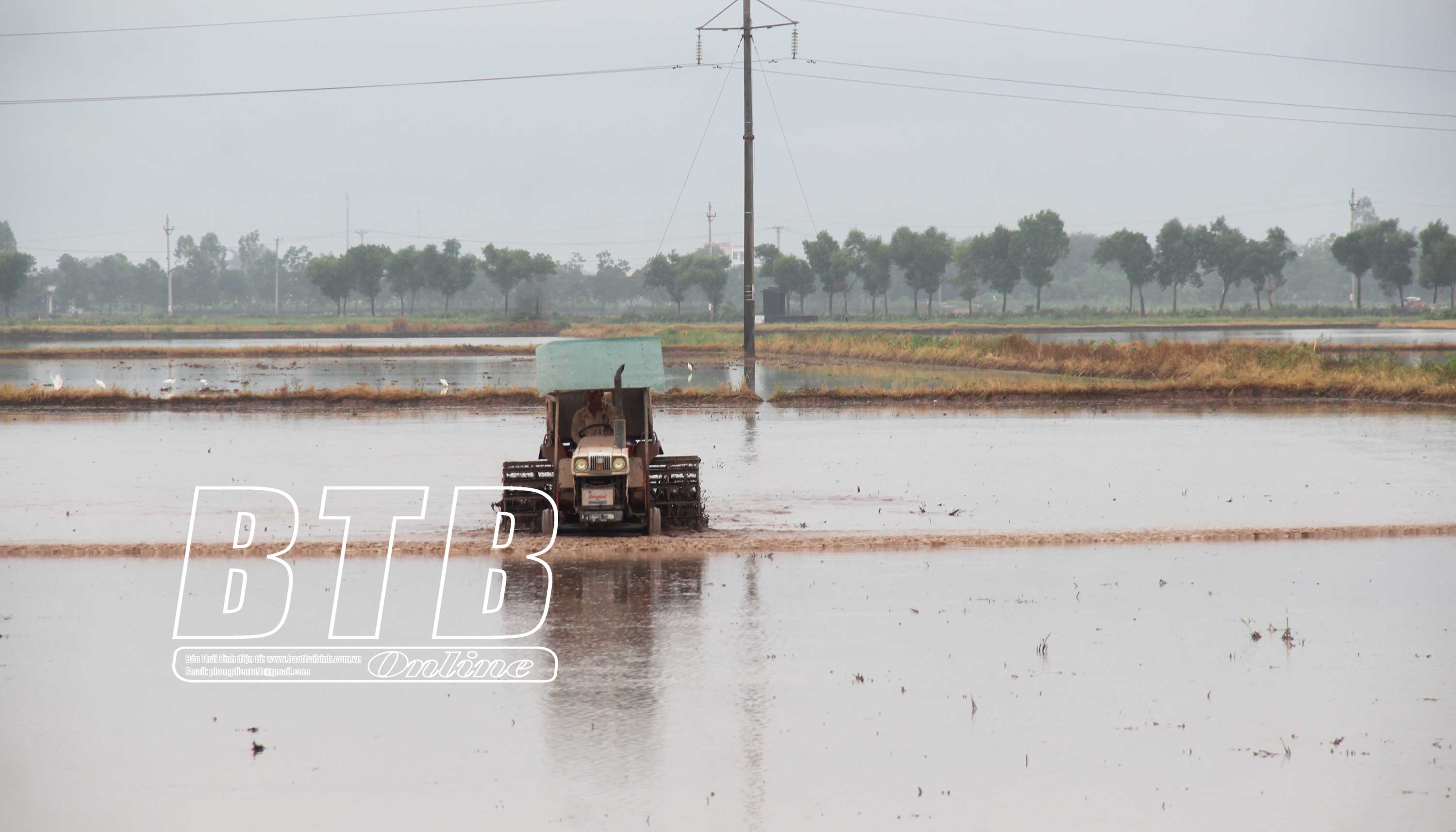
Farmers in Tay Son commune (Kien Xuong district) are preparing the land for planting the summer rice crop.
In response to unusual weather patterns, the agricultural sector advises localities to base their crop structure and rice varieties on land conditions, intensive farming practices, infrastructure, long-term weather patterns, and the 2024 crop season weather forecast.
Engineer Pham Thi Hien from the Thai Binh Agricultural Extension Center stated: To quickly decompose rice straw, weeds, and other crop residues in the fields and reduce organic poisoning during the tillering stage, it is recommended to use straw treatment products such as Sumitri, AT-YTB, Emunix, or microbial fertilizers like Azotobacterin, Truong Son Bio, or sprinkle 15-20 kg of lime powder per sao (approximately 1000 square meters). During the main cropping season, rice plants are susceptible to bacterial blight, so choose rice varieties that are resistant or only mildly susceptible to this disease. In particular, avoid planting susceptible varieties in low-lying, waterlogged areas. For early-season rice cultivation, sowing should be done before July 10th to allow for warm-weather winter crops. Large-scale sowing should be completed before July 20th. The sowing schedule should be determined based on the seedling sowing method: seedlings on a hard surface should be sown about 7-8 days old, while densely sown seedlings should be about 12-15 days old. It is important to arrange the sowing season and land preparation time appropriately, absolutely avoiding having seedlings wait in the field. Ideally, prepare the field 1-2 days before transplanting. One to two days before transplanting the seedlings, spray them to prevent and control pests and diseases, especially aphids.
By effectively implementing production measures right from the start of the season, localities can proactively execute their plans, ensuring comprehensive success in the crop season throughout the province.
Ngan Huyen
Source: https://baothaibinh.com.vn/tin-tuc/4/202456/chu-dong-san-xuat-vu-mua































































Comment (0)