


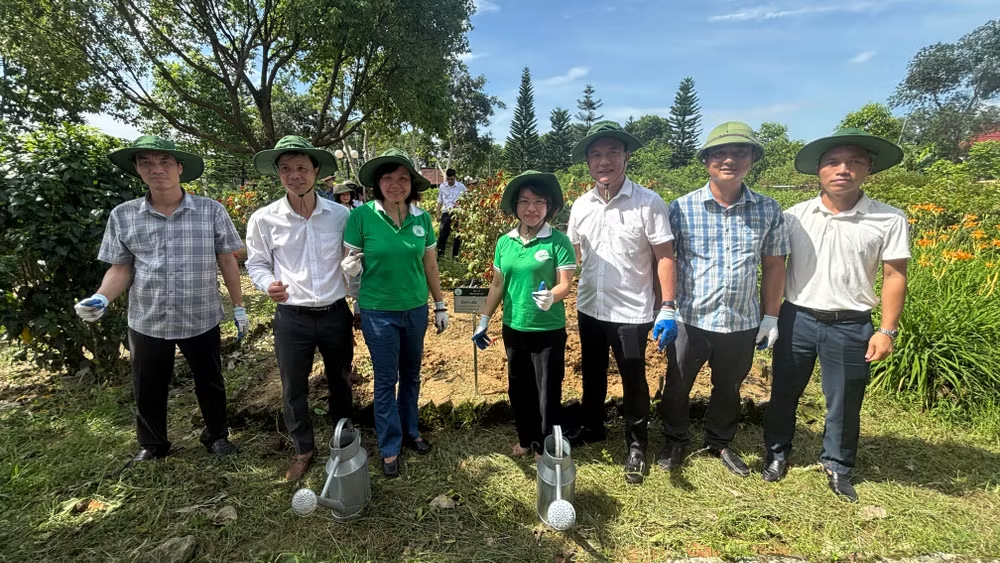
The activities include planting additional medicinal plants, reviewing the names of medicinal plants, and installing identification signs with QR codes in the medicinal plant garden of the Hai Thuong Lan Ong Historical Site, contributing to environmental protection, biodiversity conservation, and the preservation and promotion of the value of traditional national medicine.
Speaking at the program, Dr. Phan Thuy Hien, Deputy Director of the Institute of Medicinal Materials ( Ministry of Health ), emphasized that biodiversity is the foundation of life, a valuable resource for human health and sustainable development. In particular, medicinal plants not only serve community health care but also contain indigenous knowledge, culture, and the long history of the Vietnamese people.
However, due to the impacts of climate change, urbanization, and unsustainable exploitation, many valuable medicinal plant species are facing the risk of decline or even extinction. Therefore, preserving medicinal plant genetic resources, promoting the value of medicinal plant gardens, and digitizing information on medicinal plants are considered crucial in the current period.
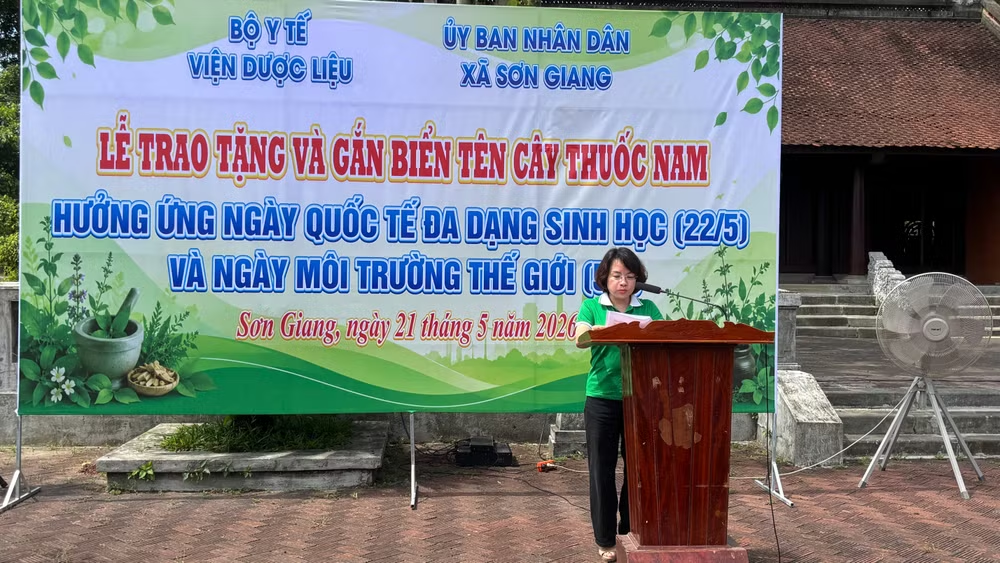
According to the organizers, the placement of QR code-enhanced identification signs for medicinal plants will help residents, students, and tourists easily access scientific information about each medicinal plant species, contributing to raising community awareness, serving education , research, and experiential tourism. At the same time, this is also a step towards connecting traditional medicine knowledge with modern technology, promoting the digitization of medicinal plant data.
Vietnam is considered one of the 16 countries with the highest levels of biodiversity in the world . According to the Biodiversity Assessment Report within the framework of the BIODEV2030 initiative, our country has recorded more than 50,000 species of organisms, including about 20,000 species of terrestrial and aquatic plants, more than 10,500 species of terrestrial animals, and thousands of species of marine and freshwater organisms.
For nearly 40 years, in fulfilling its mission of preserving genetic resources and medicinal plant varieties assigned by the Ministry of Health, the Institute of Medicinal Materials has built a conservation network of over 1,500 genetic resources of nearly 1,000 medicinal plant species. Currently, the Institute maintains 6 medicinal plant conservation gardens in various ecological regions such as Hanoi, Tam Dao, Sa Pa, Thanh Hoa, Ho Chi Minh City, and Da Lat.
Besides the conservation of medicinal plants, the Institute also promotes the investigation and collection of traditional knowledge and indigenous knowledge about the use of medicinal plants and remedies of Vietnamese ethnic groups. This is considered an important data source for cultural preservation, the development of traditional medicine, and the research of new drugs in the future.
Currently, the Center for Medicinal Plant Resources under the Institute of Medicinal Materials is preserving nearly 40,000 specimens and samples of medicinal plants, along with a database on Vietnam's medicinal plant resources. This includes many standard and rare specimens of endangered or economically valuable medicinal plant species. The Institute is also gradually developing the Vietnam Medicinal Plant Museum to serve research, education, and experiential tourism.
Source: https://nhandan.vn/chung-tay-bao-ton-cay-thuoc-nam-gin-giu-tri-thuc-y-hoc-dan-toc-post963785.html


![[Photo] General Secretary and President To Lam presides over the meeting to approve the draft report on the results of the second inspection by the Politburo of the Standing Committee of the Hanoi City Party Committee.](https://vphoto.vietnam.vn/thumb/1200x675/vietnam/resource/IMAGE/2026/05/26/1779789811432_a2-bnd-4430-9620-jpg.webp)





![[Video] Weather forecast for tonight and tomorrow, May 27, 2026: Extremely intense heat continues to blanket Northern and Central Vietnam.](https://vphoto.vietnam.vn/thumb/402x226/vietnam/resource/IMAGE/2026/05/26/1779800612293_thumb-dem-png.webp)





























































Comment (0)