

According to the report, the Mekong Delta is increasingly affected by drought, saltwater intrusion, floods, and extreme heatwaves; reducing income from agriculture , the mainstay of livelihoods for many households, and increasing pressure for migration. Over the past ten years, nearly 1.7 million people in the Mekong Delta have migrated in search of more stable livelihoods; approximately 14% of households in the region have members working away from home.
The Mekong Delta's economic position in the national economy has also declined. Its contribution to the national GDP has decreased from nearly 20% (before 2000) to 12.4% (in 2024). Regarding foreign direct investment (FDI), in 2023 the Mekong Delta only attracted 3% of Vietnam's total FDI.
The above figures show that the current development model of the Mekong Delta is revealing some limitations, especially in the context of increasingly fierce competition between regions and the increasingly profound impacts of climate change; adjustments are needed.
The report argues that the future of the Mekong Delta cannot revolve solely around its existing development space, but must be built upon a new development strategy. Accordingly, it requires investment in education and human resource skills development; modernization and transformation of agriculture towards reduced labor, increased adaptability, and greater profitability; and further infrastructure development to attract businesses to operate there…
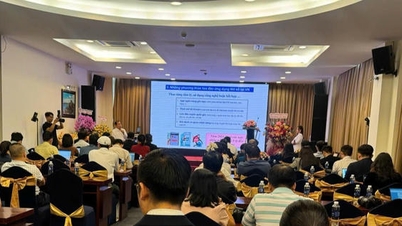
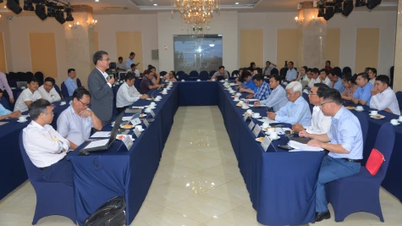
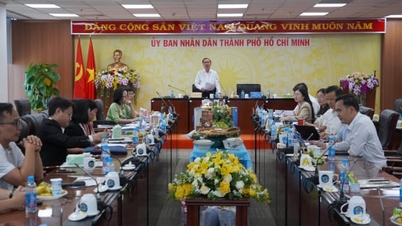
At the conference, representatives from the Central Policy and Strategy Committee highly appreciated the scientific and practical value of the report, considering it one of the important sources of argumentation; and presented a macro-level perspective on policy-making, highlighting three main issues to consider in order to promote the transformation of the Mekong Delta's growth model. Firstly, continue to improve the institutional framework for regional development coordination. Secondly, develop the Mekong Delta's economy towards a green, high-value, and sustainable direction; with agriculture continuing to play a foundational role linked to processing, logistics, markets, and environmental protection. Thirdly, place investment in human resources at the center of the regional adaptation and development strategy, identifying the development of high-quality human resources and improved labor productivity as key factors.
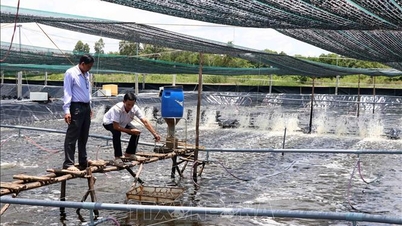
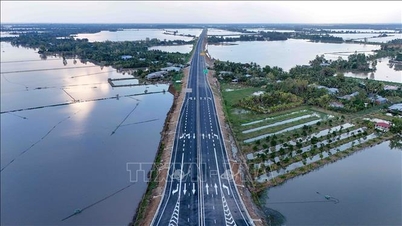
In fact, over the years, the Party and State have focused on investing in the Mekong Delta, from a modern and efficient road and bridge system to infrastructure, and providing incentives in several areas. The Mekong Delta has also shown creativity and adaptation to climate change in production, such as integrated farming models, crop and livestock diversification, and specialized cultivation of strong specialty products. To achieve even stronger progress, the Mekong Delta needs to continue to leverage its existing strengths, such as its climate and soil conditions, river system, and cultural characteristics. With the right policies and directions to facilitate investment and entrepreneurship, and with people acquiring more skills and opportunities for development right in their homeland, the Mekong Delta will soon regain its growth momentum alongside other regions nationwide.
Source: https://baophapluat.vn/chuyen-doi-mo-hinh-tang-truong-vung-dong-bang-song-cuu-long.html














































































Comment (0)