

 |
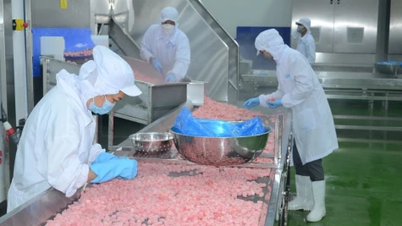
| The modern packaging line at Hao Dat Tea Cooperative (Tan Cuong commune) contributes to ensuring product quality and traceability. |
Organic is a fundamental transformation.
Thai Nguyen currently has over 24,000 hectares of tea plantations, producing approximately 280,000 tons per year, accounting for more than 18% of the total tea plantation area and over 24% of the total fresh tea leaf production nationwide. By 2025, the value of the tea industry is expected to exceed 14 trillion VND.
Behind the growth figures lies increasing pressure from export markets. Many countries in Europe, the US, and Japan are continuously raising standards regarding pesticide residue levels, traceability, carbon emissions, and sustainable production requirements. This places the tea industry before the need to change its approach, instead of expanding solely in the direction of maximizing production volume.
The market is seeing an increasing number of concepts such as "green tea," "clean tea," and "organic tea." However, organic farming goes beyond simply reducing pesticide use or partially replacing chemical fertilizers with manure.
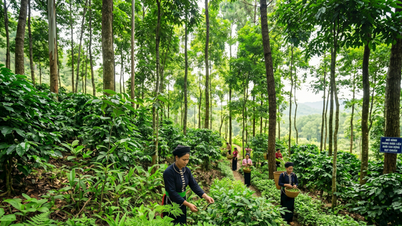
A truly organic tea plantation requires a lengthy land conversion period, complete elimination of synthetic herbicides and pesticides, a priority on biological products, maintenance of ecological balance, and a clear certification system.
Current production practices reveal a situation of "half-hearted greening," where chemicals are reduced but organic standards are not met, or the concept of "green tea" is used more as a marketing tool than a genuine commitment to production.
Statistics from the Agriculture and Environment sector show that only about 120 hectares of tea plantations in the entire province have received organic certification, and over 5,900 hectares meet VietGAP standards. This is a very small number compared to the total existing tea cultivation area.
Ms. Le Thi Hoai, a tea producer in Quan Chu commune, said: "The shift to organic farming requires a complete change in production mindset. Tea growers must focus on soil care, preserving natural grass cover, and using bio-fertilizers."
The process is more laborious, but the quality of the tea improves significantly, the flavor is more consistent, and the market is more receptive. In the initial transition phase, productivity decreases by about 15-20%, and costs increase, but in return, the tea plants are more resilient, the soil is more porous, and the product value is higher.
In some tea-growing regions, old practices still persist. Some tea growers admit to having used pesticides based on experience, without proper control. Requirements for traceability and residue testing from international markets are putting pressure on farmers to change their farming methods.
Mr. Tong Van Vien, Director of Phu Luong Agricultural Cooperative, said: "Customers are now directly surveying the tea growing areas and evaluating the production process. The use of chemicals is no longer suitable for market requirements. Organic production creates initial difficulties but helps stabilize output and increase long-term value."
The green journey of the entire value chain.
 |
| Quan Chu Tea Joint Stock Company has launched two new lines of organic tea, targeting the high-end market segment. |
Many tea businesses believe that "green" should be understood throughout the entire value chain, from raw material sourcing and processing to packaging and consumption. In Thai Nguyen, many establishments have switched from charcoal-fired roasting ovens to automatic electric or gas-fired technology, used environmentally friendly packaging, applied QR codes for traceability, and digitized the management of raw material sourcing areas.
Ms. Dao Thanh Hao, Director of Hao Dat Tea Cooperative (Tan Cuong commune), said: "Clean production is only truly meaningful when it is accompanied by clean processing, eco-friendly packaging, and transparent product information. Customers today are comprehensively interested in the production process, from water sources and soil to the handling of by-products after processing. Many international delegations even directly investigate the technical and environmental factors in the tea-growing region."
In Quan Chu commune, a large-scale organic tea plantation project spanning approximately 300 hectares, integrated with a high-tech processing complex, was recently launched in May 2026 with a total investment of around 1,200 billion VND. The project aims to apply IoT, AI, and digital transformation in raw material management, traceability, and quality control, targeting the high-end market segment.
Mr. Vu Van Cuong, Deputy General Director of Quan Chu Tea Joint Stock Company, commented: The trend of green consumption is becoming the new standard in the international market. Consumers prioritize quality while demanding transparency throughout the entire production process.
Therefore, businesses need to shift to an organic model, applying digital technology in raw material management and traceability. This is a prerequisite for increasing product value and maintaining long-term competitiveness.
Alongside the positive trend, experts warn of confusion between the concepts of "clean tea," "safe tea," and "organic tea." Organic tea requires clear standards, specific certifications, and independent testing data. Some products still use "green" or "ecological" labels in their advertising but lack sufficient evidence. This will erode market confidence if it persists.
From the renowned tea-growing regions of Thai Nguyen, the green transformation journey is gradually shaping a new direction for the tea industry.
Sustainable value can only be affirmed through substantive changes, based on transparent standards, strict control processes, and a persistent commitment to innovation. This is also the path for Thai Nguyen tea to maintain its position, meet the increasingly high demands of the market, and reach further with its green value built from the ground up.
Source: https://baothainguyen.vn/kinh-te/202606/chuyen-doi-xanh-cho-thuong-hieu-che-thai-3b82c36/
























![[Photo] Reception to welcome General Secretary and President To Lam and his wife on their State visit to the Philippines](https://vphoto.vietnam.vn/thumb/1200x675/vietnam/resource/IMAGE/2026/06/01/1780295488620_vna-potal-chieu-dai-chao-mung-tong-bi-thu-chu-tich-nuoc-to-lam-va-phu-nhan-tham-cap-nha-nuoc-toi-philippines-8798060-7855-jpg.webp)



























































Comment (0)