


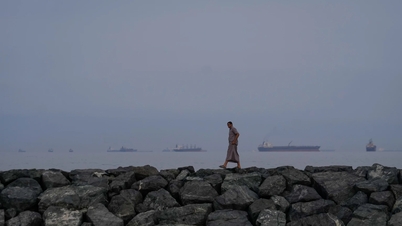
Two men play backgammon in Tehran, Iran, on May 28. - Photo: AP
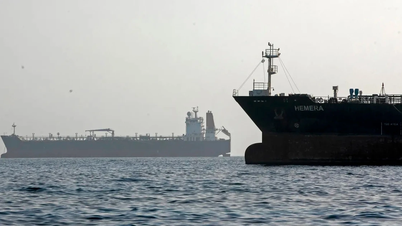
Accordingly, Washington and Iran are reportedly "very close" to a memorandum of understanding (MOU) to extend the ceasefire for another 60 days, reopen the Strait of Hormuz, and begin negotiations on Tehran's nuclear program.
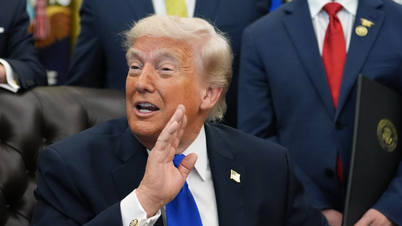
Mr. Trump needs to think more.
The signing of the MOU would be the most significant diplomatic breakthrough since the war launched by the US and Israel against Iran broke out in late February 2026.
However, a final agreement to resolve President Trump's nuclear demands will require even more intensive and prolonged negotiations.
Trump and his inner circle have repeatedly stated they were close to reaching an agreement, but negotiations have repeatedly stalled.
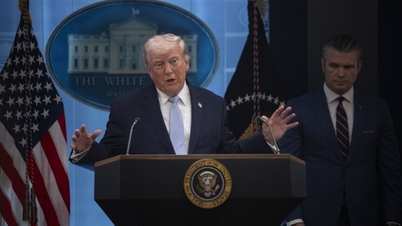
Regarding the latest agreement, Axios quoted a US official as saying: "The President has conveyed to the mediators that he wants a few days to think about it."
However, also on May 28, Tasnim News Agency, an organization affiliated with Iran's Islamic Revolutionary Guard Corps (IRGC), quoted an Iranian source as saying that the MOU was not yet complete.
US officials said that as of the afternoon of May 28, Trump was inclined to sign the agreement, but wanted to wait a few more days "to ensure Iranian officials would sign the agreement and not back down."
According to Axios, Trump also wants to wait and see how the domestic political debate surrounding the Iran deal unfolds before making a final decision.
Vice President Vance led the U.S. negotiating team in talks with Iran in Islamabad, Pakistan, last April and has been deeply involved in the matter ever since.
"We're discussing some more points of language. We've made a lot of progress," Mr. Vance said. "Hopefully we'll continue to make progress and the President will be in a position to approve the deal, but obviously that remains to be seen. I can't guarantee we'll get there... but right now I feel pretty good about it."
What does the agreement include?
According to several news outlets, the agreement includes extending the ceasefire for another 60 days, during which time the Strait of Hormuz will reopen, Iran will be free to sell oil, and further negotiations will take place.
An agreement along these lines would at least avoid escalating the war and ease pressure on global oil supplies. However, a lasting peace agreement and a solution to President Trump's nuclear demands is an entirely different story.
According to Axios, the sooner Iran clears mines and naval mines to allow shipping through Hormuz to resume, the more likely the blockade against them will be lifted.
Iran also wants its frozen funds released and sanctions lifted permanently, but the US says that will only happen after specific concessions are made.
The nuclear issue remains a major sticking point, as the draft MOU includes commitments from Iran to never pursue nuclear weapons and negotiations on suspending its uranium enrichment program and eliminating its stockpiles of highly enriched uranium.
CBS, citing two sources familiar with the matter, said Iran had given the U.S., through intermediaries, a verbal, but not yet written, commitment regarding the extent of its concessions on the nuclear issue.
In return, the US agreed to negotiate the lifting of sanctions and the release of Iranian funds within a 60-day period.
The US forces deployed in recent months will remain in the region for this 60-day period and will only withdraw if a final agreement is reached.
However, US officials say this will not be a "one-sided ceasefire," and if Hezbollah attempts to rearm or instigate attacks, Israel will be permitted to act.
"If Hezbollah behaves properly, Israel will behave properly," a CBS source said. "Bibi [Israeli Prime Minister Benjamin Netanyahu] has his domestic political considerations, but Trump has American interests and the global economy to take into account."
Trump sought advice from Arab leaders.
President Trump also surveyed several Arab and Muslim leaders about the deal with Iran in a virtual meeting last weekend, and all said they supported the agreement.
Those attending the meeting included the UAE president, Mohammed bin Zayed, who holds a hardline stance against Iran, and the leaders of Saudi Arabia, Qatar, Egypt, Türkiye, and Pakistan.
Source: https://tuoitre.vn/co-gi-trong-thoa-thuan-my-iran-20260530083040981.htm


![[Photo] Admire the coral "masterpiece" amidst the million-year-old heritage of Dak Lak province.](https://vphoto.vietnam.vn/thumb/1200x675/vietnam/resource/IMAGE/2026/05/30/1780107638639_y25-jpg.webp)


















































































Comment (0)