

According to statistics, Vietnam currently has approximately 900,000 actively operating SMEs, accounting for about 98% of the total number of businesses. This sector creates over one million new jobs annually.

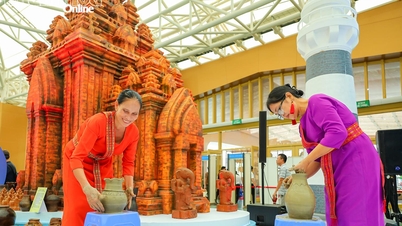
Provincial leaders visited the product display booth of ION ONE Vietnam Water Joint Stock Company (Vinh Yen ward) at a creative startup event.
The total registered capital of this sector is estimated at over 120 billion USD, equivalent to nearly 30% of the total registered capital of all businesses in the economy . Not only do SMEs contribute approximately 40% of GDP, but they also account for nearly 30% of total state budget revenue, generate about 33% of industrial output value, 30% of export turnover, and employ nearly 60% of the workforce.
With their large numbers and widespread distribution across most industries, sectors, and geographical areas, SMEs have the advantage of being flexible, responsive to market changes, and easily adaptable to fluctuations in the business environment.
However, the reality is that the majority of businesses today are still small or micro-sized, with limited financial capacity, low management skills, and limited competitiveness. Many businesses still face difficulties in accessing credit, production facilities, technology, and market information; the costs of complying with administrative procedures and informal costs remain a significant burden. While there have been improvements in participating in value chains, applying e-commerce, and digital transformation, these efforts are not yet uniform.
Recognizing the crucial role of the private sector in general, and SMEs in particular, in sustainable growth and development, the Party and State have issued numerous important policies and guidelines to create a favorable investment and business environment. In particular, Resolution No. 68 of the Politburo on the development of the private economy is considered a significant milestone, clearly demonstrating the political determination to unlock resources and create new impetus for this economic sector to develop more strongly in the coming period.
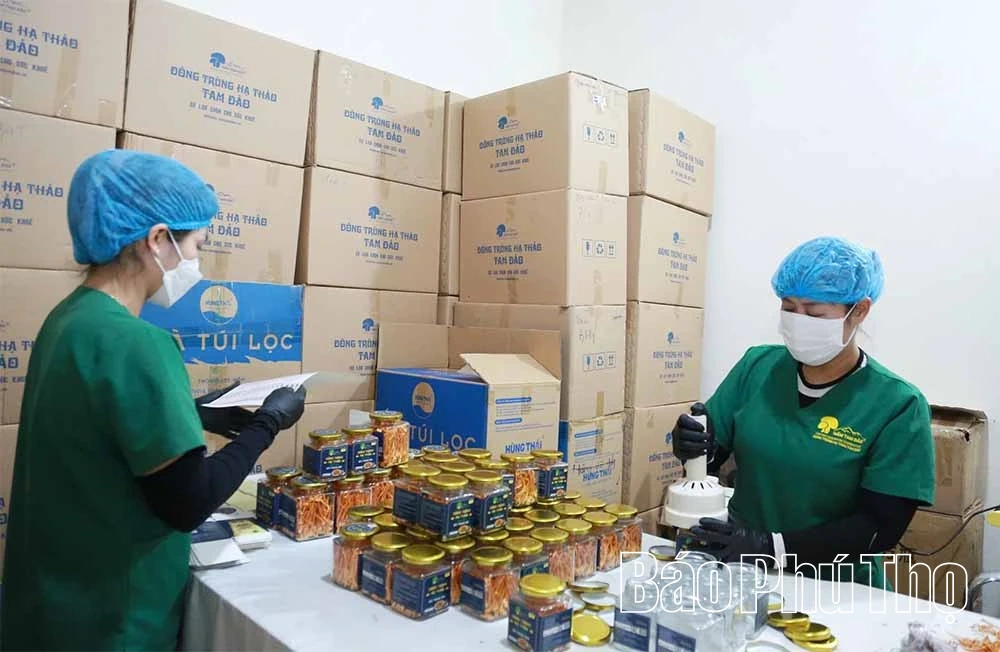
Despite being a small and medium-sized enterprise (SME), Tam Dao Mushroom Cooperative (Tam Dao commune) consistently supplies the market with many high-quality OCOP products, which are trusted by a large number of customers.
Resolution 68 affirms that the private sector is a crucial driving force of the socialist-oriented market economy; setting a target that by 2030, the private sector will contribute approximately 60-65% of GDP, with at least 2 million efficiently operating businesses. This is not only a quantitative goal but also a requirement to improve quality, competitiveness, and the ability to participate deeply in domestic and global value chains.
For SMEs, the Resolution emphasizes the need to ensure the right to freedom of business and equal access to development resources, from capital, land, and technology to information and market opportunities.
Together with Resolution 68, the Law on Supporting Small and Medium-Sized Enterprises (SMEs), the Enterprise Law, the Investment Law, and various decrees and action programs of the Government have been creating an increasingly synchronized and transparent legal framework. Policies supporting innovative startups, credit support through guarantee funds, interest rate subsidies, legal consulting, human resource training, trade promotion, and digital transformation support are being widely implemented, opening up new development opportunities for SMEs.
In practice, amidst the ongoing deep integration of the economy, many SMEs have effectively utilized support policies to restructure production, expand markets, and improve productivity and product quality. Digital transformation is becoming a crucial "lever," helping businesses optimize costs, reach customers faster, and participate effectively in modern business platforms. Many SMEs, starting from small scale, have gradually grown to participate in the supply chains of large domestic and international corporations.
Furthermore, the strong development of the digital economy, green economy, circular economy, and new-generation free trade agreements are opening up many opportunities for SMEs to exploit niche markets and develop unique products with high added value. As institutional barriers are gradually removed and market entry costs decrease, the opportunities for breakthroughs for this business sector are becoming increasingly clear.
However, according to economic experts, for these opportunities to truly materialize, stronger and more coordinated involvement from the State and all levels of government is still needed. First and foremost, it is necessary to continue promoting administrative procedure reforms in a substantive manner, reducing compliance costs, and creating a transparent, stable, and predictable business environment. Along with that, it is crucial to improve the effectiveness of policies supporting SMEs, ensuring they target the right beneficiaries and meet the right needs, avoiding a scattered approach.
Increasing access to credit, land, and production facilities should also be considered a key task, especially for start-up SMEs and innovative businesses. Simultaneously, attention should be paid to supporting businesses in improving their management capacity, the quality of their human resources, their ability to apply science and technology, and their digital transformation, helping SMEs develop sustainably and become competitive in the integrated global environment.
From the business perspective, opportunities can only become a driving force for development when each SME proactively innovates its thinking, enhances its internal capabilities, complies with the law, and builds a long-term business strategy. When the entrepreneurial spirit and aspiration of SMEs meet a favorable legal framework and timely and effective support policies, this economic sector can fully break through, contributing increasingly to growth, job creation, and social security.
With an increasingly完善 policy framework, especially from Resolution 68 of the Politburo, SMEs are facing a new phase of development. If they know how to seize opportunities, leverage their internal strengths, and receive genuine support from the State, this business sector will continue to affirm its role as an important pillar, contributing to the realization of the goal of rapid and sustainable development of the national economy.
Quang Nam
Source: https://baophutho.vn/co-hoi-cho-doanh-nghiep-nho-va-vua-246055.htm
![[Photo] Ba Lang An Lighthouse - the "eye of the sea" amidst the "rock museum" of Quang Ngai province.](https://vphoto.vietnam.vn/thumb/1200x675/vietnam/resource/IMAGE/2026/05/29/1780038698840_anh-man-hinh-2026-05-29-luc-14-10-42.png)



![[Image] Pleasant weather helps students enter the 10th grade entrance exam with confidence.](https://vphoto.vietnam.vn/thumb/1200x675/vietnam/resource/IMAGE/2026/05/29/1780034401612_ngay-1-thi-lop-10-minh-duy-8-5009-jpg.webp)







































































Comment (0)