

Following the reorganization of administrative units and the implementation of a two-tiered local government model, the grassroots government apparatus entered a completely new phase of operation. Along with changes in geographical boundaries, population size, and workload, grassroots officials also faced the demand for significant changes in mindset, skills, and working methods.

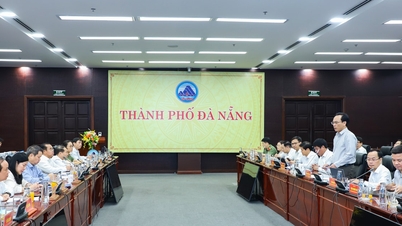
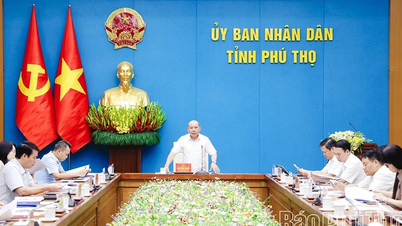
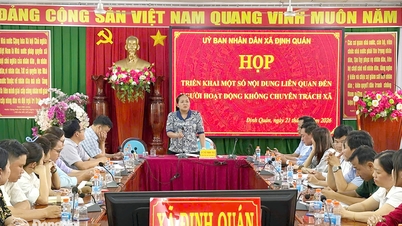
Leaders of Vinh Phuc ward held a meeting to discuss and implement measures to build a government that is close to the people, understands the people, and serves the people.
Behind the administrative reform efforts lies a silent but intense "relearning" process for commune-level officials. Previously, many tasks at the commune level were primarily handled using traditional methods. Paper documents accounted for a large proportion, data was scattered, and information exchange between agencies was mainly done directly or through paper documents.
However, along with the national digital transformation process and the requirement to build a digital government, most current processes have been moved to the electronic environment. Records are digitized, documents are digitally signed, data is interconnected, and many administrative procedures are carried out online. This means that grassroots officials not only need to master their professional skills but also be proficient in technology.
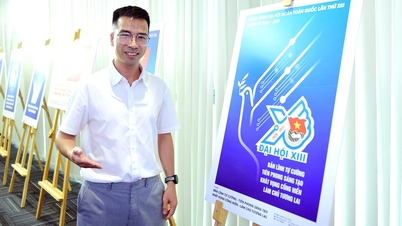
Comrade Nguyen Ba Thuy, Director of the Son Dong Commune Public Administrative Service Center, said: "Many specialized software programs were never used before, so staff had to learn them every day. At times, we had to study instruction manuals while working to promptly handle tasks for the people. Without updating our knowledge, it would be very difficult to complete our duties."
The pressure is even greater for older staff members. Tasks such as processing online documents, digital signing, managing electronic data, or utilizing shared information systems are not strengths of many. However, job requirements do not allow for slowdown.
Meanwhile, following the reorganization of administrative units, the scale of management in many localities has increased significantly. Some officials have to take on more responsibilities or be in charge of larger areas than before. The workload has increased, but the demands for quality service to the people are also becoming higher.
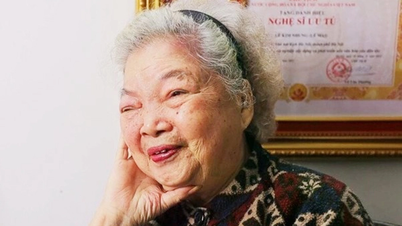
Comrade Nguyen Thi Luong - Director of the Public Service Center of Vinh Phuc Ward shared: "Previously, I was in charge of the local culture sector, but now in my new position, I have to take on many additional responsibilities such as agricultural and fisheries extension, market management, etc. This requires me to make more effort in terms of time, spirit, energy, and responsibility. For areas I've never been involved in before, the only way is to self-learn and research to acquire enough knowledge to serve the work of directing, managing, and implementing tasks."

Phu Tho province has been on the right track in maximizing citizen satisfaction through various forms of care and service.
According to statistics from the Ministry of Interior , the streamlining of the administrative apparatus is being implemented synchronously nationwide to improve the effectiveness and efficiency of local governments, reduce intermediate levels, and promote the application of technology in state management. This means that each local official must adapt more quickly, be more proactive, and be more professional.
While in the past many citizens were accustomed to making multiple trips to complete paperwork, the way things work in public administration departments has now undergone significant changes.
In many localities, officials no longer just wait for people to come and complete procedures, but proactively provide guidance from the outset, assist in filling out electronic forms, explain the process, and monitor the processing progress on the system.
Many places have also established community -based digital technology groups, mobilizing youth union members to assist the elderly and those with limited access to technology in carrying out online procedures.
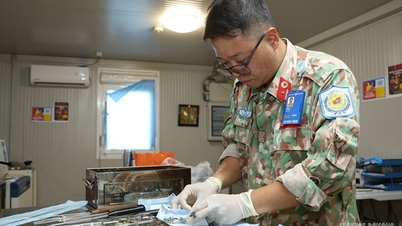
Comrade Nguyen Ngoc Thach - Deputy Chief of the Office of the People's Committee of Tam Hong commune, former officer in charge of receiving citizens at the People's Committee of Yen Lac district (old), said: The current requirement is not simply to process procedures faster, but also to serve the people better. Administrative reform is essentially a change in mindset from management to service.
This change is reflected in very small things such as the attitude towards citizens, the way of guiding them through the paperwork, the ability to explain legal regulations in an easy-to-understand way, and the spirit of accompanying citizens in the process of resolving their issues.
Many young officials today are also proactively learning additional communication skills, problem-solving skills, and technology application skills. This is because in the modern administrative environment, professional knowledge alone is not enough.
In many localities, training courses on digital transformation, digital skills development, and updating new business processes are regularly organized. Some places have even implemented a "digital literacy" model, which is not only for the general public but also becomes an effective learning environment for grassroots officials.
Looking at the current operational reality of the system, it's clear that administrative reform is not simply about reorganizing or streamlining structures. More importantly, it lies in the change in how local governments operate.
As citizens gain greater access to information, their demands for quality public services also increase. Every delayed application, every unaddressed complaint, or every inaccurate operation on the electronic system can directly affect public trust in the administrative apparatus.
Therefore, the "re-learning" process for today's grassroots officials is not simply about learning to use a software program or getting acquainted with a new procedure. It is also a process of changing management thinking, enhancing a sense of responsibility, and building a culture of serving the people.
This change is not easy, especially in the context of increasing job demands while human resources at the grassroots level remain limited. But it is precisely from these pressures that a more dynamic, professional, and people-oriented team of officials is gradually being formed.
The changes may not be visible overnight. However, behind every operation on the electronic system, every training session, or every hour of self-study by local officials are silent efforts to make the government apparatus operate more efficiently.
And it is this "relearning" process that is contributing to the crucial foundation for a modern, transparent, and people-centered administrative system. This is also the ultimate goal of administrative reform in the new development phase, where all innovations ultimately aim for the highest objective: serving the people better and better.
Quang Nam
Source: https://baophutho.vn/khi-can-bo-xa-hoc-lai-de-phuc-vu-dan-255100.htm
![[Photo] Ba Lang An Lighthouse - the "eye of the sea" amidst the "rock museum" of Quang Ngai province.](https://vphoto.vietnam.vn/thumb/1200x675/vietnam/resource/IMAGE/2026/05/29/1780038698840_anh-man-hinh-2026-05-29-luc-14-10-42.png)
![[Image] Pleasant weather helps students enter the 10th grade entrance exam with confidence.](https://vphoto.vietnam.vn/thumb/1200x675/vietnam/resource/IMAGE/2026/05/29/1780034401612_ngay-1-thi-lop-10-minh-duy-8-5009-jpg.webp)














































































Comment (0)