
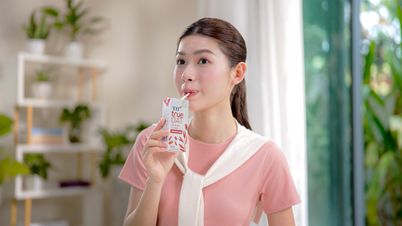
For women in particular, satisfying their physiological needs is even more beneficial for their training - Photo: TN
Sex is not harmful.
Numerous studies have shown that regular exercise can enhance sexual desire and performance in both men and women.
A study presented in the Netflix documentary series "You Are What You Eat" showed that after 8 weeks of practice, both vegetarian and omnivorous women increased their sexual arousal when watching pornography, with the vegetarian group experiencing an increase of over 300%.
Additionally, a survey of 2,000 adults in the US found that about one-fifth do cardio to improve sexual stamina, and one-third focus on lower body exercises like planks.
Exercise also helps increase testosterone levels in men and improve blood circulation in women, thereby enhancing libido and the ability to achieve orgasm.
But conversely, does satisfying physiological needs affect training and athletic performance?
At the very least, people can rest assured that having sex does not affect their training or participation in sports.
A 2022 meta-analysis in the journal Scientific Reports reviewed nine studies involving 133 participants.
The study concluded that having sex within 30 minutes to 24 hours before exercise did not affect endurance, muscle strength, or aerobic performance. The results showed no significant difference between the abstaining group and the group that had sex beforehand.
Harmful effects of excessive dieting.
On the other hand, abstaining from sexual intercourse and suppressing physiological needs for a long period of time will negatively impact training. This is a finding proven by many scientists , summarized as follows:
Sexual repression increases stress hormones.
Stress caused by suppressed sexual desire in women can increase cortisol levels. According to Dr. Justin Lehmiller (USA), persistently high cortisol levels can lead to muscle wasting and reduced recovery ability after exercise.
For men specifically, this will lower testosterone, thereby affecting their ability to build muscle and strength.
Suppressing desire reduces motivation and mood.
A study from the University of Maryland found that not satisfying sexual desire for an extended period can reduce dopamine and serotonin – neurotransmitters that boost motivation and excitement.
As a result, exercisers may experience a lack of energy, a lack of motivation, or even mild depression, leading to less effective workouts.
Risk of endocrine or sleep disorders
Excessive dieting can lead to sleep disorders and endocrine imbalances. Poor sleep quality is one of the leading causes of impaired muscle recovery and decreased athletic performance, according to research published in the Journal of Sports Sciences.
Moderate sex supports physical health.
In contrast to suppression, moderate sexual activity (not too close to training/competition) can be beneficial for cardiovascular health, reduce stress, and improve blood circulation.
"Sex is part of overall physiological health. If you exercise well but constantly suppress your desires, you're missing out on an important part of hormonal balance," shared Dr. Mike Joyner (USA).
HUY DANG
Source: https://tuoitre.vn/co-nen-han-che-tinh-duc-khi-tap-luyen-the-thao-20250514104722055.htm




![[Image] Close-up view of the interchange connecting the two expressways and Long Thanh Airport.](https://vphoto.vietnam.vn/thumb/1200x675/vietnam/resource/IMAGE/2026/05/25/1779703378210_ndo_br_z7863716673926-224453a31600126cce10622af6290afd-4549-jpg.webp)
![[Image] Hanoi's urban life under the challenge of a "scorching hot" environment](https://vphoto.vietnam.vn/thumb/1200x675/vietnam/resource/IMAGE/2026/05/25/1779706979265_nang-nong-t5-2026-minh-duy-7-4636-jpg.webp)



























































































Comment (0)