

According to the website of the Japan National Tourism Organization (JNTO) in Vietnam, Japan has a culture of bathing in hot springs (onsen) or public bathhouses (sento). There are some basic customs and etiquette that should be followed.
Wash your body thoroughly with soap before entering the bath. Private hot springs usually provide shampoo, body wash, and towels, but you may need to rent or bring your own when visiting public baths. Each shower comes with a stool and a bucket. Sit down and use the bucket to pour hot water over yourself, being careful not to splash water on others, and turn off the water when not in use.
Most public baths and showers have instructions, so please refer to them. After rinsing yourself clean, you can enter the bath after removing all your clothes. Absolutely do not put towels or any other items in the tub. You should also tie your hair back. Remember that the bath is for bathing, not swimming. The water in the tub can be very hot, so dip a toe in first to get used to it.
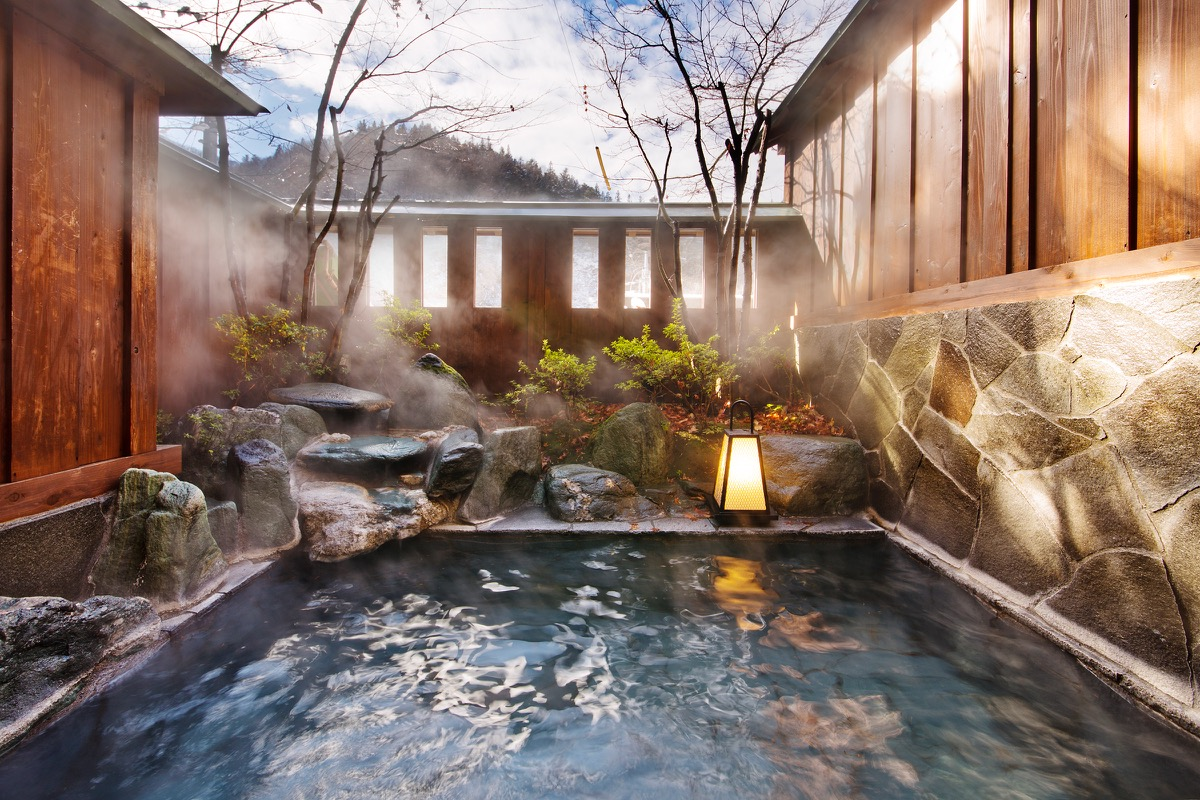
People with tattoos are generally not allowed to bathe in hot springs, public baths, swimming pools, or gyms. However, there are some exceptions depending on the type of bath or the owner's regulations.
Soto-yu (open-air baths) and city-run hot springs tend to be more open to tattoos. Some local sento (public bathhouses) also accept tattoos. Therefore, the safest option is to check beforehand or try to cover tattoos with waterproof bandages.
Swimming pools or gyms sometimes accept tattoos if you cover them up with a swimsuit or bathrobe.
If you feel uncomfortable being naked in front of others or are worried about your tattoos, you can always opt for private baths (kashikiriburo) or ryokan (traditional Japanese inns) with private bathrooms. Private baths are usually more expensive.
According to vnexpress.net
Source
![[Photo] The General Secretary, President and his wife begin their state visit to the Philippines.](https://vphoto.vietnam.vn/thumb/1200x675/vietnam/resource/IMAGE/2026/05/31/1780230559452_anh-man-hinh-2026-05-31-luc-19-28-11.png)
![[Photo] Admire the coral "masterpiece" amidst the million-year-old heritage of Dak Lak province.](https://vphoto.vietnam.vn/thumb/1200x675/vietnam/resource/IMAGE/2026/05/31/1780221235105_anh-man-hinh-2026-05-31-luc-16-53-27.png)
![[Photo] Solemn bathing ceremony and Buddha procession in Hue](https://vphoto.vietnam.vn/thumb/1200x675/vietnam/resource/IMAGE/2026/05/31/1780228263543_1-jpg.webp)













![[Video] Sunset at Lap An Lagoon – Where the sun sets over the fishing nets](https://vphoto.vietnam.vn/thumb/340x192/vietnam/resource/IMAGE/2026/05/31/1780192137701_beach-landscape-sea-water-nature-grass-745871-pxhere-com.jpeg)
































![[Photo] Admire the coral "masterpiece" amidst the million-year-old heritage of Dak Lak province.](https://vphoto.vietnam.vn/thumb/402x226/vietnam/resource/IMAGE/2026/05/31/1780221235105_anh-man-hinh-2026-05-31-luc-16-53-27.png)































Comment (0)