

"So many years have passed, yet he's still gone..." That song echoed in my mind one summer afternoon in the mountains when I was just 20 years old. It was also the moment the radio announced the death of composer Trịnh Công Sơn.
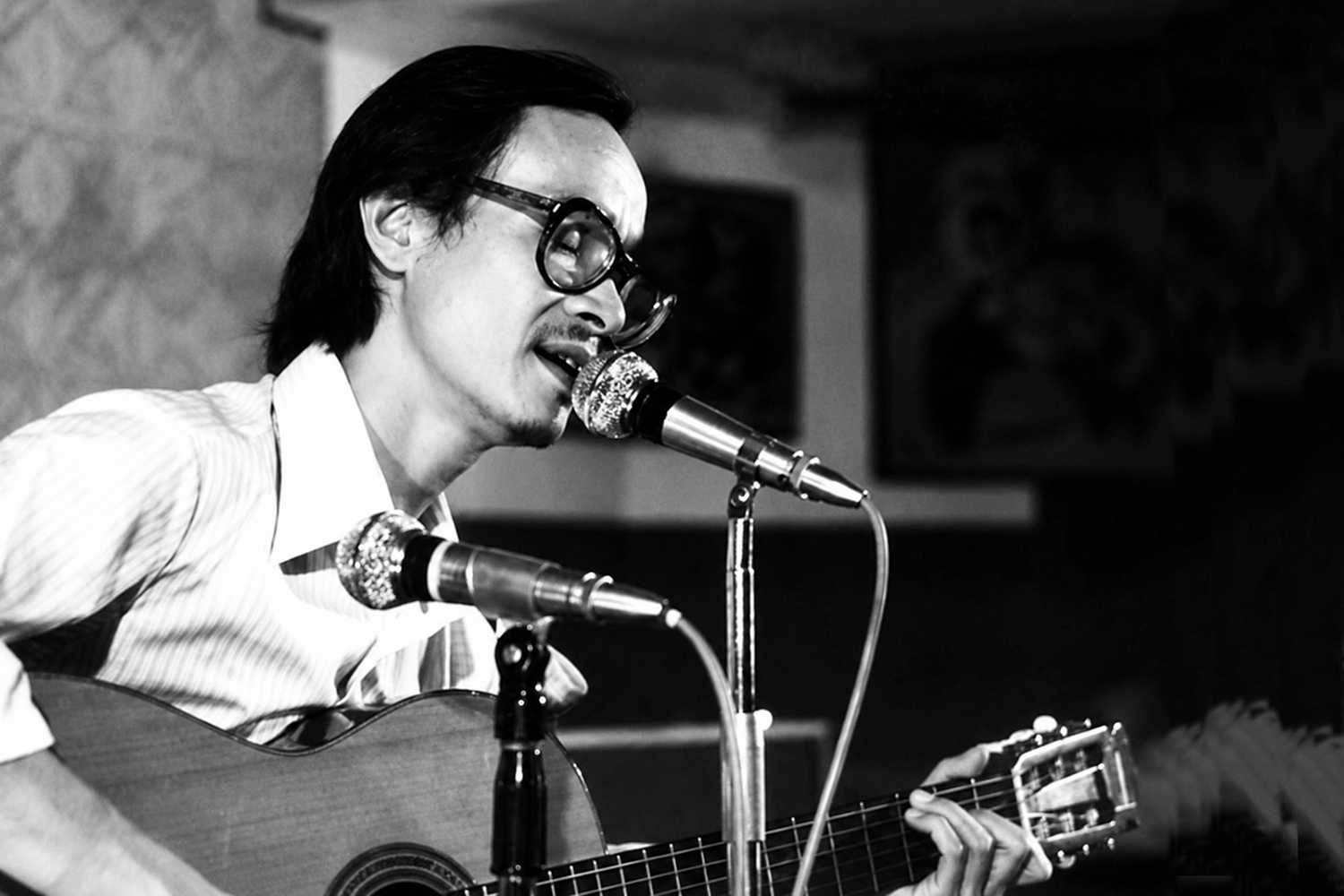
In the days that followed, the street vendor in my small neighborhood kept selling photocopies of newspaper articles about Trịnh Công Sơn. He had never sold so many before… They were thin sheets of paper, with faded lettering, and a picture of the musician holding his guitar, his eyes distant and sad. I bought one, as if wanting to preserve something very fragile that I myself couldn't quite picture at the time.
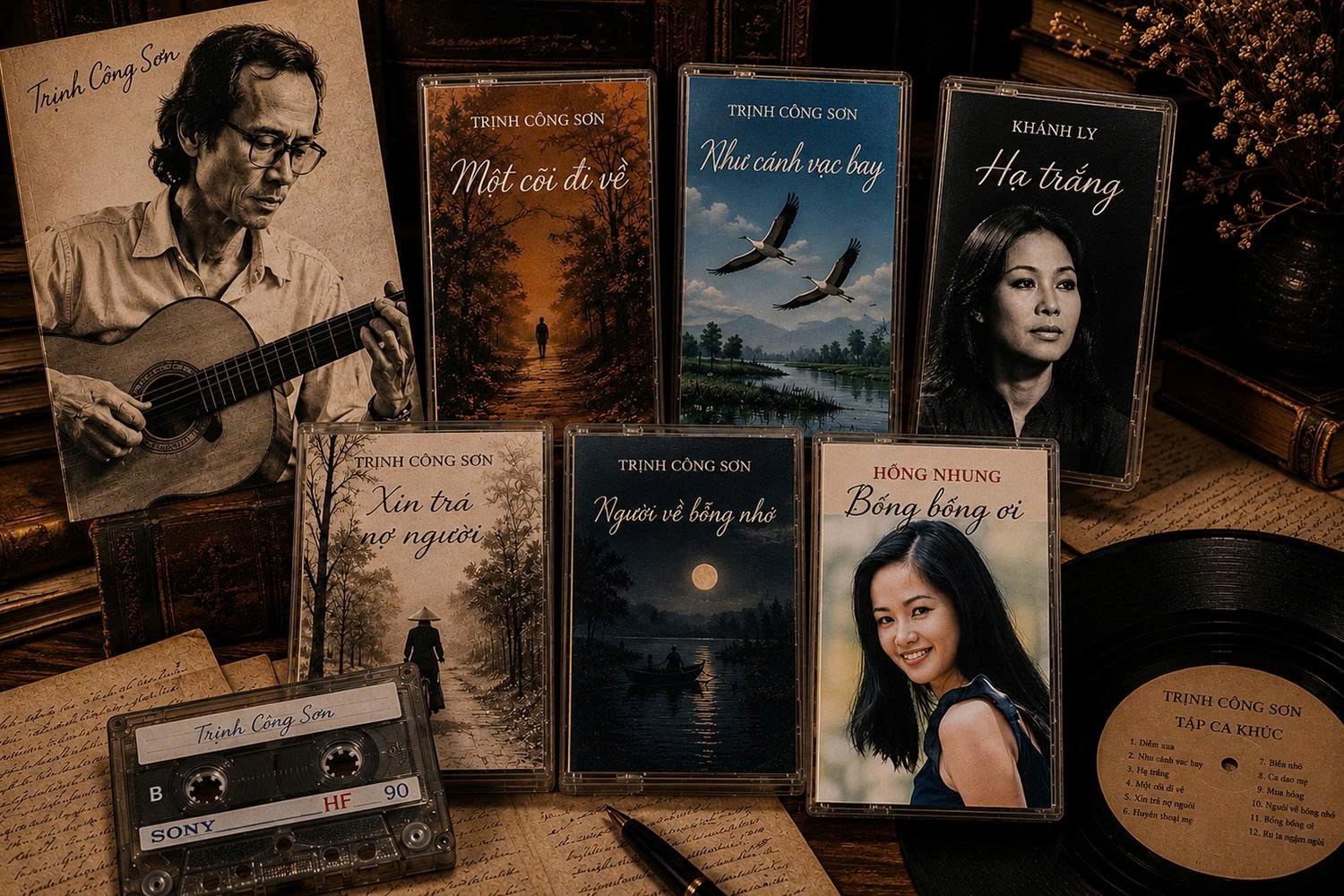
Back then, I hadn't listened to much of Trinh Cong Son's music and had no idea that in my small village at the foot of the mountain, there existed such a quiet yet powerful "Trinh realm." Only after Trinh Cong Son's passing did I hear more conversations and exchanges among art and literature lovers about the music and philosophy of that Hue -based musician. They shared their "treasure" of Trinh Cong Son with each other. These included cassette tapes of his songs, notebooks filled with lyrics, and rare photographs of the musician. They also knew Trinh Cong Son's philosophical quotes by heart.
Many of them, night after night, would turn on their old cassette tapes, letting the enchanting voices of Khánh Ly and other renowned singers like Tuấn Ngọc, Lệ Thu, and Hồng Nhung transport them through different emotional realms. I realized that Trịnh's music had silently and persistently been present in their spiritual lives.
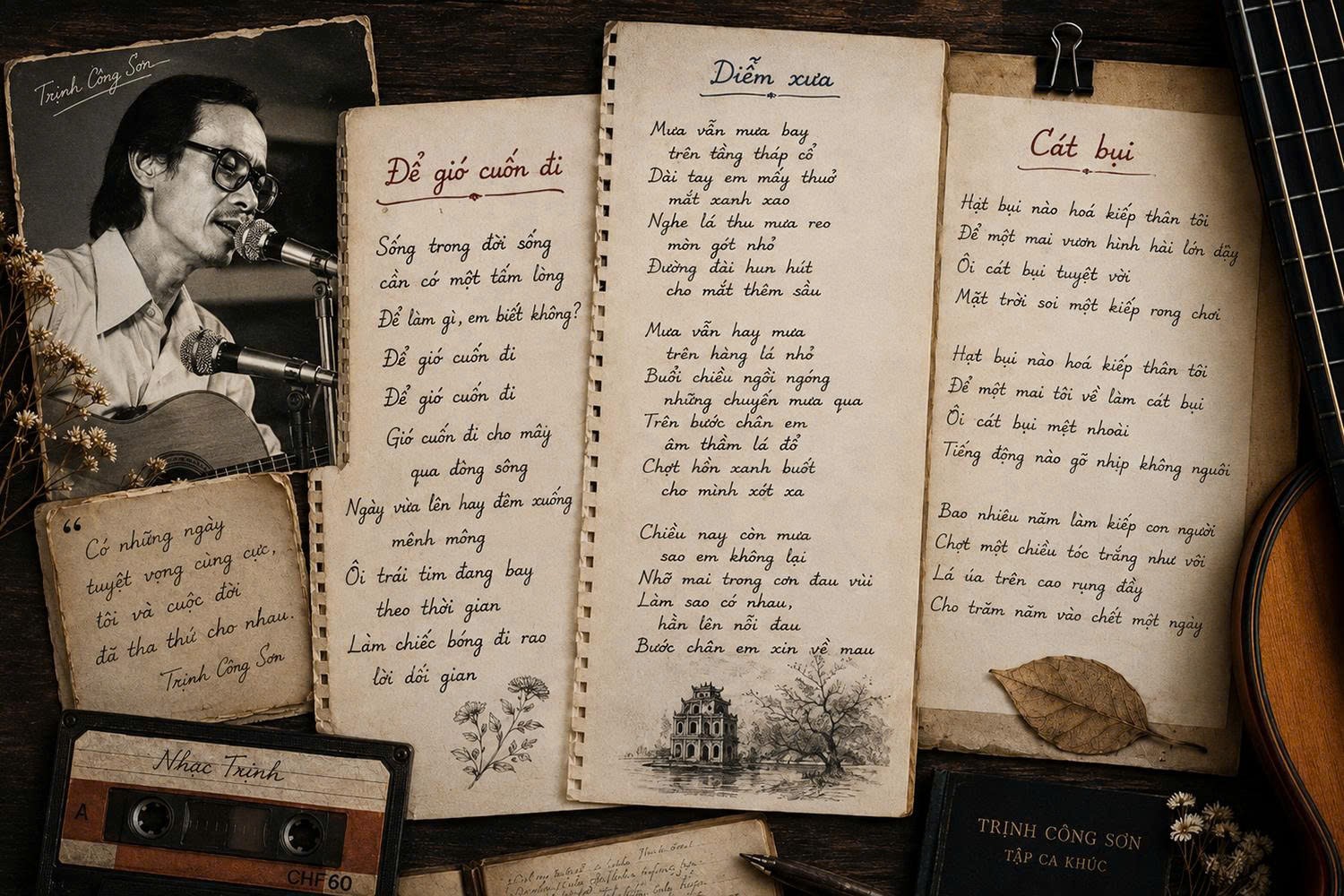
From that day on, I started listening to Trinh Cong Son more. At first, I only listened to the melancholic melodies. Later, I listened to the lyrics. And gradually, I began to listen to the thoughts behind each song. I realized that in Trinh Cong Son's music, there was always a great love for humanity. A gentleness towards lives filled with loss. A compassionate view of the imperfections of human existence. My understanding of Trinh Cong Son's thoughts, spirit, and songwriting style deepened when I met the "extraordinary" Trinh Cong Son enthusiasts in my Literature department. They loved Trinh Cong Son like devout followers.
I carried that love of music with me on my journey back to my hometown. Back then, the small town had few shops. Yet, there were already a few cafes named after Trinh Cong Son's lyrics. People hung portraits of the musician on their walls, played Trinh Cong Son's music every night, and connected with each other through an invisible thread of Trinh Cong Son's spirit.
What's special about Ha Tinh is that Trinh Cong Son's music has never existed merely as a musical taste. It has gradually formed a community of kindred spirits with unique identifying characteristics: precious paintings, impromptu nights of singing and playing music, and lengthy conversations about the human condition and the finitude of life. Many close friendships and kindred spirits have been formed from a love for Trinh Cong Son's music. Sometimes it comes because of Trinh, and sometimes Trinh brings it to everyone. In any way, those who love Trinh Cong Son's music seem to always find each other.
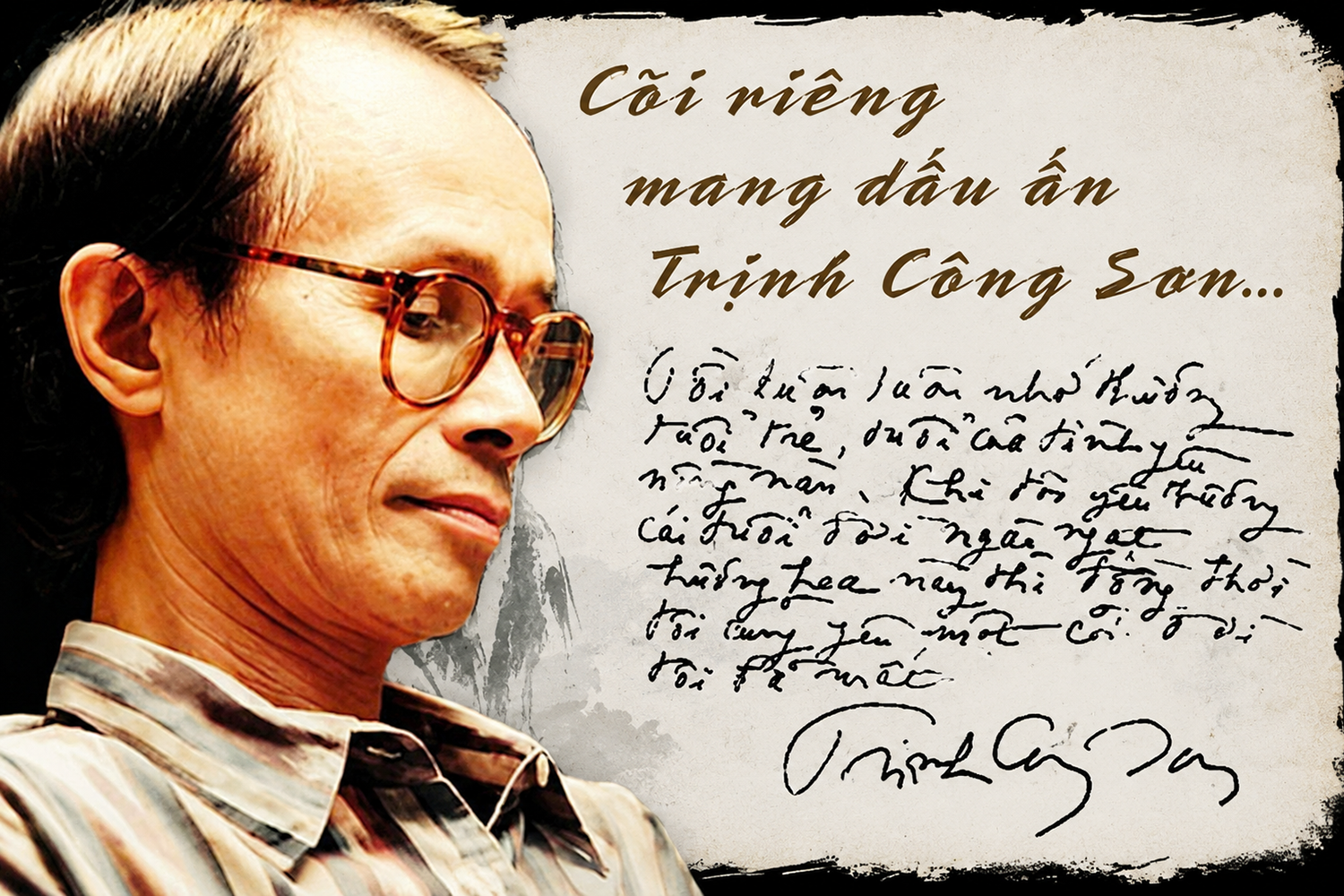
And then, through the music, the lyrics, and Trinh's deeply humanistic reflections on humanity and life, these connections are extended. Those who love Trinh know at least dozens of his songs, remember every passage of his essays, and can sit all night talking about "human condition," "the transient world," and "the sorrows of humanity" in Trinh's music. It's not difficult to hear Trinh's insightful and philosophical statements in any conversation.
Anyone who loves Trinh Cong Son can easily recite lines like: “There were days of utter despair, when life and I forgave each other. From the time when human life was so cheap, I knew that glory was nothing but a lie. I have nothing left to worship but despair and compassion,” and “Every night, I look at the sky and earth to learn about compassion. I watch the path of ants to learn about patience. The river flows its course. The stream flows its course. Human life is also meant to be lived, so let go of resentments.” And my literary and poetic friends, who among them hasn't quoted Trinh Cong Son at least once in their own works?
It was during those years that I gradually realized there was a "Trinh realm" quietly existing within the cultural life of my homeland. In a land of hardship and resilience like Ha Tinh, where cultural and artistic life was still limited at the time, this encounter became even stronger because people found in each other a need to share, to find peace, and to live more gently amidst the hustle and bustle of life.
The people of Ha Tinh possess the resilience of a land prone to natural disasters, yet also a profound inner life. Perhaps that is why Trinh Cong Son's music – with its compassion and reflections on the human condition – has found a special resonance in this land. People listen to Trinh not just to enjoy the music. They seek him out as a way to engage in dialogue with themselves. After the hardships of life, after loss, natural disasters, and years of toil, lyrics like "Living in this life requires a kind heart," "Every day I choose a joy," or "Let the wind carry it away" have become an emotional anchor for many.
Moreover, I wasn't surprised to encounter Trinh Cong Son's fans anywhere. There was a vendor in the provincial market, a street vendor, a middle-aged seamstress. Like many others who love Trinh Cong Son, they expressed their admiration by collecting his tapes, photos, and articles about him. They loved Trinh Cong Son by singing his songs. They might not understand much about philosophy or existentialism, but they heard something in Trinh Cong Son's music that resonated deeply with their own lives. It could be the loneliness of someone who has gone through many hardships yet still wants to maintain a kind heart. It could be the experience of loss and heartbreak. It could be the yearning to slow down amidst a life filled with so much hardship.
Because of their deep love for Trinh Cong Son, many people, especially those who once lived in Hue City, have always longed for Ha Tinh to have a musical space imbued with the spirit of Trinh Cong Son. Cafés dedicated to Trinh Cong Son's music have sprung up. Small music nights have been organized with great passion. But many dreams have quietly faded away. In a land still burdened by the struggles of daily life, romance is sometimes very fragile. People may love Trinh Cong Son's music with all their hearts, but it's not easy to maintain a space that thrives solely on that love.
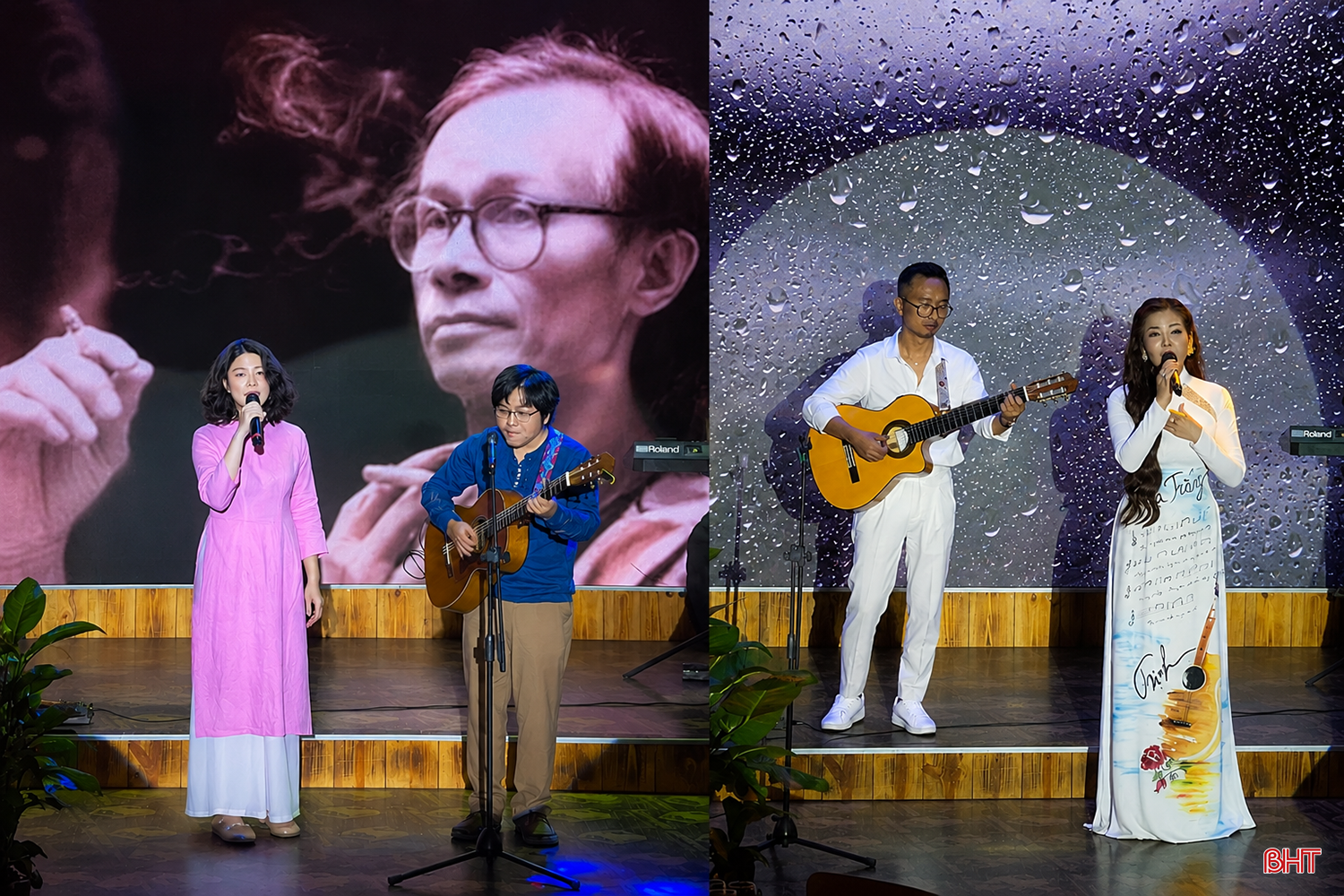
Nevertheless, Trinh Cong Son's music has never truly left the spiritual life of the people of Ha Tinh. His lyrics and melodies still quietly linger in conversations among friends, in the sound of guitars late at night, in old cafes, and in the memories of countless people whose youth was spent with Trinh Cong Son's music.
And so today, with a more open cultural and entertainment landscape, that "Trinh realm" has the opportunity to resonate again through larger-scale musical nights and more joyful reunions of like-minded individuals. The upcoming concert "Living in Life Requires a Kind Heart," organized by the family of composer Trinh Cong Son in Ha Tinh, is therefore eagerly awaited not only as an artistic event but also as a reunion of souls who have silently loved Trinh Cong Son's music for many years.
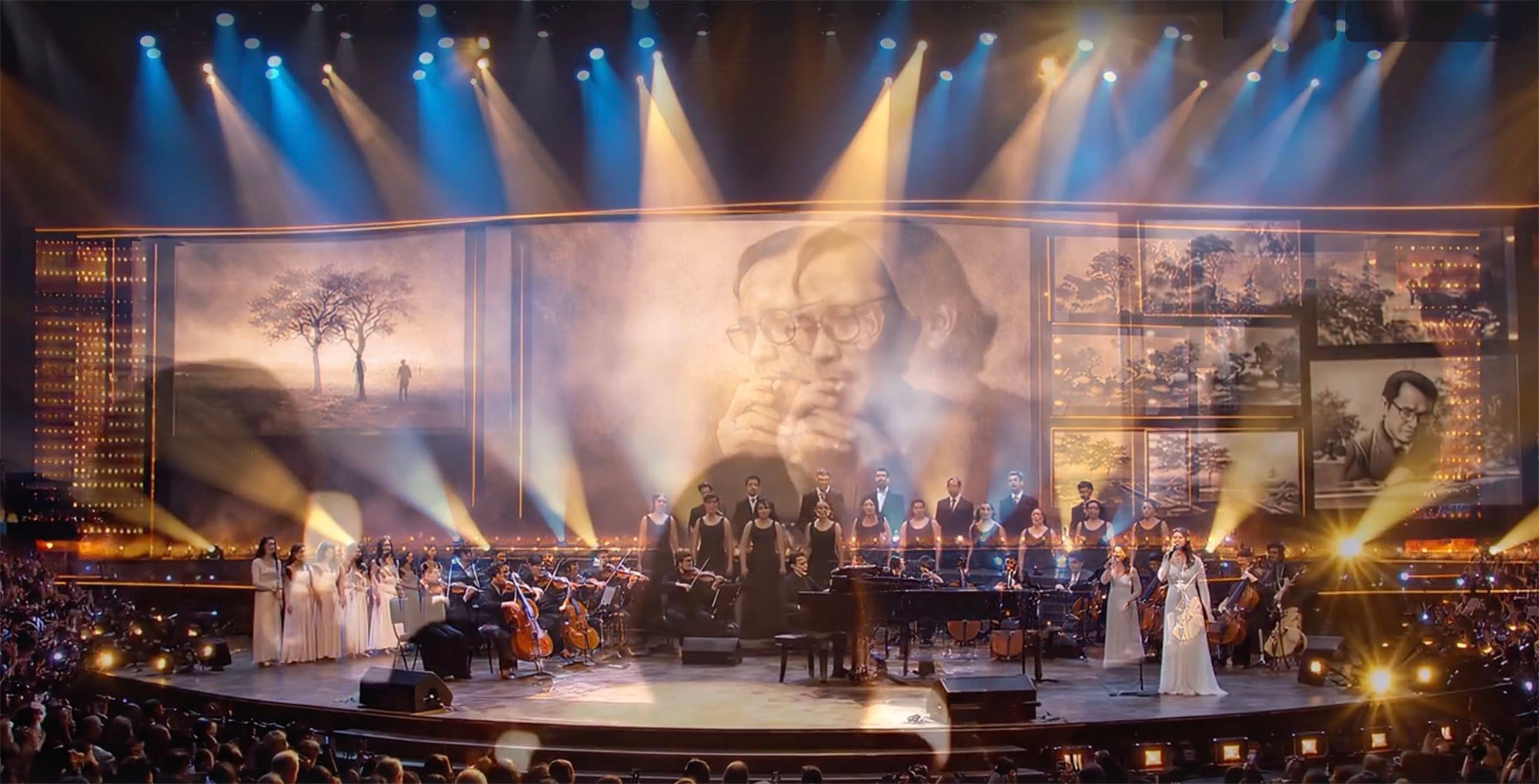
In truth, the "Trinh realm" has never been absent from the spiritual life of the people of Ha Tinh. It is still present somewhere in the guitar music of a late afternoon café, in the old songs sung during a gathering of friends, in the way people learn tolerance after life's hardships. In a land of much struggle and harshness, Trinh's music seems even more necessary – as a quiet space for people to find refuge in their souls, to spread humanistic spirit, and to connect the deeper layers of culture.
And perhaps that is why, after so many years, people still return to Trinh Cong Son's music, to listen to his old songs again, to find a deep part of themselves – a place that still retains the same emotions about the human condition, the sadness of life, and the yearning to be loved and to live decently in this transient world.
Source: https://baohatinh.vn/coi-trinh-giua-long-ha-tinh-post310926.html











![[QUIZ] Under what circumstances was Trịnh Công Sơn's passion for music "awakened"?](https://vphoto.vietnam.vn/thumb/402x226/vietnam/resource/IMAGE/2026/05/20/1779228580019_fb_thiet-ke-chua-co-ten-5072-jpg.webp)









































































Comment (0)