

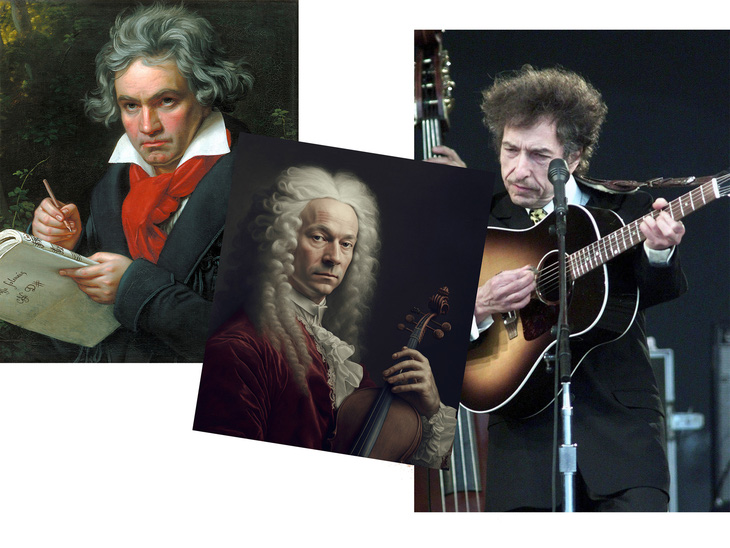
From left to right: Beethoven, Vivaldi, and Bob Dylan
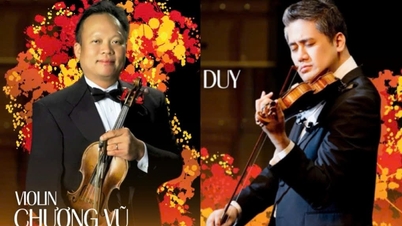
The movement is divided into three parts, corresponding to three sonnets, from the allegro non molto (lively) section, evoking a peaceful atmosphere but already echoing the anxieties and tremors of the shepherd, to the adagio e piano (slow) section, the calm before a fierce storm, and finally culminating in the presto (very fast) section as the storm arrives in the countryside with thunder and lightning.
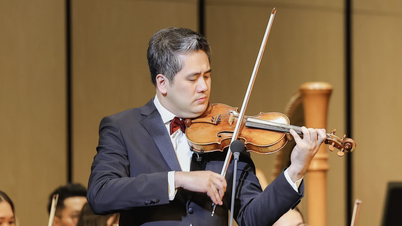
The violin's sound was like a thousand gusts of wind, a storm sweeping away everything in its path.
The sudden change in volume awakens in us a sense of dread at the overwhelming fury of the storm. We listen to the presto, and cannot help but be terrified by nature's unparalleled destructive power.
Beethoven loved the countryside, and throughout his life he often retreated to rural settings. But rural life is not just about romance and leisure.
Listening to the Pastoral Symphony, or Symphony No. 6, by the German composer, he initially leads us into a tranquil world with the sound of babbling streams, birdsong, and incredibly bright and sweet melodies.
But only the first three movements! By the fourth movement, Gewitter, Sturm (Storm), a sudden storm erupts, unexpectedly and without warning. The timpani mimics the thunderclap that strikes our ears, the violin's finger runs like a torrential downpour.
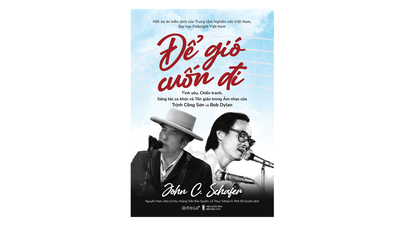
But it's not just classical composers who seek to incorporate thunderstorms and rain into their works. Bob Dylan's classic song, "A Hard Rain's a-Gonna Fall," is often said to be an allegory of radioactive fallout.
Bob Dylan - A Hard Rain's A-Gonna Fall (Official Audio)
Yet the composer rejected that interpretation. He said the song was simply about a very heavy rain. And the lyrics, with their 66 lines, each one long, seemed to contribute to the feeling of a rainstorm that never seemed to end.
That torrential rain changed the face of the world, and in the rain emerged the myriad faces of human suffering: a child beside a dead horse, a young woman burned to death, forgotten souls, poets slumped dead in the gutter, a jester sobbing in the valley, branches stained dark with blood, children holding swords…
The metaphors unfold endlessly, inviting countless interpretations even today, making the song itself seem like a rain shower that spans centuries.
However, amidst this overall melancholic poetic atmosphere, near the end there is still an image full of hope: the lyrical persona meets a young girl and is given a rainbow by her.
The storm is never the end. We listen to Beethoven's Pastoral Symphony; after the storm passes, the final movement is a cheerful and grateful song of the shepherd as the rain subsides, the clouds clear, and the sun shines again.
However, the joy here is not the same as the lighthearted melodies in the earlier chapters.
In chapter 5, joy is not a joy that is readily available, but rather a post-loss joy, a more profound and humble joy that comes from having experienced the ups and downs of life.
Similarly, Vivaldi's Symphony of the Four Seasons doesn't end with a summer storm, does it? Summer passes and autumn arrives.
As the storm subsides, the music opens up a festive atmosphere celebrating the harvest season, with farmers dancing, drinking wine, and then, exhausted, returning home to sleep—this is the allegro section of the Autumn movement.
Thus, nature is an endless cycle, with the rotation of life and death, destruction and rebirth. What is lost will find a way back, perhaps in a different form.
Such an unstoppable force, storms have been the subject of countless musical masterpieces for centuries.
Perhaps it's because only profound phenomena can be expressed through music that is not small in scale.
Source: https://tuoitre.vn/con-bao-cua-vivaldi-20240915090717175.htm




![[Photo] General Secretary and President To Lam and the President of the Philippines hold talks.](https://vphoto.vietnam.vn/thumb/1200x675/vietnam/resource/IMAGE/2026/06/01/1780283481955_vna-potal-tong-bi-thu-chu-tich-nuoc-to-lam-va-tong-thong-philippines-hoi-dam-8797519-1429-jpg.webp)


















![[Photo] The General Secretary, President and his wife begin their state visit to the Philippines.](https://vphoto.vietnam.vn/thumb/1200x675/vietnam/resource/IMAGE/2026/05/31/1780230559452_anh-man-hinh-2026-05-31-luc-19-28-11.png)
![[Image] Hanoi Police officially crowned champions of V-League 2025/2026](https://vphoto.vietnam.vn/thumb/1200x675/vietnam/resource/IMAGE/2026/05/31/1780244769054_ndo_br_039d561b692be875b13a-jpg.webp)





























































Comment (0)