

 |
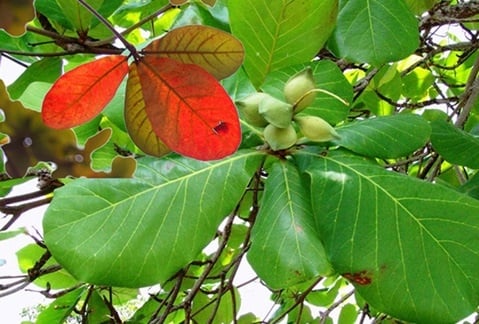
Besides providing shade, Terminalia catappa leaves are also used to make drinks that support health. |
The Terminalia catappa tree, scientifically known as Terminalia catappa, belongs to the Combretaceae family. In traditional medicine, Terminalia catappa leaves are used to support the treatment of several ailments due to their high content of bioactive compounds such as flavonoids, tannins, saponins, and antioxidants.
According to several studies, many valuable compounds have been found in fresh Terminalia catappa leaves, including: flavonoids, tannins, saponins, chloroform, glycosides, alkaloids, carbohydrates, proteins, and amino acids.
Typically, people use mature or dried Terminalia catappa leaves to make tea or decoctions for medicinal purposes.
What are the benefits of drinking Terminalia catappa leaf tea?
According to Traditional Medicine Practitioner Tran Dang Tai, as shared in the Health & Life newspaper, Terminalia catappa leaves have the following effects:
Helps reduce symptoms of atopic dermatitis.
Terminalia catappa leaves contain many tannins and phytosterols and flavonoids, which stimulate cell production, fight inflammation, and have antibacterial and antifungal effects. In particular, Terminalia catappa leaves help treat atopic dermatitis, reducing the itching and burning sensation caused by the condition.
Anti-inflammatory
Terminalia catappa leaves have anti-inflammatory effects because the chloroform, polyphenolic, and triterpenoid compounds they contain can quickly reduce edema symptoms.
Helps improve the condition of gynecological yeast infections.
Indian almond leaves contain a large amount of tannins, which have strong antioxidant properties, helping to fight bacteria and treat gynecological fungal infections in women. They help reduce symptoms such as itching and burning, and prevent the spread of gynecological fungi.
Sore throat
Some active compounds in Terminalia catappa leaves are believed to have anti-inflammatory properties, helping to soothe sore throats and inflammation of the oral mucosa.
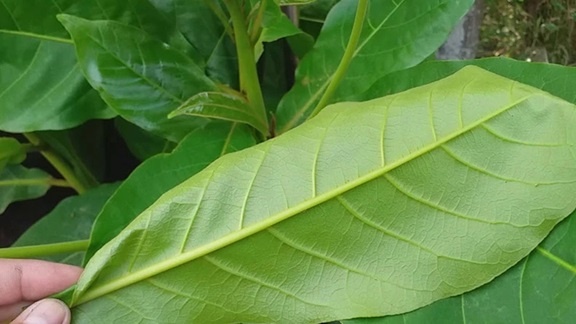 |
Do not use leaves that are infested with insects or diseased, as the insect hairs may irritate the skin. |
Support in treating tooth decay
Using Terminalia catappa leaves to treat tooth decay is very effective because substances such as tannins, flavonoids, and phytosterols in the leaves interact with enzymes in saliva to form a substance that prevents harmful bacteria from entering the mouth, thereby quickly reducing pain.
Supports the treatment of mouth ulcers.
Indian almond leaves contain antioxidants that have anti-inflammatory effects, promote faster wound healing, and fight bacteria and viruses that damage the oral mucosa.
Some common ways to use Terminalia catappa leaves.
Indian almond leaves can be used in several simple ways, such as:
Oral care
Boil Terminalia catappa leaves, let the water cool to a warm temperature, and use it as a mouthwash. This decoction helps cleanse the mouth and reduce bad breath. Some components in Terminalia catappa leaves are also believed to have gum-care benefits. This is a very effective method for preventing and treating conditions such as tooth decay, gingivitis, and mouth ulcers.
Indian almond leaf tea
After drying, Terminalia catappa leaves can be used to make tea. Terminalia catappa leaf tea has a mild, pleasant flavor. Regularly drinking Terminalia catappa leaf tea helps to clear heat and detoxify the body, regulate moisture levels, and alleviate symptoms of damp heat.
Indian almond leaves for skincare
Indian almond leaves can also be used for skincare. Crushing Indian almond leaves into a paste and applying it to itchy skin caused by damp heat will help soothe discomfort and maintain skin health.
Bath or soak
This is perhaps the most common way to use Terminalia catappa leaves. Soak the leaves in warm water to release their active ingredients, or boil them to make a decoction. Using this decoction in a bath helps to relax, reduce fatigue, and improve blood circulation.
Notes on using Terminalia catappa leaves
Young Terminalia leaves should be chosen because they contain a higher quality and quantity of active compounds than older leaves.
Do not use leaves that are infested with insects or diseased, as the insect hairs may irritate the skin.
If you experience any allergic reactions or other unusual bodily reactions while using Terminalia catappa leaves, stop using them immediately.
People with allergies or those undergoing medical treatment should consult their doctor before using Terminalia catappa leaves regularly.
Indian almond leaves have many health benefits, but their use depends on individual constitution. Indian almond leaves used for internal consumption should only be used in moderation; excessive consumption can lead to adverse health conditions.
If any unusual reactions occur during use, stop immediately and consult a doctor.
Source: https://znews.vn/cong-dung-it-nguoi-biet-cua-la-bang-voi-suc-khoe-post1656465.html

![[Photo] Secretary of the National Assembly Party Committee, Chairman of the National Assembly presides over the meeting of the Standing Committee and Executive Committee of the National Assembly Party Committee.](https://vphoto.vietnam.vn/thumb/1200x675/vietnam/resource/IMAGE/2026/06/03/1780480353201_ndo_br_bnd-2585-jpg.webp)
![[Photo] General Secretary and President To Lam presides over a meeting with the Central Organizing Committee.](https://vphoto.vietnam.vn/thumb/1200x675/vietnam/resource/IMAGE/2026/06/03/1780482764658_a1-bnd-4741-3342-jpg.webp)
![[Photo] First session of the 14th Congress of the Vietnam Trade Union](https://vphoto.vietnam.vn/thumb/1200x675/vietnam/resource/IMAGE/2026/06/03/1780465947883_ndo_br_img-3852-jpg.webp)







































![[Video] Sunset at Lap An Lagoon – Where the sun sets over the fishing nets](https://vphoto.vietnam.vn/thumb/1200x675/vietnam/resource/IMAGE/2026/05/31/1780192137701_beach-landscape-sea-water-nature-grass-745871-pxhere-com.jpeg)



































Comment (0)