

Providing important scientific information to the public about earthquakes and tsunamis was the main topic of the public lecture titled "Earthquakes and Tsunamis: Risks and Responses, Lessons for Vietnam," organized by two agencies under the Vietnam Academy of Science and Technology, namely the Information and Documentation Center and the Institute of Geophysics, on the morning of December 9th in Hanoi.
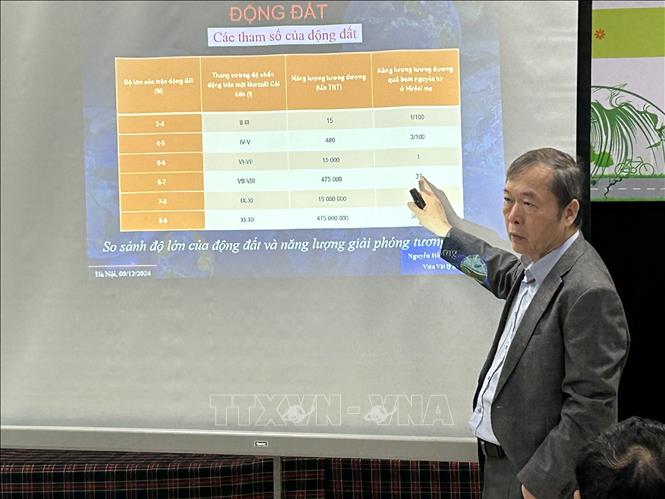
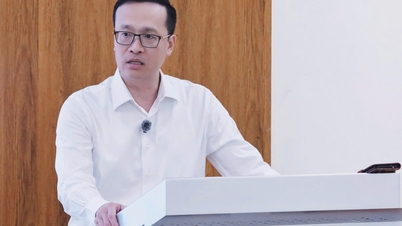
Sharing essential information about earthquakes and tsunamis, Associate Professor, Dr. Nguyen Hong Phuong, Chairman of the Scientific Council of the Institute of Geophysics, stated that earthquakes are phenomena where a slight tremor in the ground becomes a violent tremor caused by the sudden movement of rock layers beneath the Earth's surface. Sudden shifts along geological faults in the solid and rigid layers of the Earth's crust create tectonic earthquakes. Earthquake epicenters are often concentrated in narrow, elongated zones called earthquake belts. The three largest earthquake belts on the planet are the Pacific Belt, the Mediterranean-Himalayan Belt, and the belt extending along the underwater mountain range from the Arctic Ocean, across the Atlantic Ocean, far to the south.
Tsunamis, on the other hand, are a series of large, long-wavelength waves generated by powerful geological upheavals occurring on the seabed. When sudden movements of large columns of water occur, or when the seabed is suddenly raised or lowered due to earthquakes, tsunamis are formed under the influence of gravity. These waves quickly propagate through the water and become extremely dangerous and destructive as they approach shallow coastlines.
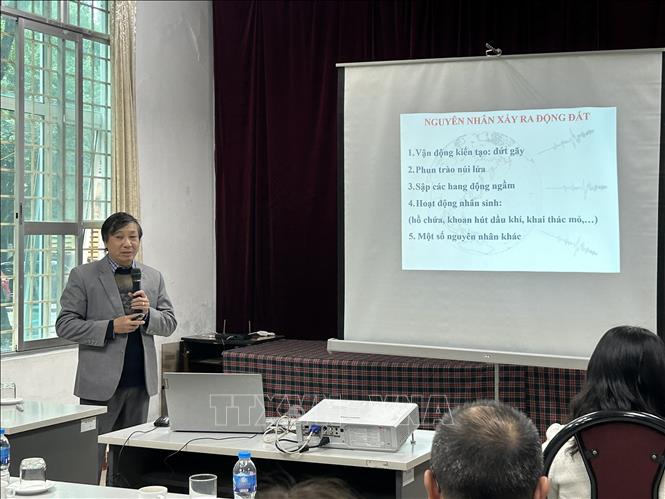
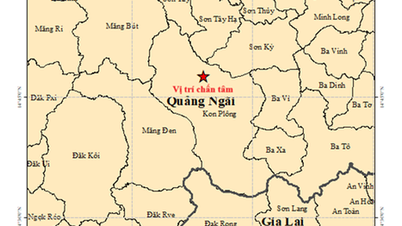
Proposing solutions to respond to earthquakes in the northern mountainous provinces and the recent earthquakes in Kon Tum province, Associate Professor, Dr. Nguyen Hong Phuong suggested that, first and foremost, local authorities in earthquake-prone areas should coordinate with relevant units to closely monitor aftershocks in their areas, promptly report and propose solutions to the Provincial People's Committee for consideration and direction in responding to earthquakes according to regulations. At the same time, they should proactively coordinate with the Institute of Geophysics to continue surveying, observing, and conducting detailed research on geological formations and seismic regimes in the area, promptly informing the authorities and the public about earthquake situations so that they can proactively respond and avoid causing panic among the people.
Associate Professor, Dr. Nguyen Hong Phuong emphasized that earthquakes in Kon Plong district, Kon Tum province, will continue and affect densely populated areas and key infrastructure, especially in the epicenter region. Therefore, authorities need to regularly update information to develop earthquake-resistant design plans for various types of infrastructure, from key projects to residential areas. People also need to understand the difference between induced and tectonic earthquakes to prevent and respond promptly when earthquakes occur.
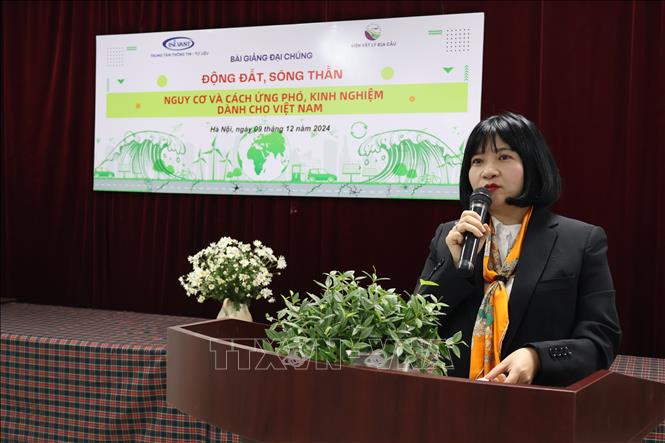
To improve earthquake response skills, Dr. Bui Nhi Nhung, principal researcher at the Earthquake Information and Tsunami Warning Center, Institute of Geophysics, suggested that in the future, relevant ministries and agencies should promptly add more informational materials suitable for remote and rural areas to meet the practical situation. At the same time, local authorities need to continue to do a good job of educating and disseminating knowledge to the people, and training skills for relevant forces through: drills, integrating earthquake response knowledge and skills into educational programs, extracurricular activities, and experiential learning in educational institutions...
According to VNA
Source: https://doanhnghiepvn.vn/cong-nghe/cung-cap-thong-tin-khoa-hoc-ve-dong-dat-song-than-cho-dai-chung/20241210100144776

![[Photo] Secretary of the National Assembly Party Committee, Chairman of the National Assembly presides over the meeting of the Standing Committee and Executive Committee of the National Assembly Party Committee.](https://vphoto.vietnam.vn/thumb/1200x675/vietnam/resource/IMAGE/2026/06/03/1780480353201_ndo_br_bnd-2585-jpg.webp)
![[Photo] General Secretary and President To Lam presides over a meeting with the Central Organizing Committee.](https://vphoto.vietnam.vn/thumb/1200x675/vietnam/resource/IMAGE/2026/06/03/1780482764658_a1-bnd-4741-3342-jpg.webp)



































![[Video] Sunset at Lap An Lagoon – Where the sun sets over the fishing nets](https://vphoto.vietnam.vn/thumb/1200x675/vietnam/resource/IMAGE/2026/05/31/1780192137701_beach-landscape-sea-water-nature-grass-745871-pxhere-com.jpeg)




















Comment (0)